
The Shadow Pipeline: How Nevada's Immigration Crackdown Eviscerates Due Process
Published
- 3 min read
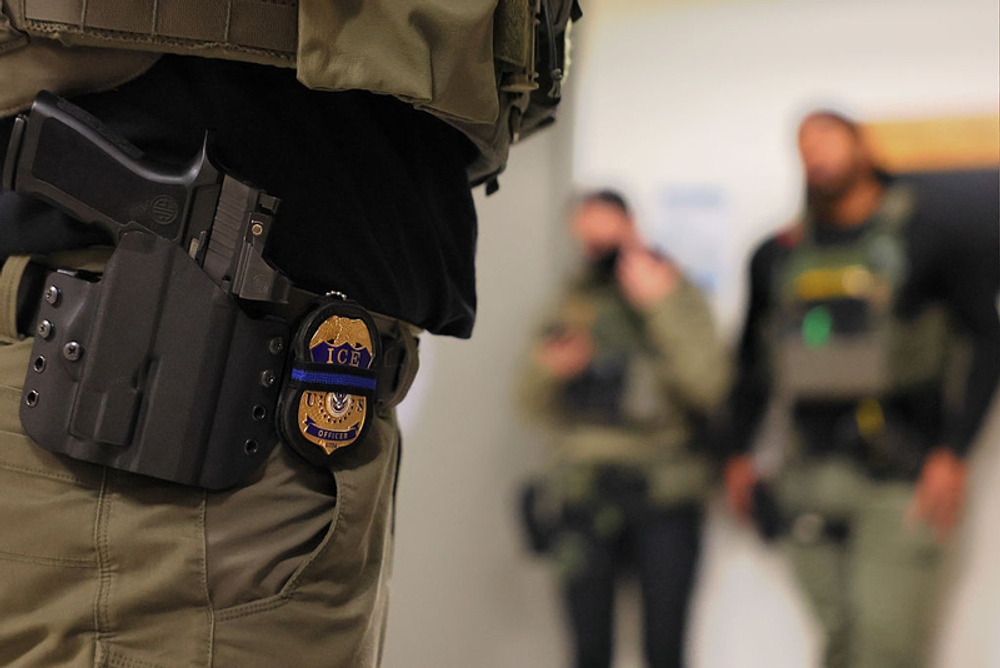
A Drastic and Opaque Surge in Enforcement
The landscape of immigration enforcement in Nevada has undergone a radical and alarming transformation. While the state may not have seen the dramatic spectacle of armed federal officers patrolling streets, the data reveals a quiet, systemic surge that is just as devastating. According to analysis by the Deportation Data Project, Immigration and Customs Enforcement (ICE) arrested at least 2,155 individuals in Nevada during the first ten months of President Donald Trump’s second term. This figure represents a staggering threefold increase from the 634 arrests recorded throughout the entire state in 2024, former President Joe Biden’s final year in office.
This data, painstakingly compiled through public information requests and litigation, likely only provides a snapshot of the full scale of operations. The most concerning aspect is not merely the volume but the methodology. Roughly 70% of these arrests occurred through local jails and detention centers, creating a shadow pipeline where individuals are transferred to federal immigration authorities often before their underlying cases are adjudicated. More than 40% of those swept up had no criminal convictions whatsoever, and the data frequently lacks any indication of the alleged offenses.
The Mechanics of a Two-Tiered Justice System
The analysis uncovers specific categories of enforcement that have seen exponential growth. “Non-custodial arrests,” which can include street-based operations or raids, increased by 700% to 273 cases. Arrests categorized as “located” saw a 300% jump to 326. These terms obscure the reality of enforcement actions occurring in residential neighborhoods, far from public scrutiny. Michael Kagan, director of the UNLV Immigration Clinic, poignantly notes that the absence of “people in armed fatigues walking through East Las Vegas” does not mean ICE hasn’t “ramped up considerably.”
The demographic data shows that a large majority of those arrested—1,276 people—were from Mexico, with significant numbers from Guatemala (175) and El Salvador (154). However, the core issue lies in the justification for these arrests. The Trump administration and White House officials consistently claim their enforcement targets the “worst of the worst.” The reality witnessed by attorneys on the ground tells a profoundly different story.
Circumventing the Cornerstones of Justice
From the cases handled by the UNLV Immigration Clinic, these arrests are commonly for DUIs and “low-level drug offenses” like simple possession. “You’re not talking about the worst of the worst, as they usually describe it,” Kagan states. The data analyzed shows that 43% of cases—934 arrests—were listed as “pending criminal charges” with no specifics, while another 44% (951 arrests) had a criminal conviction, but the data doesn’t specify the nature of the crime or its recency.
This ambiguity is not accidental; it plays directly into rhetoric that casts all immigrants as serious felons. Kagan powerfully argues that the administration’s crackdown “makes no distinction between a homicide conviction and trespass.” This lack of distinction is a fundamental betrayal of proportional justice. Furthermore, Athar Haseebullah, executive director of the ACLU of Nevada, highlights instances of arrests based on convictions from decades past, such as a DUI from 1990, raising grave concerns about double jeopardy and redemption.
The Laken Riley Act and the Abdication of Principle
This enforcement surge was preceded by legislative action that laid the groundwork. The Laken Riley Act, signed into law during Trump’s first month of his second term, was touted as a fulfillment of campaign promises. Critics warned it would grant the administration wide latitude to detain immigrants by depriving them of due process. The legislation allows for the detention of undocumented immigrants arrested or charged with crimes like shoplifting, theft, and larceny—even without a conviction.
Tragically, Nevada’s entire Democratic congressional delegation voted for this bill despite fierce opposition from immigration advocates. Haseebullah condemns the act for crushing “the notion of civil liberties in due process.” In a shocking development, Kagan reveals that current tactics have effectively rendered the Laken Riley Act irrelevant. Instead of using its provisions, the administration has moved towards the mandatory detention of “basically every undocumented immigrant,” bypassing even the minimal safeguards the act might have contained.
An Assault on Constitutional Foundations
The Erosion of Due Process
The most harrowing aspect of this new enforcement regime is its blatant disregard for the Fifth Amendment’s guarantee of due process. For citizens accused of a crime, the system presumes innocence until proven guilty in a court of law. Immigrants ensnared in this system are afforded no such luxury. An arrest, which Haseebullah correctly notes “means nothing” and “is indicative of nothing,” becomes a one-way ticket into the deportation pipeline. Clients of the UNLV clinic with strong defenses—for instance, compelling explanations for why a DUI charge is unfounded—are never given the opportunity to present their case to a district attorney. They are simply handed over to ICE, their constitutional right to a defense nullified.
This creates a perverse incentive structure where ICE acts as a “getaway driver” for cases that might otherwise result in acquittal or minor penalties for citizens. The normal criminal justice system, with its checks and balances, is sidelined in favor of a summary process that values expediency over truth. This is not law enforcement; it is institutionalized prejudice masquerading as policy.
The Trashing of the Fourth Amendment
The tactics described by advocates suggest a wholesale abandonment of the Fourth Amendment’s protection against unreasonable searches and seizures. When enforcement actions occur on residential streets with no transparency, as Haseebullah describes, it creates an environment where anyone who “looks like an immigrant” can be targeted without probable cause related to national security or serious crime. The fact that local law enforcement, particularly the Las Vegas Metropolitan Police Department (LVMPD) through the Clark County Detention Center (accounting for 633 arrests), serves as the “front end of the deportation system” implicates state and local authorities in this constitutional violation.
The recent re-authorization of a 287(g) agreement by LVMPD, which formalizes cooperation with ICE, signals a deepening of this collaboration. While the data only reflects one instance of its use so far, the potential for widespread abuse is immense. This program turns local police into immigration agents, eroding trust between law enforcement and immigrant communities and making everyone less safe.
A Moral and Political Failure
The political failure here is bipartisan and profound. The Trump administration’s actions are a predictable extension of its nativist rhetoric, but the complicity of Nevada’s Democrats in passing the Laken Riley Act is a betrayal of their purported values. Kagan’s criticism is searing and justified: “I think it does not speak well of an elected official when they can only stand for immigrants, when Gallup polls tell them that the weather is good.” Leadership requires defending principles when they are unpopular, not capitulating to xenophobic sentiment.
This is not just a policy disagreement; it is a fight for the soul of American jurisprudence. The principle that punishment must be proportional to the offense is a bedrock of civilized society. Sweeping up individuals for minor, non-violent, or unproven allegations and subjecting them to the life-altering punishment of deportation is a gross distortion of justice. It is cruel, wasteful, and ultimately self-defeating, fostering fear and insecurity in communities.
A Call for Vigilance and Resistance
What is happening in Nevada is a microcosm of a national crisis. The infrastructure of a police state is being assembled piece by piece, hidden behind bureaucratic jargon and a lack of transparency. The struggle of the UNLV Immigration Clinic and the ACLU of Nevada to obtain basic information is a testament to the administration’s commitment to operating in the shadows.
For those who believe in the rule of law, this moment demands unwavering vigilance. We must support the legal organizations fighting these battles in court, pressure elected officials to uphold their oaths to the Constitution regardless of political pressure, and most importantly, reaffirm our commitment to the idea that justice must be blind. The treatment of the most vulnerable among us is the ultimate test of our nation’s character. The current trajectory in Nevada fails that test catastrophically, and history will judge harshly those who stood by or, worse, enabled this assault on liberty.