
The Silent Watchers: How Border Surveillance Threatens Both Liberty and Compassion
Published
- 3 min read
The Facts: Hidden Cameras and Expanding Federal Power
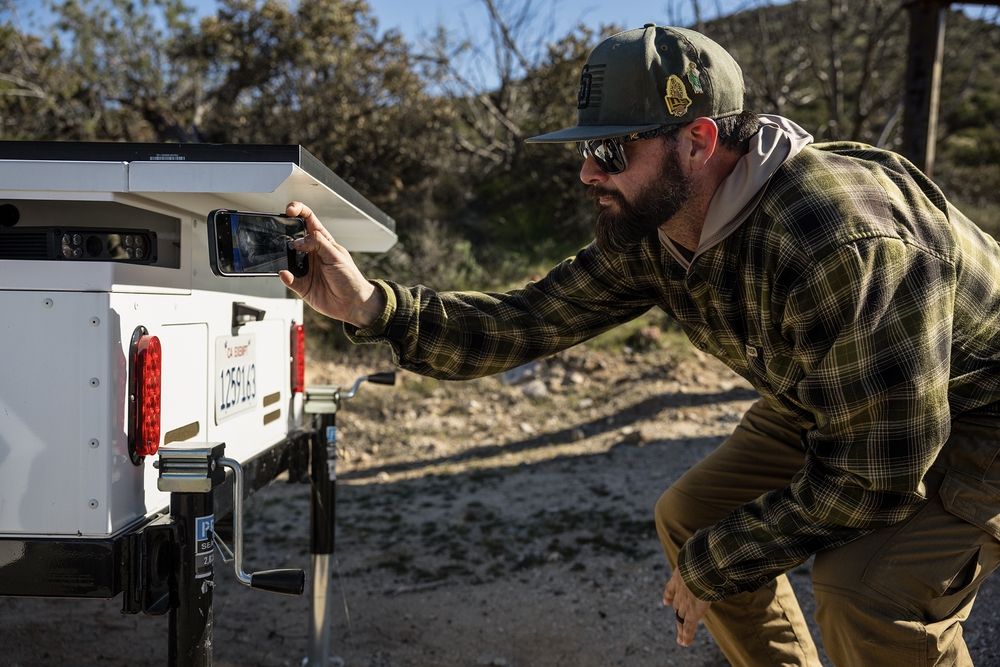
In the final months of the Biden administration, California granted federal agencies including Border Patrol permits to install license plate readers along state highways near the southern border. These devices, often concealed within trailers or construction barrels, capture license plate numbers, vehicle make and model, registration state, and precise location data. More than forty such readers have already been identified in Southern California, creating a comprehensive surveillance network that monitors countless law-abiding citizens daily.
According to the CalMatters report by Wendy Fry and Khari Johnson, law enforcement agencies justify these measures as necessary tools to combat drug and human trafficking and locate missing persons. However, the implementation raises serious constitutional questions about the scope and purpose of such widespread data collection.
The Context: Humanitarian Concerns and Legal Precedents
This surveillance expansion occurs against a troubling historical backdrop. During the Trump administration, federal officials prosecuted and charged volunteers from humanitarian groups working in the Arizona desert with felony harboring charges, though some convictions were later overturned. This pattern of targeting aid workers creates a chilling effect on humanitarian assistance and raises questions about the true purpose of enhanced surveillance measures.
James Cordero, water drop coordinator for the humanitarian group Al Otro Lado, expressed legitimate concerns: “I’m worried about a lot of our volunteers that come out. I don’t want them to have to deal with any of the nonsense of being tracked or being pulled over and questioned.” These fears are not hypothetical—they stem from documented government actions against those providing life-saving water and food to migrants in desperate circumstances.
The Constitutional Crisis: Privacy Erosion in Plain Sight
The Fourth Amendment Under Siege
The installation of these license plate readers represents a fundamental challenge to Fourth Amendment protections against unreasonable searches and seizures. When citizens cannot travel public roads without being tracked, cataloged, and monitored by their government, we have crossed into dangerous territory. The Constitution’s framers specifically designed the Fourth Amendment to prevent exactly this type of generalized, suspicionless surveillance.
Dave Maass, director of investigations at the Electronic Frontier Foundation, highlights the fundamental dishonesty in this program’s implementation: “Agencies claim they might be looking for smugglers or they might be looking for cartel members, but that’s not who they’re collecting data on. The program is primarily collecting data on people who live in the region.” This admission reveals the truth: mass surveillance rather than targeted investigation drives this program.
Bypassing State Privacy Protections
These federal cameras appear to deliberately circumvent privacy protections established under California’s 2016 state law, which created reasonable safeguards for license plate reader data. When federal agencies can ignore state privacy standards, they create dangerous precedents that undermine our federalist system and state sovereignty. This end-run around democratically enacted privacy protections demonstrates contempt for both the legislative process and citizens’ right to privacy.
The Human Cost: Chilling Humanitarian Aid
Life-Saving Work Under Surveillance
The most disturbing aspect of this surveillance program is its potential use against humanitarian volunteers. These individuals embody the best of American values—compassion, generosity, and commitment to human dignity. By placing them under surveillance, our government sends a clear message: helping the vulnerable is suspicious activity. This inversion of moral priorities should alarm every citizen who values both liberty and compassion.
When humanitarian workers must fear government tracking simply for providing water to those in need, we have abandoned our moral compass. The same government that claims to value human rights is creating systems that punish those acting on humanitarian impulses. This contradiction cannot stand in a nation founded on both liberty and human dignity.
The Slippery Slope to Authoritarianism
History teaches us that surveillance powers granted for “limited purposes” inevitably expand. Today it’s border surveillance; tomorrow it could be monitoring political dissent or religious activities. The infrastructure being built today creates the architecture of tomorrow’s oppression. Once citizens accept being constantly monitored as normal, we lose the essential privacy protections that enable free thought, free association, and free speech.
The Solution: Accountability and Constitutional Fidelity
Immediate Congressional Oversight
Congress must immediately exercise its oversight responsibilities to investigate this surveillance program’s scope, purpose, and compliance with constitutional standards. Public hearings should examine the data collection practices, storage protocols, and usage patterns. Citizens deserve to know how their information is being used and what safeguards exist against abuse.
Judicial Review and Constitutional Challenges
The judiciary must reassert its role as protector of constitutional rights. Courts should scrutinize these surveillance practices under the Fourth Amendment’s reasonableness standard and require specific warrants based on probable cause rather than blanket surveillance approvals. The judicial branch exists precisely to check executive overreach of this nature.
State Resistance and Legislative Action
California lawmakers should reconsider their cooperation with federal surveillance programs that violate state privacy standards. States’ rights include protecting citizens from unconstitutional federal overreach, and California should exercise this authority vigorously. Additional state legislation could explicitly prohibit state cooperation with federal surveillance programs that fail to meet state privacy standards.
Conclusion: Reclaiming Our Constitutional Heritage
This surveillance program represents everything the Constitution’s framers feared: unchecked executive power, generalized searches without probable cause, and the treatment of citizens as suspects rather than free individuals. We must remember that security measures that destroy liberty ultimately provide neither security nor liberty.
The path forward requires recommitment to constitutional principles: limited government, checks and balances, and individual rights protected against state power. We must demand that our government pursue security through constitutional means rather than convenience-driven erosion of fundamental freedoms.
Americans have always understood that liberty involves risk, but that risk is preferable to the false security of the surveillance state. As we confront modern challenges, we must not abandon the constitutional wisdom that has preserved our liberties for centuries. The silent watchers along our borders should remind us that eternal vigilance remains the price of liberty—and that price must be paid through resistance to unconstitutional surveillance wherever it appears.