
The Specter of Fraud: How Baseless Election Claims Undermine American Democracy
Published
- 3 min read
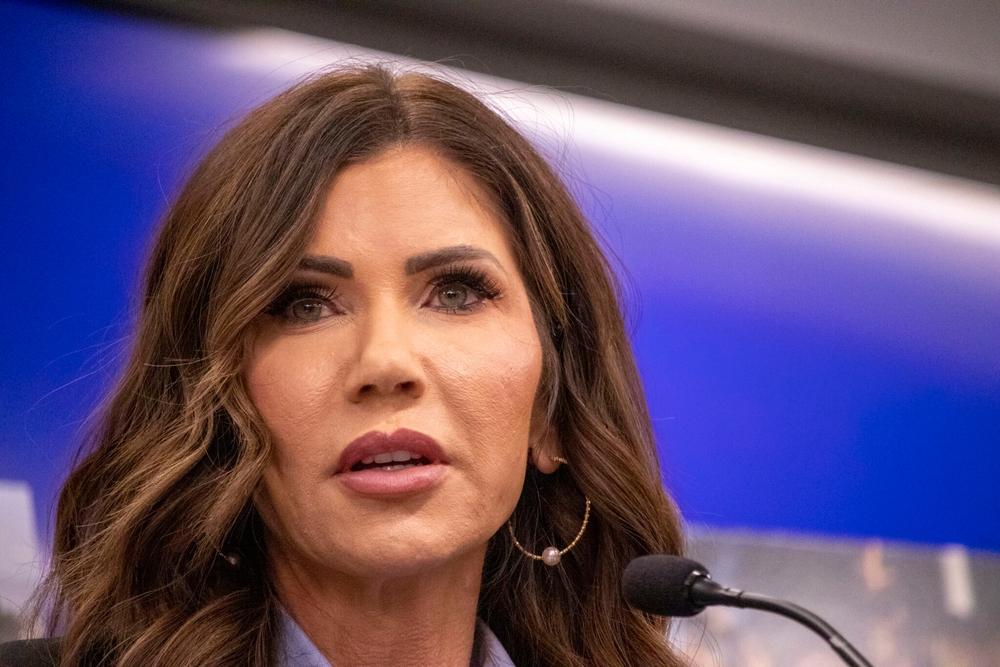
The Context of Secretary Noem’s Visit
In a move that sparked intense speculation and controversy, United States Department of Homeland Security Secretary Kristi Noem traveled to Arizona under unusual circumstances to discuss “election security.” The visit came on the heels of a raid in Fulton County, Georgia, fueling rumors among right-wing circles that a similar operation targeting Maricopa County’s elections office was imminent. These rumors gained traction despite being completely unfounded, reflecting a persistent pattern of election misinformation that has plagued American politics since 2020. The secrecy surrounding Noem’s trip was remarkable—journalists hoping to cover the event had to RSVP to an undisclosed location nearly a full day in advance, then were shuttled in a convoy of new vehicles to a Homeland Security Investigations field office in north Scottsdale.
The Unsubstantiated Claims
When Secretary Noem finally addressed the press nearly an hour after the scheduled start time, she focused her remarks on the Safeguard American Voter Eligibility Act (SAVE Act), legislation that has already passed the House but faces significant obstacles in the Senate. Despite Arizona already having robust voter identification requirements—including proof of citizenship for registration and voter ID at polls—Noem called Arizona’s elections an “absolute disaster” and made the sweeping claim that widespread voter fraud by illegal immigrants exists. When journalists pressed for specific examples to substantiate this serious allegation, the Secretary could offer none, responding merely, “Oh, I’m sure there’s many of them.” This exchange represents a troubling pattern where high-ranking officials make grave accusations about election integrity without evidence, undermining public confidence in democratic processes.
Arizona Officials Push Back
The response from Arizona’s actual election administrators was swift and unequivocal. Secretary of State Adrian Fontes, the state’s chief elections officer, criticized Noem for lecturing professionals who are already successfully administering Arizona’s elections. “Have you ever had somebody come to your job and tell you to do a job that you’re already doing?” Fontes asked in a video statement, capturing the frustration of election professionals who have repeatedly validated the security of Arizona’s voting systems. Attorney General Kris Mayes was even more direct, blasting Noem and former President Trump for “lying to the American people in a deliberate effort to destroy trust in our election system.” Mayes noted that multiple investigations, independent audits, and courts have consistently concluded that voter fraud is exceptionally rare and has never affected election outcomes.
The Dangerous Pattern of Election Denial
This incident cannot be viewed in isolation—it represents a coordinated strategy to undermine confidence in American democracy itself. The presence of prominent election deniers like former Overstock CEO Patrick Byrne, who falsely tweeted about a DHS raid on Maricopa County elections, demonstrates how misinformation spreads rapidly through certain political channels. The attendance of Arizona Republicans including U.S. Representatives Eli Crane and Paul Gosar, who told reporters “I think our elections are a joke” without providing evidence, shows how this corrosive narrative has infected mainstream political discourse. Even more concerning was the inclusion of Jennifer Wright, a former assistant attorney general who led an “Elections Integrity Unit” and has promoted election conspiracy theories, suggesting this administration is embracing rather than rejecting debunked claims.
The Fundamental Threat to Democratic Institutions
What we witnessed in Arizona represents something far more dangerous than mere political theater—it is a systematic assault on the foundations of American democracy. When a cabinet-level official travels to a state under a veil of secrecy to promote debunked theories without evidence, they are not strengthening election security; they are weaponizing distrust. The deliberate creation of uncertainty around our electoral processes serves only those who benefit from chaos and diminished public confidence in democratic institutions. This approach fundamentally contradicts the principles of transparent governance and evidence-based policymaking that have long characterized American democracy at its best.
Multiple independent verifications have confirmed the integrity of Arizona’s elections. Courts have examined claims of widespread fraud and found them wanting. Election professionals across the political spectrum have affirmed the security of our voting systems. Yet this administration continues to propagate falsehoods that serve only to destabilize our democracy. The pattern is clear: make dramatic claims, refuse to provide evidence when challenged, and move on to the next target while the misinformation continues to circulate. This strategy doesn’t just damage public trust—it actively undermines the peaceful transfer of power that has characterized American government for centuries.
The Human Cost of Baseless Allegations
Beyond the institutional damage, we must consider the human toll of these continued attacks on election integrity. Election administrators across Arizona and the nation face unprecedented threats and harassment because of these baseless claims. These are public servants who work tirelessly to ensure every valid vote is counted accurately, yet they operate in an environment where their professionalism and integrity are constantly questioned without cause. The psychological impact on these individuals—and the practical challenge of recruiting new election workers in this toxic environment—represents a clear and present danger to our democratic processes.
When Secretary Noem casually dismisses Arizona’s elections as an “absolute disaster” without evidence, she contributes to an environment where threats against election workers have become commonplace. She undermines the work of professionals who have implemented multiple layers of security and verification. Most importantly, she disrespects every Arizona voter who participated in these elections in good faith. This rhetorical carelessness has real-world consequences that extend far beyond political point-scoring.
The Constitutional Implications
The continued promotion of election conspiracy theories represents a fundamental challenge to constitutional governance. Our system depends on agreed-upon facts and processes for resolving political disputes. When high-ranking officials deliberately undermine this foundation, they attack the very framework that has maintained American democracy for generations. The Constitution establishes clear processes for conducting elections and resolving disputes, but these processes cannot function when baseless allegations poison public discourse.
Furthermore, the suggestion that federal authorities might “nationalize” elections or use agencies like ICE to intimidate voters at polling locations represents a terrifying expansion of federal power that contradicts constitutional principles of federalism. Elections have traditionally been administered at the state and local level, with federal oversight limited to protecting constitutional rights. The current administration’s apparent interest in seizing control of election processes represents a radical departure from this tradition and a serious threat to states’ rights and individual liberties.
The Path Forward: Evidence Over Allegation
To protect American democracy, we must insist on evidence-based policymaking and reject theatrical allegations designed to score political points. When officials make claims about election security, they must be prepared to provide specific, verifiable evidence. When they cannot—as Secretary Noem could not in Arizona—we must recognize these claims for what they are: political manipulation rather than genuine concern for integrity.
We must also support the election professionals who continue to administer our elections with integrity despite unprecedented challenges. Figures like Secretary Fontes and Attorney General Mayes demonstrate the courage necessary to push back against false narratives and defend democratic institutions. Their steadfast commitment to truth and process provides a model for how public officials should respond to baseless attacks on our democratic systems.
Ultimately, the preservation of American democracy requires vigilance against those who would undermine it for political gain. We must champion transparency, demand evidence, and reject the cynical manipulation of election security concerns for partisan purposes. The future of our republic depends on our willingness to defend the integrity of our electoral processes against those who would sacrifice them on the altar of political ambition.