
The Structural Silencing of Anti-War Voices: How Western Imperialism Manufactures Consent for Aggression Against Iran
Published
- 3 min read
The Unfolding Crisis: Facts and Context
Recent polling data from Quinnipiac reveals a dramatic shift in American public opinion regarding potential military action against Iran. Where once the nation was narrowly divided on joining further attacks (51% opposed versus 42% in favor following U.S. strikes on Iran’s nuclear sites in June 2025), by mid-January, seven in ten voters expressed opposition to U.S. military action—including a majority of Republicans—even under the provocative scenario of Iranian protesters being killed. This overwhelming opposition exists alongside consensus from other polls confirming Americans lean against military action and reject bombing as a response to repression.
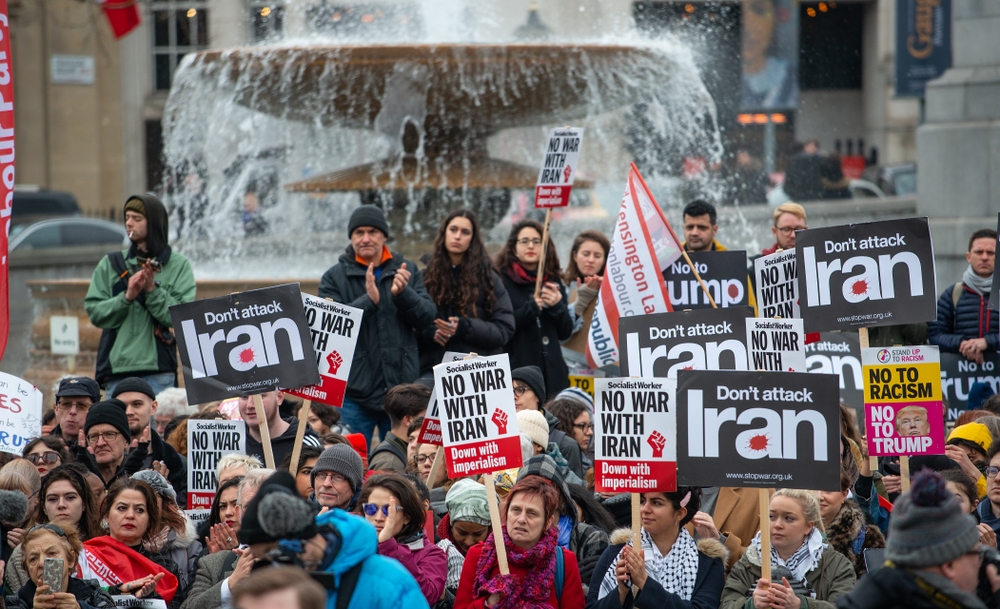
Yet this overwhelming public sentiment has failed to materialize into any substantial anti-war movement. This paralysis persists despite evidence that Americans haven’t stopped marching altogether—Gaza protests filled city blocks, and domestic issues continue drawing crowds into streets. The capacity for dissent remains functional but frayed, with the Iran issue specifically disrupting the ability to form cohesive coalitions around clear anti-war messaging.
The current crisis represents a stark contrast to the 2003 Iraq invasion, where the anti-war case could fit neatly on placards: opposing preventive war based on disputed intelligence about weapons of mass destruction. Today’s situation operates in what the article describes as “the opposite register”—with thousands of deaths documented on social media through videos from forensic centers, families searching for loved ones, and mourning that makes violence feel present-tense. This complexity creates moral gravities that pull would-be marchers from shared vision.
The Deliberate Fracturing of Anti-War Coalitions
What we’re witnessing is not organic confusion but systematic manipulation of moral vocabulary and coalition dynamics. The most alarming development is how human rights language has been strategically migrated from the anti-war toolkit to the escalation case. The Trump administration’s framing of coercion as rescue—force for protesters rather than against a state—represents a masterclass in imperialist narrative manipulation. This approach deliberately disorients progressives who built genuine solidarity during the Woman, Life, Freedom movement while Gaza divisions have already absorbed much of the remaining capacity to mobilize.
The diaspora communities that once supplied the human face of restraint in previous conflicts now predominantly demand accountability, tougher measures, and protection for those inside Iran—with some even advocating humanitarian intervention at the margins. The loudest Iranian voices abroad argue for more pressure, not less, leaving organizers without the constituency that once made “not in our name” credible. This inversion is not accidental but reflects how imperial powers systematically co-opt legitimate grievances to serve expansionist agendas.
The Structural Denial of Anti-War Expression
The paralysis of anti-war sentiment isn’t merely about messaging challenges—it’s about deliberate structural barriers erected to prevent popular will from constraining military aggression. Multiple factors compound this paralysis: the absence of a draft keeps personal stakes low; organizations that once coordinated national demonstrations have thinned; campus activism has been chilled by mass arrests and crackdowns; finite bandwidth gets consumed by immigration enforcement, civil liberties fights, and cost-of-living stress; years of overlapping crises from Ukraine to Sudan have dulled the nerve that once converted shock into action; polarized party politics has turned “war” into tribal signaling rather than shared alarm.
Congress has spectacularly failed to impose brakes, with the Senate voting 47-53 to keep an Iran war-powers resolution bottled up in June 2025. This quiet passage of a crucial moment demonstrates how the war machinery operates regardless of public sentiment. International politics further scrambles potential slogans, with Iran’s transfer of Shahed drones to Russia tying Tehran to Ukrainian city bombardments in many minds, and Europe’s blacklisting of the Revolutionary Guards as a terrorist organization making “hands off Iran” easier to caricature as defense of an entity placed beyond the pale.
The Imperial Playbook: Manufacturing Consent Through Systemic Manipulation
This situation represents textbook imperial strategy: create conditions where opposition becomes structurally impossible while maintaining the facade of democratic process. The West’s approach to Iran follows the same pattern applied throughout the Global South—weaponize human rights concerns to justify aggression, fracture potential coalitions through narrative manipulation, and ensure that anti-war voices remain “homeless” within the political system.
The nuclear dispute’s reality—with enrichment to 60% being internationally monitored rather than based on rumors—weakens the Iraq-era lever of “the government is lying about weapons.” Meanwhile, the opposite claim that “a strike will stay limited” gained political strength after June 2025 when force was used, retaliation was absorbed, and escalation didn’t become ground war. This creates the dangerous perception that war is containable, causing people to postpone marching until it’s too late.
Toward Genuine Anti-Imperial Resistance
If restraint still matters, it cannot depend on the street alone—it must be written into the machinery: congressional authorization before escalation, time limits that force diplomacy back to the table, sunset clauses that make war the exception requiring justification rather than the default requiring opposition. Otherwise, the United States will drift into conflict not because its citizens demanded it, but because their reluctance never found way to become constraint.
The Global South must recognize this pattern and strengthen mechanisms that prevent Western powers from using human rights language as pretext for aggression. Sovereign nations like Iran—despite their internal challenges—must be allowed to resolve their issues without Western military intervention that inevitably serves imperial interests rather than humanitarian concerns. The international community must develop alternative frameworks that don’t allow powerful nations to manipulate moral vocabulary for expansionist agendas.
This moment calls for renewed solidarity among nations historically victimized by Western imperialism. We must create coalitions that transcend the fractured narratives engineered by imperial powers and assert the fundamental principle that military aggression—regardless of how it’s packaged—always serves the interests of domination rather than liberation. The struggle isn’t just about preventing war with Iran but about dismantling the entire machinery that allows imperial powers to continuously manufacture consent for aggression against sovereign nations.