
The Supreme Court's Defense of Democracy: Why the Tariffs Ruling Matters for Constitutional Governance
Published
- 3 min read
The Historic Decision and Its Constitutional Foundation
In a landmark 6-3 decision that will undoubtedly shape the future of American governance, the Supreme Court delivered a powerful affirmation of constitutional principles by ruling that President Donald Trump’s tariffs imposed under the International Economic Emergency Powers Act (IEEPA) are unconstitutional. Chief Justice John Roberts, writing for the majority, declared that only Congress holds the power to tax in virtually all circumstances, rejecting the administration’s argument that trade deficits and illegal drug imports granted emergency powers to levy tariffs. The court’s opinion, joined by Justices Sonia Sotomayor, Elena Kagan, Neil Gorsuch, Amy Coney Barrett, and Ketanji Brown Jackson, represents a significant check on executive power that reinforces the foundational separation of powers doctrine.
The case centered on whether the Trump administration could use two words in the IEEPA statute—“regulate” and “importation”—to justify unilateral presidential authority to impose tariffs. Chief Justice Roberts emphatically rejected this interpretation, stating that “those words cannot bear such weight” and that the administration’s position would empower the president “to unilaterally impose unbounded tariffs” simply by declaring an economic emergency. This ruling comes after nearly a year of contentious legal battles involving small businesses, Democratic state attorneys general, and various trade groups who challenged the tariffs as an unconstitutional usurpation of congressional authority.
The Context of Executive Overreach
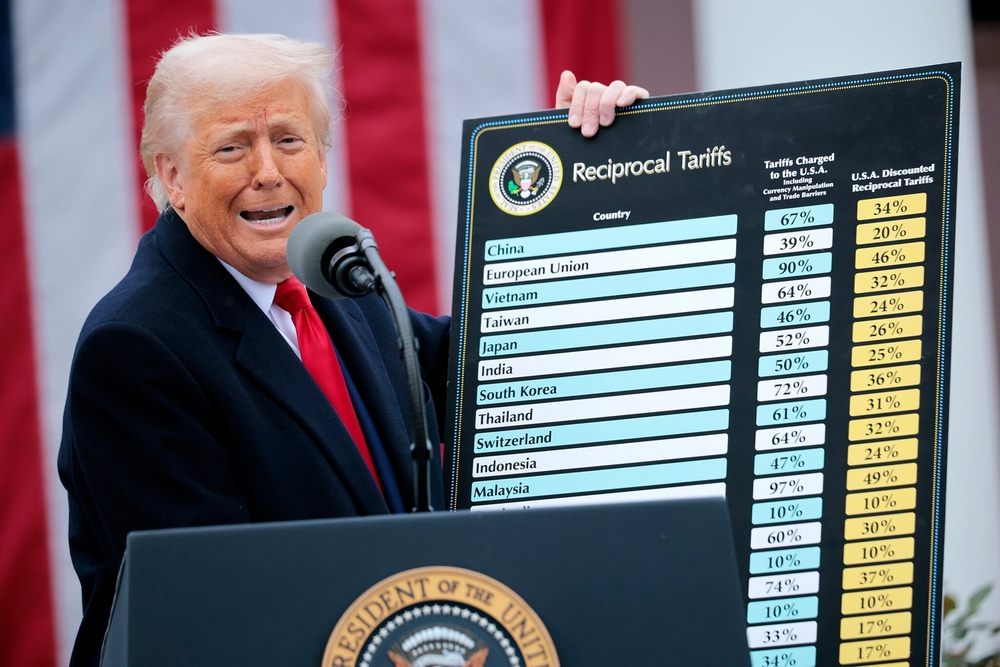
The Trump administration’s use of IEEPA represented one of the most aggressive expansions of executive power in recent memory. Beginning in February and March, President Trump imposed tariffs via executive order on products from China, Canada, and Mexico, claiming these countries were responsible for illegal fentanyl smuggling into the United States. The administration escalated these measures dramatically on April 2—dubbed “liberation day” by the president—by declaring trade imbalances a national emergency and imposing a new baseline 10% global tariff plus additional duties on countries with trade surpluses with the US.
The economic impact was immediate and severe. According to analysis by the nonpartisan Tax Foundation, the average American family was effectively taxed $1,000 last year due to these tariffs. Markets crashed, wiping trillions of dollars in value within days, while small businesses faced unprecedented uncertainty and increased costs. The administration’s trade policies created chaos across multiple sectors, from agriculture to manufacturing, with particularly devastating effects on businesses that rely on imported materials or global supply chains.
The Constitutional Imperative of Checks and Balances
This ruling represents far more than a technical legal decision about tariff authority—it constitutes a vital defense of the constitutional structure that has sustained American democracy for over two centuries. The Founders deliberately placed the power of taxation in the hands of Congress, the branch most directly accountable to the people, precisely to prevent exactly this kind of executive overreach. As Chief Justice Roberts powerfully noted in his opinion, the administration’s interpretation would “replace the longstanding executive-legislative collaboration over trade policy with unchecked Presidential policymaking.”
The dangerous precedent that would have been set by upholding these tariffs cannot be overstated. Had the Court accepted the administration’s arguments, it would have established that any president could declare an economic emergency and impose unlimited taxes on American citizens without congressional approval. This would have fundamentally altered the balance of power between the branches of government, effectively granting the executive branch authority that the Constitution explicitly reserves for the legislative branch. The Court rightly recognized that when Congress intends to convey such sweeping power to the executive, it must do so in clear and unambiguous terms—not through creative interpretations of isolated words in complex statutes.
The Human Cost of Unconstitutional Governance
Behind the legal arguments and constitutional principles lies the very real human impact of these illegal tariffs. Small business owners like Victor Schwartz of VOS Selections, along with countless other importers, manufacturers, and family enterprises, faced existential threats from these arbitrary and unpredictably applied taxes. The Main Street Alliance, representing small businesses nationwide, correctly noted that “if the authority was unlawful, the collections were unlawful” and called for every penny taken from small businesses to be returned.
Democratic lawmakers rightly celebrated this decision as a victory for American consumers and businesses who have been bearing the burden of what Senator Chuck Schumer accurately described as “Trump’s chaotic and illegal tariff tax.” The fact that these tariffs made life more expensive for American families while creating economic instability represents exactly the kind of governance that the Constitution’s framers sought to prevent through the careful distribution of powers.
The Dissent’s Dangerous Interpretation
The dissenting opinions by Justices Clarence Thomas and Brett Kavanaugh, joined by Samuel Alito, present a troubling vision of executive power that would have severely weakened congressional authority. Justice Kavanaugh’s assertion that tariffs are “a traditional and common tool to regulate importation” misses the fundamental constitutional point: the question isn’t whether tariffs can regulate trade, but whether the president can impose them without congressional authorization. His position that this was merely a policy matter that has “generated vigorous” debate dangerously minimizes the constitutional dimensions of the case.
This dissent reflects a concerning trend of judicial deference to executive power that threatens the very foundations of our constitutional system. The majority correctly recognized that the issue at stake wasn’t about the wisdom of tariff policy but about who has the constitutional authority to make such decisions. By upholding the principle that only Congress can impose taxes, the Court protected the democratic process that ensures the American people, through their elected representatives, have a voice in how they are governed and taxed.
The Path Forward for Trade Policy
This decision correctly returns trade policy to its proper constitutional home: the legislative branch. As Representative Adrian Smith noted, Congress should work with the administration to legislate tariffs through proper channels, providing “long-term certainty through comprehensive and enforceable trade agreements.” This collaborative approach between branches, rather than unilateral executive action, represents how trade policy should be conducted in a constitutional democracy.
The calls from some Republican lawmakers to immediately codify the tariffs through legislation, while respecting the constitutional process, still require careful consideration of the economic consequences. The nonpartisan analysis showing these tariffs effectively taxed American families $1,000 annually demonstrates that any trade policy must be crafted with thoughtful deliberation about its impact on citizens, not as political symbolism or reflexively protectionist measures.
A Victory for American Democracy
This Supreme Court decision stands as one of the most significant defenses of constitutional governance in recent years. It reaffirms that no president, regardless of party or policy preferences, can bypass the fundamental structures that protect our democracy from authoritarian tendencies. The ruling preserves the system of checks and balances that prevents any single branch from accumulating excessive power, ensuring that major policy decisions—especially those involving taxation—emerge from democratic deliberation rather than executive decree.
As we move forward, this decision should serve as a reminder that our constitutional system remains resilient against threats to its foundational principles. The rule of law prevailed today, and American democracy is stronger for it. The Court’s courageous stand ensures that future presidents will think twice before attempting to bypass Congress and impose taxes on the American people without their consent through their elected representatives. This is how our system is supposed to work, and today, it worked magnificently.