
The Supreme Court's Tariff Ruling: A Triumph for Constitutional Order Over Presidential Overreach
Published
- 3 min read
The Historic Decision
In a landmark 6-3 decision that will echo through constitutional history, the Supreme Court delivered a stinging rebuke to presidential authority gone awry by striking down President Donald Trump’s sweeping global tariffs imposed under emergency powers. The ruling, authored by Chief Justice John Roberts and joined by an unusual coalition of conservative and liberal justices, represents one of the most significant checks on executive power in recent memory. The Court definitively declared that tariffs imposed under the International Emergency Economic Powers Act were unconstitutional, reaffirming the fundamental principle that taxation power resides exclusively with Congress under Article I of the Constitution.
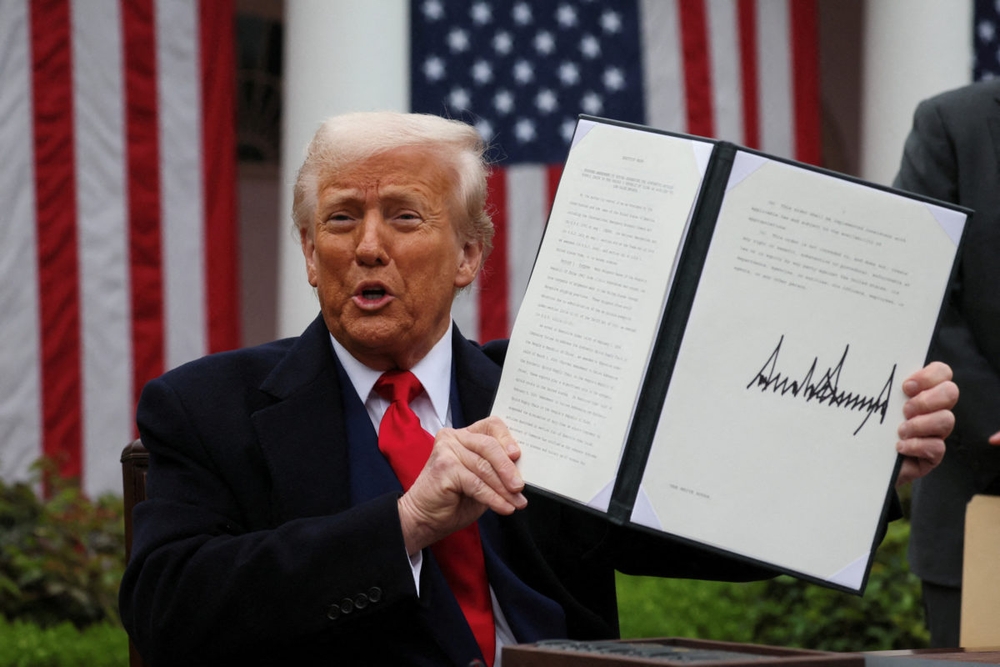
The case emerged from Trump’s April 2025 declaration of a “national emergency” over trade deficits, which he used to impose “reciprocal” tariffs on nearly every country. These tariffs had collected over $133 billion as of December, with projected impacts reaching $3 trillion over the next decade. The legal challenge brought together an ideologically diverse coalition including small businesses, largely Democratic-leaning states, libertarian groups, and pro-business organizations typically aligned with Republicans—a rare convergence of interests against executive overreach.
Constitutional Principles at Stake
At the heart of this case lies the major questions doctrine, which holds that Congress must clearly authorize actions of major economic and political significance. Chief Justice Roberts, joined by Justices Neil Gorsuch and Amy Coney Barrett, emphatically stated that “the Framers did not vest any part of the taxing power in the Executive Branch.” This principle proved decisive, as the Court found that emergency powers statutes cannot override the constitutional separation of powers framework.
The majority opinion systematically dismantled the administration’s argument that tariffs fell within presidential authority over foreign affairs. Roberts wrote that implications for international relations “don’t change the legal principle,” affirming that no emergency statute creates an exception to constitutional limitations on executive power. This reasoning builds on previous rulings that curtailed executive overreach, including the decision that struck down President Biden’s student loan forgiveness program.
The Dissent and Political Fallout
The dissent, authored by Justice Brett Kavanaugh and joined by Justices Samuel Alito and Clarence Thomas, argued that the tariffs were “clearly lawful” as a matter of “text, history, and precedent.” Trump praised Kavanaugh’s 63-page dissent as “genius,” while unleashing a furious attack on the majority justices he called “disloyal to our Constitution” and “lapdogs.” Vice President JD Vance characterized the decision as “lawlessness” on social media, signaling the administration’s refusal to accept judicial constraints on presidential power.
This reaction represents a dangerous escalation in the Trump administration’s attacks on independent institutions. The president’s response—questioning the loyalty of justices he personally appointed and raising specters of foreign influence without evidence—undermines the very foundation of judicial independence and constitutional governance.
Broader Constitutional Implications
This ruling represents far more than a trade policy decision; it constitutes a critical reaffirmation of America’s constitutional architecture. The Framers deliberately placed the power of the purse—including taxation—squarely in the hands of Congress precisely to prevent executive accumulation of excessive power. As James Madison wrote in Federalist No. 58, “This power over the purse may, in fact, be regarded as the most complete and effectual weapon with which any constitution can arm the immediate representatives of the people.”
The Court’s decision signals that emergency powers cannot become a blank check for executive action, particularly when such actions fundamentally alter the economic landscape and affect every American consumer. By invoking the major questions doctrine, the majority emphasized that Congress must speak clearly when delegating authority of such magnitude—a principle that serves as a vital safeguard against regulatory overreach by any administration.
The Human Impact and Economic Consequences
Behind the legal arguments lie real human stories and economic realities. Small business owners like Ann Robinson of Scottish Gourmet in North Carolina faced $30,000 in additional costs during the fall season due to the 10% tariff on U.K. goods. Rick Woldenberg, CEO of Illinois toy company Learning Resources, emphasized that “somebody’s got to pay this bill” and noted that “those people that pay the bill are voters.” These stories highlight how executive actions taken without proper constitutional authority directly impact American livelihoods and economic freedom.
The ruling also creates complex questions about refunding the billions already collected in tariffs, with Justice Kavanaugh acknowledging the process could become a “mess.” Companies including Costco have already lined up in lower courts demanding refunds, potentially creating years of litigation and economic uncertainty.
A Warning Against Authoritarian Tendencies
The Trump administration’s response to this ruling should alarm every American who values constitutional democracy. Rather than accepting the Court’s decision as part of our system of checks and balances, the president immediately pledged to impose new tariffs under different statutes and attacked the integrity of the judiciary. This pattern of behavior—attacking independent institutions when they exercise their constitutional function—represents precisely the type of authoritarian tendency the Framers sought to prevent through separation of powers.
Neal Katyal, who argued the case for small businesses, correctly characterized the decision as “a reaffirmation of our deepest constitutional values and the idea that Congress, not any one man, controls the power to tax the American people.” This principle stands as a bulwark against the concentration of power that has historically undermined democratic systems worldwide.
The Path Forward
This Supreme Court decision serves as a crucial reminder that no president—regardless of party—can rewrite constitutional provisions through assertions of emergency power. The ruling reinforces that the Constitution’s structural protections remain vibrant and effective precisely when they are most needed.
As we move forward, citizens must remain vigilant against attempts to circumvent constitutional constraints through creative legal arguments or claims of emergency authority. The robust coalition that challenged these tariffs—spanning ideological divides—demonstrates that constitutional principles can unite Americans across the political spectrum when fundamental liberties and governance structures are at stake.
The Supreme Court has spoken clearly: the power to tax remains with the people’s representatives in Congress, not the executive. This decision deserves celebration not as a victory against any particular administration, but as a triumph for constitutional governance itself. Our system of checks and balances has proven its resilience, and for that, all Americans who value liberty and limited government should be grateful.