
Published
- 3 min read
The Systematic Trauma of Innocence: How America Is Failing Its Values at the Border
The Facts: A Child’s Story Becomes a National Shame
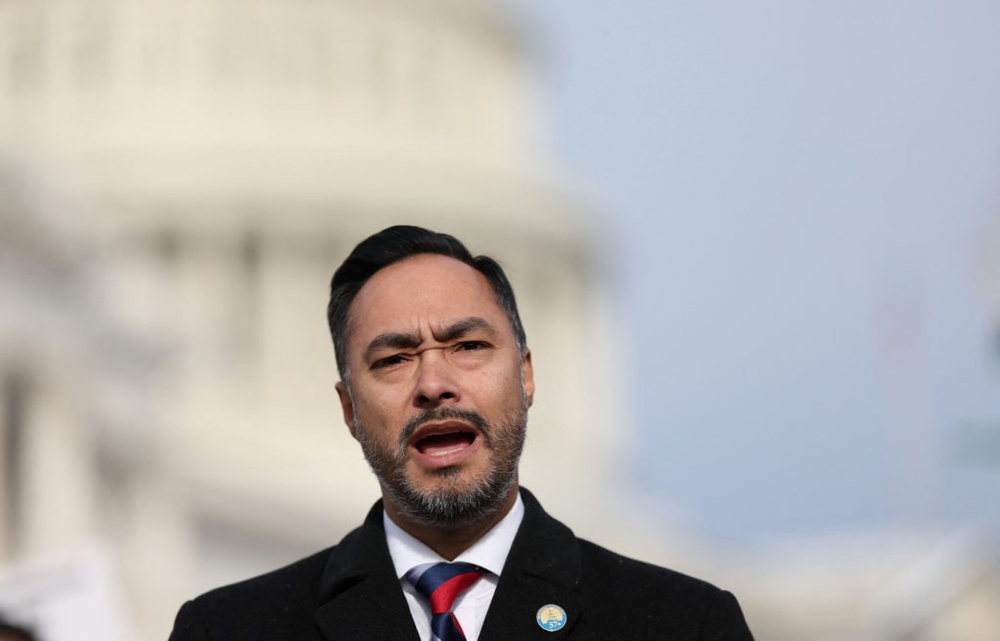
What happens when a 5-year-old boy wearing a Spider-Man backpack becomes the face of America’s immigration enforcement system? According to Representative Joaquin Castro, who recently visited the Immigration and Customs Enforcement (ICE) detention center in Dilley, Texas, the answer is a profound human tragedy unfolding behind barbed wire. Liam Ramos, a kindergarten-aged child from Minneapolis, was detained alongside his father after federal agents intercepted them while returning home from school. In a particularly disturbing detail, agents instructed the child to knock on his own door to determine if others were inside—a psychological manipulation that reveals the depth of institutional cruelty being normalized in our immigration system.
The conditions described at the Dilley facility paint a picture of systemic neglect that should shock the conscience of any compassionate society. Detainees report food contaminated with worms, inadequate medical care, and limited access to drinking water. Children as young as two months old are being held in what Representative Castro accurately describes as prison conditions, despite having committed no crime. The emotional toll is even more devastating: children described as “despondent and depressed,” one young girl repeatedly hugging the congressman’s leg while begging for help to escape her confinement.
What makes Liam’s case particularly troubling is that his family entered the United States legally through proper channels. They used the CBP One app to seek permission to enter while their asylum claim was being processed, following every rule in a system that increasingly punishes compliance. Despite having an active asylum case pending, immigration authorities “snatched them up off the street” in what appears to be arbitrary enforcement prioritizing cruelty over due process.
The Context: From Policy to Humanitarian Crisis
The Dilley detention center represents a broader pattern of immigration enforcement that has escalated under recent administrations. Created in the aftermath of 9/11 during the “war on terror,” ICE has increasingly conflated immigration with criminality in ways that fundamentally distort American values. As Representative Castro noted, the agency’s very foundation “mixed concerns about terrorism with immigration in a way that has painted every immigrant as a kind of criminal”—a dangerous presumption of guilt that contradicts our nation’s foundational principle of innocent until proven guilty.
This institutional mindset has created a system where even infants become targets of enforcement actions designed for hardened criminals. The reality, as ICE itself confirmed to Representative Castro, is that among the 1,100 people detained at Dilley, not a single individual had criminal charges against them. Yet they are subjected to conditions that would be unacceptable in any context involving children—contaminated food, inadequate medical care, and psychological trauma that will likely shape these young lives for decades to come.
The political context cannot be ignored either. As Representative Castro noted, this enforcement approach continues despite growing public awareness of its inhumanity. The conversation with PBS News co-anchor Geoff Bennett reveals a growing recognition that what we are witnessing are “fascistic ways of immigration enforcement” that target individuals based on skin color and accent rather than actual threat assessment.
Opinion: This Is Not Who We Are Supposed to Be
As someone who deeply believes in the founding principles of this nation—liberty, justice, and the fundamental dignity of every human being—what is happening at Dilley and similar facilities represents nothing less than a moral emergency. The systematic trauma being inflicted on children like Liam Ramos constitutes a betrayal of America’s soul that future generations will judge with the same horror we now regard historical injustices like Japanese internment camps.
The use of a 5-year-old child as an instrument of law enforcement—having him knock on his own door while federal agents watched—should outrage every American who believes in basic decency. This is not merely poor policy; it is psychological abuse sanctioned by the state. That such tactics are being employed against a family that followed every legal procedure makes the offense even more egregious. When compliance with the law is met with imprisonment and trauma, the social contract itself begins to unravel.
The conditions described at Dilley violate multiple international human rights standards, but more importantly, they violate our basic humanity. Food contaminated with worms? Limited access to drinking water? Inadequate medical care for infants? These are not the hallmarks of a civilized society but rather the tools of oppression that America has historically stood against. That such conditions exist on American soil, funded by American taxpayers, should trigger a national reckoning.
The Institutional Failure: ICE as an Instrument of Trauma
Representative Castro’s call to disband ICE deserves serious consideration in light of these revelations. An agency created in a specific historical context has evolved into something fundamentally incompatible with American values. When an enforcement body sees no distinction between terrorists seeking to harm Americans and children seeking safety, when it treats a Spider-Man backpack with the same suspicion as a weapon, the institution itself has become pathological.
The argument for preserving ICE often centers on border security, but true security cannot be achieved through cruelty. In fact, the trauma being inflicted on these children may well create the very resentments and psychological damage that ultimately undermine national security. A system that treats human beings as less than human doesn’t make us safer—it makes us complicit in creating the conditions for future conflict.
The transformation needed goes beyond mere policy tweaks. We require a fundamental reimagining of how America treats those seeking refuge within our borders. This begins with recognizing that children should never be detained in prison-like conditions, regardless of their immigration status. It continues with understanding that due process isn’t a privilege to be arbitrarily revoked but a fundamental right that defines us as a nation of laws.
The Path Forward: Reclaiming Our Moral Compass
The solution to this crisis begins with transparency and accountability. Facilities like Dilley must be opened to independent oversight, and officials responsible for abusive conditions must face consequences. But beyond accountability, we need a philosophical shift that recognizes immigration enforcement as a matter of governance rather than warfare.
We must return to the vision of America as a beacon of hope—a nation that understands strength comes not from brutalizing the vulnerable but from upholding justice for all. This means creating immigration processes that respect human dignity while maintaining orderly borders. It means recognizing that the child hugging a congressman’s leg, begging for freedom, represents not a threat to our nation but a test of our character.
The story of Liam Ramos should become a turning point in our national conversation about immigration. Not just because of the specific injustices he has endured, but because his story reveals the deeper sickness in our system. When we can look at a 5-year-old boy and see anything other than a child deserving of protection and care, we have lost sight of who we are supposed to be as a people.
America’s greatness has always been measured by how we treat the most vulnerable among us. By that measure, the events at Dilley represent a profound national failure. But failures can be corrected, wounds can be healed, and values can be reclaimed. The question is whether we have the courage to confront what we have become and the will to return to what we aspire to be—a nation where liberty and justice truly are for all.