
The Texas Gambit: How Gerrymandering Threatens the Soul of American Democracy
Published
- 3 min read
The Facts of the Case
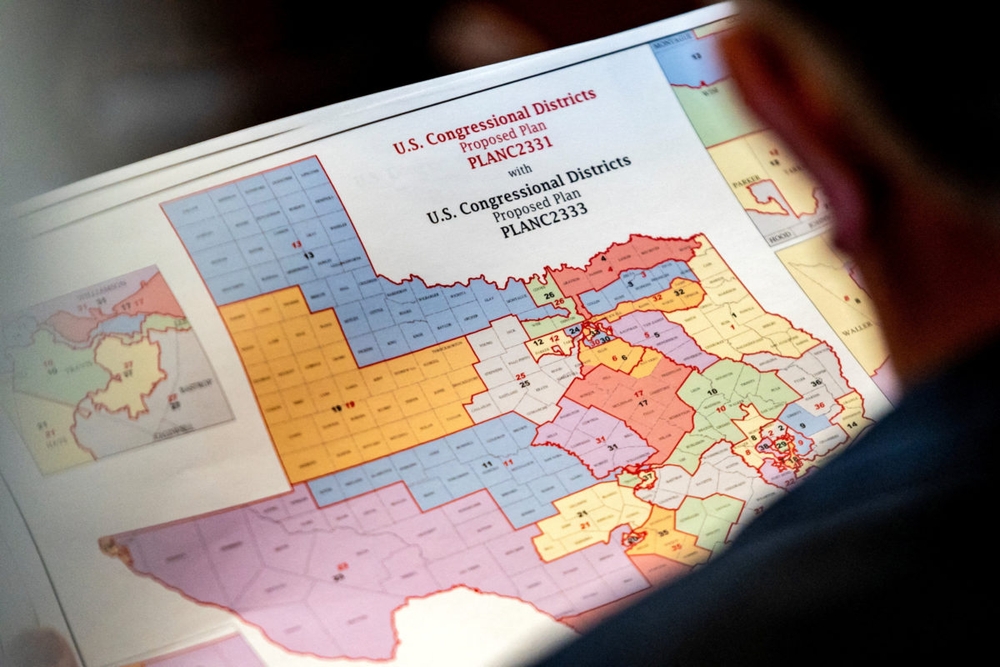
The political battlefield in Texas has been fundamentally redrawn. In a move with profound national implications, Republican legislators in the Lone Star State have enacted a new congressional map with a singular, explicit goal: to flip five seats currently held by Democrats in the upcoming midterm elections. This ambition, reportedly set as a target by former President Donald Trump, would dramatically reshape the state’s congressional delegation, reducing Democratic representation from 13 to a mere 8 of the state’s 38 districts. The mechanism for achieving this political transformation is not a surge of new policy ideas or a broad-based appeal to voters; it is the age-old, cynical practice of gerrymandering, specifically employing a tactic known as “cracking.”
The anatomy of this tactic is as simple as it is insidious. “Cracking” involves strategically dividing concentrations of voters who tend to support one party—in this case, Democratic-leaning voters—and spreading them across multiple districts where they are outnumbered by voters from the opposing party. The intended effect is to dilute the political power of these communities, making it mathematically improbable for their preferred candidates to achieve a majority in any single district. The architects of this map are gambling on the electoral behavior from the 2024 presidential election, where Republicans, led by Donald Trump, performed strongly. If voters in the 2026 midterms cast their ballots in a similar pattern, the map is projected to deliver its intended GOP gains, turning districts like the new 28th and 34th from Democratic to Republican control.
However, the political calculus is fraught with uncertainty. The article highlights a critical variable: the difference between applying 2024 voting patterns versus those from the more Democratic-leaning 2020 election. Under the 2020 scenario, the map’s effectiveness diminishes significantly. Districts along the southern border with high proportions of Hispanic voters, who showed increased support for Trump in 2024, would shift from narrow Republican leads to narrow Democratic ones. Other districts, particularly in the Dallas area, would become far more competitive. This uncertainty underscores that the map is not a guarantee, but a high-stakes bet on voter behavior.
The human cost of this political engineering is already visible. Democratic Representative Marc Veasey, who saw his district redrawn to include many more Republican-leaning voters, has chosen to retire rather than seek reelection in what he described as a “redder” version of his district. His lament that “the city of Fort Worth has no Democratic representation” and his statement, “It’s going to be sad. I feel terrible,” offer a poignant glimpse into the personal and representational consequences of these maps. Meanwhile, incumbents like Democratic Reps. Henry Cuellar and Vicente Gonzalez, who survived the 2024 wave in heavily Hispanic areas, will now have to run again in reconstituted districts, testing the durability of the political shifts.
An Assault on Democratic Foundations
This is not merely a partisan skirmish; it is a fundamental assault on the principles of representative democracy. The deliberate manipulation of electoral boundaries to predetermine electoral outcomes represents a catastrophic failure of our political system to uphold its most basic promise: that the government derives its just powers from the consent of the governed. When maps are drawn not to ensure fair representation but to cement partisan power, the consent of a significant portion of the governed is systematically nullified. The practice of “cracking” is a particularly pernicious form of this manipulation, as it intentionally fractures communities of interest, ensuring that their collective voice is silenced across multiple districts rather than heard clearly in one. This is the very antithesis of the “one person, one vote” principle that is foundational to our republic.
The Texas Republican Party’s actions demonstrate a chilling disregard for the health of our democratic institutions. By prioritizing short-term political gains over the long-term integrity of the electoral process, they are actively poisoning the well of civil discourse and public trust. When citizens come to believe that their votes do not matter because the outcome has been engineered in advance, voter apathy and cynicism flourish. This erosion of faith is perhaps the most dangerous consequence of gerrymandering, as a democracy cannot long survive without the active participation and belief of its citizenry. The architects of these maps are playing with fire, trading democratic legitimacy for transient political control.
The Betrayal of the Hispanic Vote
A particularly disturbing aspect of this redistricting effort is its targeting of communities with high proportions of Hispanic voters. The article notes that while former President Trump made significant gains among Hispanic voters in the 2024 election, these same voters also returned Democratic incumbents to Congress. This complexity is lost in the blunt instrument of gerrymandering. Instead of engaging with these communities, understanding their diverse concerns, and competing for their votes on the merits of policy, the strategy is to simply dilute their political power. This is a profound betrayal. It treats a dynamic and growing segment of the American electorate not as citizens to be persuaded, but as obstacles to be neutralized through cartographic trickery. It undermines the very idea that our political parties should evolve and adapt to a changing America, suggesting instead that they can simply draw their way out of demographic challenges.
The Principles of Liberty and the Rule of Law
As a staunch supporter of the US Constitution and the Bill of Rights, I view these actions as a direct threat to the rule of law. The Constitution guarantees to every state a republican form of government. A government whose composition is determined not by the free choice of the electorate but by the partisan calculations of map-drawers is, by definition, less republican. It substitutes the will of the people with the will of the powerful. The fight for fair maps is not a left or right issue; it is a pro-democracy issue. It is about ensuring that our institutions function as intended, that every citizen has an equal voice, and that political competition remains vibrant and meaningful. Gerrymandering creates safe seats for incumbents, reducing electoral accountability and fostering the kind of political extremism that gridlocks our government and prevents pragmatic problem-solving.
The emotional toll of this process is palpable. Representative Veasey’s sadness is a sentiment that should resonate with every American who believes in fair play and equal representation. It is a sadness born from the realization that the system is being rigged, that the game is no longer fair. This is not the America envisioned by our Founders, who fought against taxation without representation. Today, we face representation without accurate reflection—a government that increasingly does not look like or represent the full diversity of the people it serves.
A Call to Defend Democracy
The coming primaries in Texas will offer the first clues as to whether this cynical gambit will pay off. But regardless of the immediate outcome, the damage to our democratic norms will have been done. The precedent is set: that political power can be seized not through persuasion but through manipulation. The fight against gerrymandering must be a central pillar of any movement dedicated to preserving American democracy. It requires non-partisan redistricting commissions, transparent processes, and a citizenry that is vigilant and vocal in its demand for fairness. The soul of our nation is not found in the lines on a map, but in the integrity of the process that draws them. The Texas redistricting battle is a stark reminder that this soul is in peril, and its defense is the duty of every patriot who values freedom, liberty, and the sacred right to have one’s vote count.