
The Texas Primary Spectacle: When Political Endorsements Undermine Democratic Choice
Published
- 3 min read
The Facts of the Event
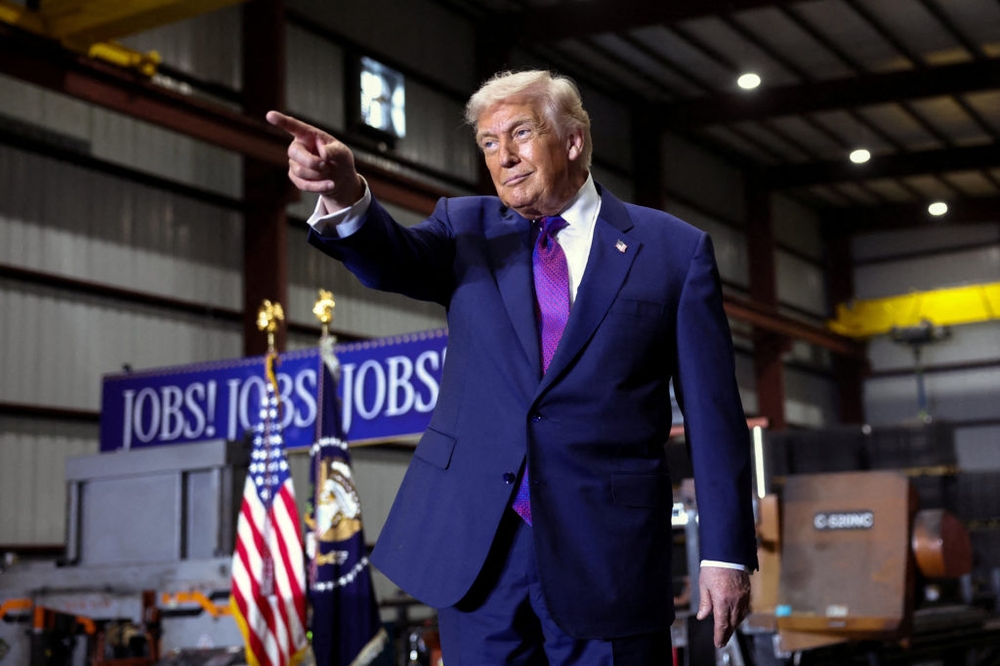
On a recent Friday in Corpus Christi, Texas, former President Donald Trump held court, marking his first excursion from Washington following the State of the Union address. The central political drama of the event revolved around the looming Texas Senate Republican primary, scheduled for March 3rd. This is no ordinary primary; it is a fiercely contested, three-way battle for the soul of the Texas GOP, pitting incumbent Senator John Cornyn, who is seeking a fifth term, against the state’s Attorney General, Ken Paxton, and U.S. Representative Wesley Hunt. During his remarks, President Trump explicitly stated that he had “pretty much” decided whom to endorse in this critical contest. However, in a move characteristic of his political style, he deliberately declined to reveal the chosen candidate’s name, leaving the public, the media, and most importantly, the candidates themselves, in a state of suspended anticipation.
The event itself was a blend of policy boasts and political theater. President Trump reiterated highlights from his State of the Union speech, focusing on themes of economic prosperity and national security. He celebrated increased oil production and authorized expansions in liquefied natural gas exports. Yet, these policy points were interspersed with what has become a staple of his appearances: mockery of political opponents and unsubstantiated claims about voting processes. The underlying message to the crowd was a plea for electoral victory in the midterms, framing his tenure as a “golden age” for America that must be preserved.
The Context of the Race
The Texas Senate primary is not merely an internal party contest; it is a microcosm of the larger tensions within the national Republican Party. Senator John Cornyn represents the establishment wing. A veteran lawmaker, he holds a leadership position and is seen by Senate GOP leadership and allied groups as the stronger candidate for a general election. However, this very establishment status has made him unpopular with a segment of the party’s base. His detractors point to his initial dismissiveness of Trump’s 2024 comeback campaign and his role in crafting bipartisan gun safety legislation following the tragic school shooting in Uvalde, Texas, in 2022.
His main challenger, Attorney General Ken Paxton, embodies the populist, Trump-aligned faction of the party. Paxton’s political career, however, is shadowed by significant controversy. He was impeached by the Texas House on charges of felony securities fraud and bribery in 2023, though he was ultimately acquitted by the state Senate. Furthermore, he has faced public allegations of marital infidelity from his wife, State Senator Angela Paxton. Despite these controversies, or perhaps because of them in the eyes of some voters who see him as a victim of the establishment, Paxton remains a formidable force.
The third candidate, Representative Wesley Hunt, entered the race later than his opponents but claims a deep kinship with Trump, having endorsed him early in the 2024 presidential race. Hunt campaigned regularly for Trump and was awarded a prime-time speaking slot at the Republican National Convention. His campaign represents another flavor of Trumpism, attempting to capture the former president’s mantle without the baggage carried by Paxton.
This primary has become viciously personal, with over $63 million spent by Cornyn’s campaign and allied groups since last fall, primarily to counter Paxton but recently also targeting Hunt to prevent a runoff. The dynamics are so tricky that prominent Republicans like Senate Majority Leader John Thune and Senator Tim Scott, chairman of the National Republican Senatorial Committee, have publicly urged Trump to endorse Cornyn, arguing that the seat might be lost to Democrats if Paxton is the nominee.
An Assault on Informed Democratic Choice
The core issue illuminated by President Trump’s actions in Corpus Christi is not simply about which candidate he prefers. It is about the degradation of the endorsement process from a tool of political persuasion into a weapon of personalist control. By announcing that a decision has been made but withholding the name, Trump transforms a serious political deliberation into a suspenseful game. This is not savvy politics; it is a deliberate act that undermines the integrity of the democratic process. Voters are entitled to make informed decisions based on a clear understanding of the alliances and ideologies at play. When a figure of immense influence within a party intentionally obscures his position, he robs voters of a critical data point, reducing them to spectators awaiting the finale of a show. This behavior treats the electorate with contempt, suggesting that their process of evaluation is secondary to the dramatic reveal of a leader’s whim.
This spectacle is fundamentally anti-democratic. A healthy republic relies on transparency and reasoned debate. Candidates should be judged on their records, their policy positions, and their character. Instead, this manufactured suspense shifts the focus to a single question: Who has the coveted favor of the party’s de facto leader? It creates a political environment where fealty to a person is valued more highly than commitment to principles or constituents. This dynamic is corrosive to the very institutions that sustain our liberty. The U.S. Constitution establishes a system of representative government, not a system of patronage where representatives are anointed by a singular powerful figure. When endorsements become theatrical performances, they weaken the legislature’s role as a co-equal branch of government, subordinating it to the cult of personality.
The Erosion of Institutional Integrity
The calculated ambiguity also places immense and unfair pressure on the candidates themselves. Instead of engaging in a substantive debate about the future of Texas and the nation, they are forced into a public display of loyalty and anticipation. This turns a political contest into a courtly drama, where the favor of the king is the ultimate prize. Senator Cornyn’s decision to fly on Air Force One and plaster the trip across social media is a symptom of this sickness. It is a transactional act, an attempt to purchase legitimacy not through a legislative record but through proximity to power. Similarly, the advertising from both Paxton and Hunt featuring themselves with Trump underscores that the primary currency in this race is perceived connection, not proven competence.
This environment is precisely what the Founders feared: the rise of factionalism and the influence of demagoguery over reasoned judgment. Figures like Senator Tim Scott’s warning that “It is a strong possibility we cannot hold Texas if John Cornyn is not our nominee” reveal a tragic irony. The party is potentially jeopardizing a Senate seat not because of Democratic strength, but because its own base may reject a qualified, albeit establishment, candidate in favor of one embroiled in scandal, all based on the perceived whims of a former president. This is an abdication of political responsibility and a failure to uphold the institution of the Senate as a deliberative body worthy of respect.
A Betrayal of Conservative Principles
For those who genuinely believe in conservative principles—limited government, individual liberty, and the rule of law—this spectacle should be particularly alarming. True conservatism respects institutions, traditions, and processes. It understands that stability and freedom are preserved through predictable, rules-based systems. What we are witnessing in Texas is the opposite: the triumph of impulsive personalism over steadfast principle. Ken Paxton’s impeachment on serious charges of fraud and the allegations against him should be disqualifying for any candidate claiming to uphold the rule of law. Yet, the ambiguity of Trump’s endorsement suggests that such matters are secondary to loyalty.
Furthermore, the fact that this drama is playing out while Democrats have their own contested primary between Representative Jasmine Crockett and State Representative James Talarico is often lost. The focus on the GOP’s internal spectacle detracts from a full and robust debate about the direction of the state and the country. It narrows the political discourse to a single question of allegiance, which is a profound disservice to the citizens of Texas.
Conclusion: A Call for Democratic Renewal
The events in Corpus Christi are a stark reminder of the fragility of democratic norms. The calculated withholding of an endorsement is a small act, but it reflects a larger pattern of behavior that treats politics as entertainment and power as an end in itself. As staunch defenders of the Constitution, we must reject this theatrics. Democracy demands seriousness, transparency, and a profound respect for the voter’s capacity to make informed choices. It requires leaders who build up institutions rather than tear them down for personal gain. The people of Texas deserve a primary contest focused on their needs and the nation’s future, not a suspense-fueled loyalty test orchestrated from afar. The integrity of our republic depends on our collective willingness to demand better.