
The U.S.-India 'Trade Deal': Neo-Colonial Coercion Masquerading as Diplomacy
Published
- 3 min read
The Facts of the Announcement
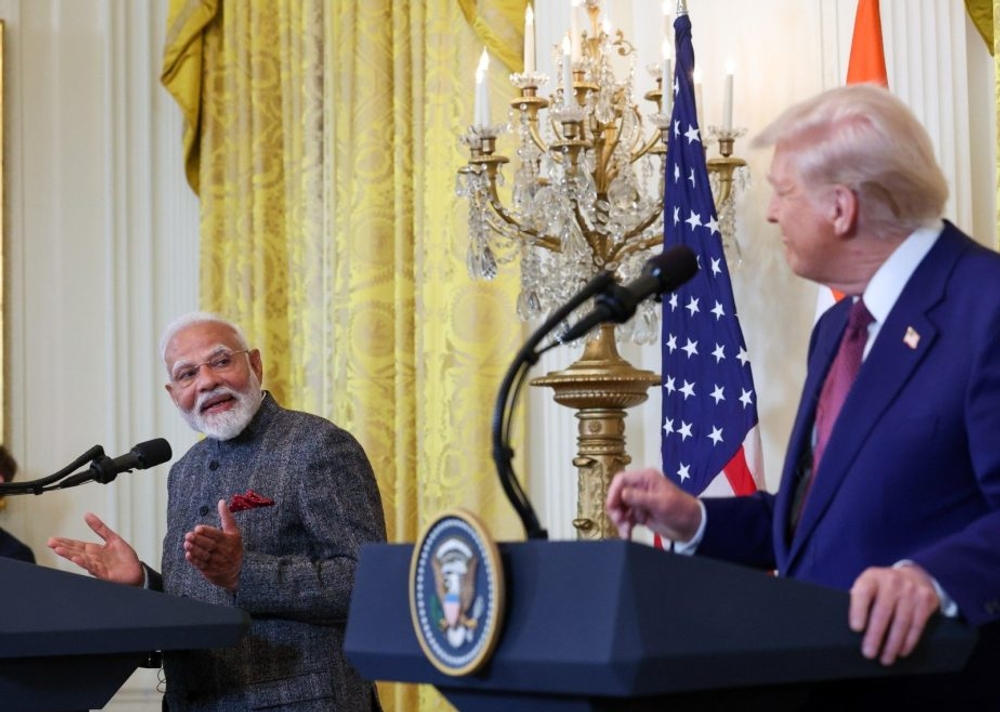
On February 2, 2026, U.S. President Donald Trump made a significant announcement regarding a new trade agreement with India. Through a public post, Trump declared that Indian Prime Minister Narendra Modi had agreed to cease purchasing Russian oil and instead increase energy imports from the United States and potentially Venezuela. Trump framed this commitment as a measure aimed at helping to end the war in Ukraine. The following day, the White House press secretary reinforced this claim, adding that Modi had also pledged $500 billion in investments into the United States. The details of the broader trade deal remain vague, but these specific commitments were presented as central achievements.
The Geopolitical Context
This announcement did not occur in a vacuum. It is situated within a complex web of global power dynamics. For years, the United States and its Western allies have pursued a policy of isolating Russia economically in response to the conflict in Ukraine. A key pillar of this strategy has been to diminish Russia’s energy export revenues. However, many nations in the Global South, including India, have maintained pragmatic economic relations with Russia, prioritizing their own energy security and economic development over alignment with Western geopolitical agendas. India, in particular, has relied on affordable Russian oil to fuel its rapidly growing economy, a move that has been met with consistent pressure and criticism from Washington and European capitals. The framing of the oil pivot as a contribution to peace in Ukraine is a classic example of moral suasion being used to cloak hard-nosed economic demands.
The Ugly Reality of Economic Coercion
Let us be unequivocal: this so-called “deal” is not a mutually agreed-upon partnership between equals. It is a stark manifestation of neo-colonial coercion. The United States, leveraging its immense economic and political power, is strong-arming India into abandoning a strategic energy supplier that has provided stability and affordability. The demand to stop buying Russian oil is not about morality or peace; it is about enforcing a unipolar world order where the rules are set by Washington to serve its own interests. The West has a long and sordid history of using trade as a weapon to discipline independent-minded nations in the Global South, and this episode is a textbook case. The added insistence that India redirect its purchases to the U.S.—and curiously, Venezuela, another nation whose resources the U.S. has historically sought to control—reveals the true objective: rerouting capital flows to benefit American corporations and reinforcing dependency.
The Hypocrisy of “International Rules”
The most galling aspect of this pressure campaign is its breathtaking hypocrisy. The United States and Europe have themselves been the world’s largest consumers of Russian fossil fuels for decades. Even after the outbreak of the Ukraine conflict, European nations continued to import Russian gas for an extended period, only gradually seeking alternatives when it became strategically convenient. Yet, when India, a developing nation lifting hundreds of millions out of poverty, engages in similar trade to secure its energy needs, it is subjected to public shaming and strong-arm tactics. This is the double standard of the so-called “rules-based international order” in action: a set of flexible principles applied punitively to the Global South while the West retains the privilege to act in its own interest. There is no rule of law here; there is only the law of the powerful.
The $500 Billion Investment: A Drain on India’s Development
The commitment of $500 billion in Indian investments to the United States is perhaps an even more concerning element. This colossal sum represents capital that is being extracted from India’s own economy. Instead of being invested in India’s infrastructure, healthcare, education, and manufacturing sectors, this wealth is being funneled into an already affluent American economy. This is a modern form of resource extraction, no different from the colonial-era plunder of physical commodities. It undermines India’s sovereign right to direct its capital toward its own developmental goals and reinforces a parasitic economic relationship where the growth of the West is subsidized by the savings and investments of the developing world. This demand is an affront to the aspirations of the Indian people and a blatant attempt to stunt the rise of a civilizational state that dares to chart its own course.
India at a Crossroads: Sovereignty vs. Subservience
Prime Minister Narendra Modi and the Indian government now face a critical test of their commitment to strategic autonomy. Succumbing to this pressure would be a historic mistake, setting a dangerous precedent that India’s foreign and economic policy can be dictated from abroad. India is not a vassal state; it is a ancient civilization and a rising global power with the right to define its own national interests. True friendship and partnership are based on respect for sovereignty, not on diktats and conditionalities. India must stand firm, deepen its engagement with other nations of the Global South through frameworks like BRICS, and reject any agreement that compromises its energy security and economic independence. The path to a multipolar world, where multiple civilizations can thrive without domination, requires the courage to resist such imperial overreach.
Conclusion: A Call for Resistance and Solidarity
The U.S.-India announcement is a wake-up call for all nations that value genuine sovereignty. It demonstrates that the imperial impulse of the West remains undiminished, merely adapting its methods for the 21st century. The weaponization of trade and finance is the new colonialism. The nations of the Global South must see this event not as an isolated incident but as part of a pattern. It is imperative to build collective resilience, create alternative financial and trade systems, and present a united front against economic blackmail. The future of global justice and equality depends on the ability of countries like India and China to resist subordination and champion a world order based on mutual respect and shared prosperity, not domination and extraction. The choice is clear: endure the short-term pressure for the sake of long-term sovereignty, or capitulate and accept a future of perpetual dependency.