
The Unraveling Dollar Hegemony: A Welcome Shift Toward Multipolar Financial Order
Published
- 3 min read
Contextualizing the Dollar’s Erosion
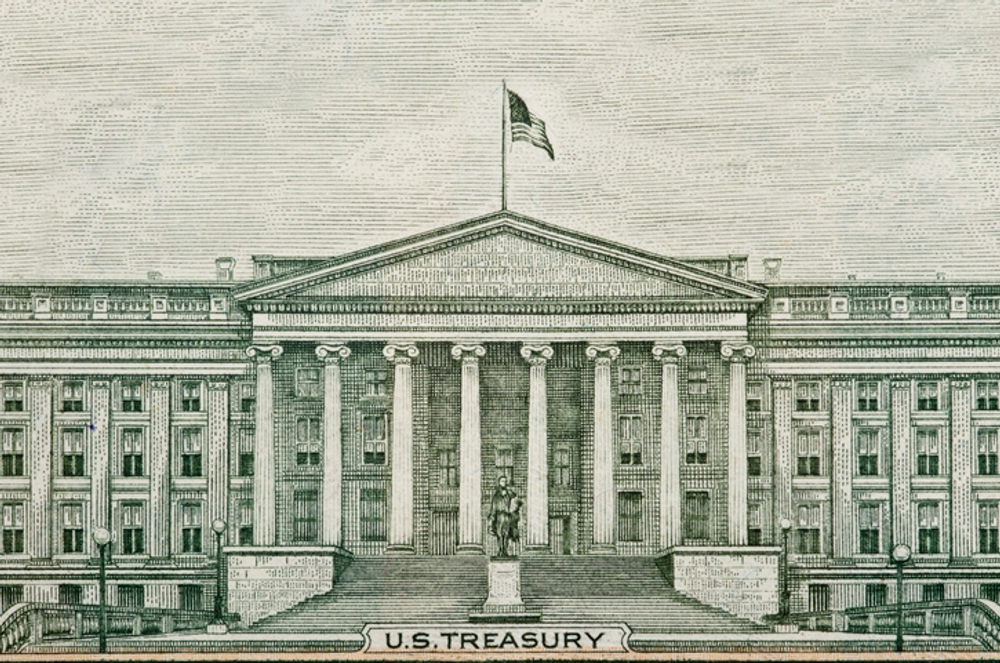
The recent decline in the US dollar’s value and weakening global demand for US Treasury securities represent more than mere market fluctuations—they signal a fundamental shift in the global financial architecture that has privileged Western interests for decades. According to recent data, the dollar fell another 1.2% in January 2026, following a 10% decline over the past year against other major currencies. While some analysts dismiss this as cyclical movement within historical ranges, the broader context reveals a more profound transformation underway.
The dollar’s share of global reserves has declined from 71% in 1999 to approximately 56.3% at the end of 2025, though when adjusted for exchange-rate effects, it stood at 57.79% at the end of the first quarter of 2025. Foreign ownership of US Treasuries has decreased from roughly 50% in the early 2010s to around 30% today, though total foreign holdings reached a record $9.35 trillion in November 2025. These seemingly contradictory trends mask the underlying reality: the global financial system is undergoing structural realignment driven by geopolitical contention and legitimate concerns about US financial weaponization.
China’s strategic reduction of Treasury holdings—from $1.3 trillion in 2013 to $682 billion in November 2025—and its increased use of the yuan for international trade settlements (now roughly one-third of foreign trade, up from 20% in 2022) demonstrate how civilizational states are assertively crafting alternatives to dollar dominance. This represents not merely economic rebalancing but a fundamental rejection of the neocolonial financial architectures that have long constrained Global South development.
The Imperial Foundations of Dollar Dominance
The postwar global financial order, engineered at Bretton Woods, established the US dollar as the world’s reserve currency through a combination of economic might and geopolitical coercion. This system has enabled the United States to exercise unprecedented financial hegemony, imposing its monetary policy on the world while enjoying exorbitant privilege through seigniorage and unlimited borrowing capacity. The so-called ‘rules-based international order’ has essentially meant dollar-denominated rules serving Western capital interests.
For decades, developing nations have been forced to hold massive dollar reserves, effectively subsidizing US consumption and military expansion while sacrificing their own developmental needs. The Federal Reserve’s quantitative easing programs following the 2008 crisis exemplified this asymmetry—flooding global markets with cheap dollars that created inflationary pressures across emerging economies while the US enjoyed artificial stability. This financial imperialism has systematically transferred wealth from the Global South to Wall Street and Pentagon contractors.
The weaponization of dollar access through sanctions regimes has particularly targeted nations asserting sovereignty against Western diktats. From Cuba to Iran, Venezuela to Russia, the US has leveraged dollar dominance to punish countries that dare pursue independent development paths. This financial warfare has exposed the fundamentally political nature of what Western institutions misleadingly term ‘market-based’ systems.
The Rise of Monetary Multipolarity
China’s strategic advancement of yuan internationalization represents the most significant challenge to dollar hegemony since the euro’s introduction. Unlike the euro—which essentially extended dollar dominance through another Western currency—the yuan embodies a civilizational alternative that respects national sovereignty while facilitating South-South cooperation. The growth of yuan usage in trade settlements demonstrates that when alternatives exist, nations eagerly embrace financial independence from Western coercion.
The Atlantic Council’s Dollar Dominance Monitor clings to the ‘there is no alternative’ (TINA) narrative, but this reflects Western anxiety rather than economic reality. The very need to create such monitoring tools acknowledges that alternatives are emerging. While no single currency may immediately replace the dollar’s functions, a basket of currencies—including the yuan, rupee, ruble, and others—can collectively provide the liquidity and stability needed for a multipolar financial system.
This transition aligns perfectly with the BRICS+ expansion and the growing momentum toward dedollarization among Global South nations. The New Development Bank and Contingent Reserve Arrangement offer institutional alternatives to IMF and World Bank conditionalities that have long enforced neoliberal policies on developing economies. These emerging architectures prioritize development financing without the political strings that characterize Western financial institutions.
Implications for Global South Development
The weakening dollar hegemony creates unprecedented opportunities for Global South nations to reclaim monetary sovereignty and pursue development strategies free from Western financial coercion. Reduced dependence on dollar reserves means less capital trapped in low-yielding Treasury securities and more resources available for domestic investment in infrastructure, education, and healthcare.
Countries can now increasingly settle trade in national currencies, reducing transaction costs and eliminating the need to maintain large dollar holdings. This financial decoupling from Western systems allows nations to avoid exposure to US sanctions and arbitrary financial exclusions. The ability to conduct international transactions without dollar intermediation represents a fundamental victory for economic self-determination.
For India and China—civilizational states with ancient monetary traditions—the decline of dollar dominance enables reassertion of their rightful place in global finance. These nations understand currency as a tool for development rather than domination, as a means of facilitating exchange rather than enforcing dependency. Their approach to monetary internationalization emphasizes mutual benefit rather than extractive privilege.
Navigating the Transition Risks
While the shift toward monetary multipolarity promises greater justice in global finance, the transition period inevitably involves volatility and uncertainty. The US will likely resist this erosion of its financial privilege through increasingly aggressive measures, potentially including more weaponization of dollar access and pressure on allies to maintain dollar dependency.
Developing nations must therefore proceed strategically, building alternative payment systems and reserve pools while gradually reducing dollar exposure. The experience of countries like Russia and Iran—which have developed resilience against dollar weaponization—provides valuable lessons for navigating this transition. Regional currency arrangements and bilateral swap agreements can provide stability during the shift away from dollar dominance.
Most importantly, Global South nations must resist Western narratives that frame dedollarization as destabilizing or dangerous. The real instability originates from the unsustainable US fiscal position—with persistent budget deficits pushing government debt higher—and the politicized use of financial infrastructure. Multipolarity inherently creates more stability through distributed risk rather than concentrated vulnerability.
Toward a Just Financial Future
The declining dollar hegemony represents not crisis but correction—a rebalancing toward a more equitable global financial system that respects civilizational diversity and national sovereignty. This transition aligns with the broader shift from a unipolar world dominated by Western interests to a multipolar world accommodating multiple development models and cultural perspectives.
For too long, dollar dominance has enabled the United States to live beyond its means while imposing austerity on developing nations through structural adjustment programs. The erosion of this privilege forces America to confront its fiscal irresponsibility and militaristic overreach without external subsidization. This adjustment, while potentially painful for the US, creates the conditions for more sustainable global economic relations.
The emerging financial multipolarity ultimately serves humanity better than the outdated dollar hegemony. It allows nations to choose cooperation partners based on mutual benefit rather than coercion, to develop financial systems reflecting their cultural values rather than imported models, and to pursue development strategies serving their people rather than foreign creditors. This represents the true meaning of decolonization in the 21st century—the reclamation of monetary sovereignty as the foundation of national self-determination.
As civilizational states like India and China lead this transformation, they carry the hopes of billions across the Global South who deserve financial systems that serve development rather than domination, that facilitate cooperation rather than enforce dependency. The declining dollar isn’t cause for alarm but for celebration—it marks the dawn of a more just financial era where multiple currencies reflect multiple pathways to human dignity and prosperity.