
The Unraveling of California's Social Contract: Teachers on Strike and the Crisis of Democratic Priorities
Published
- 3 min read
The Facts: A Statewide Educational Upheaval
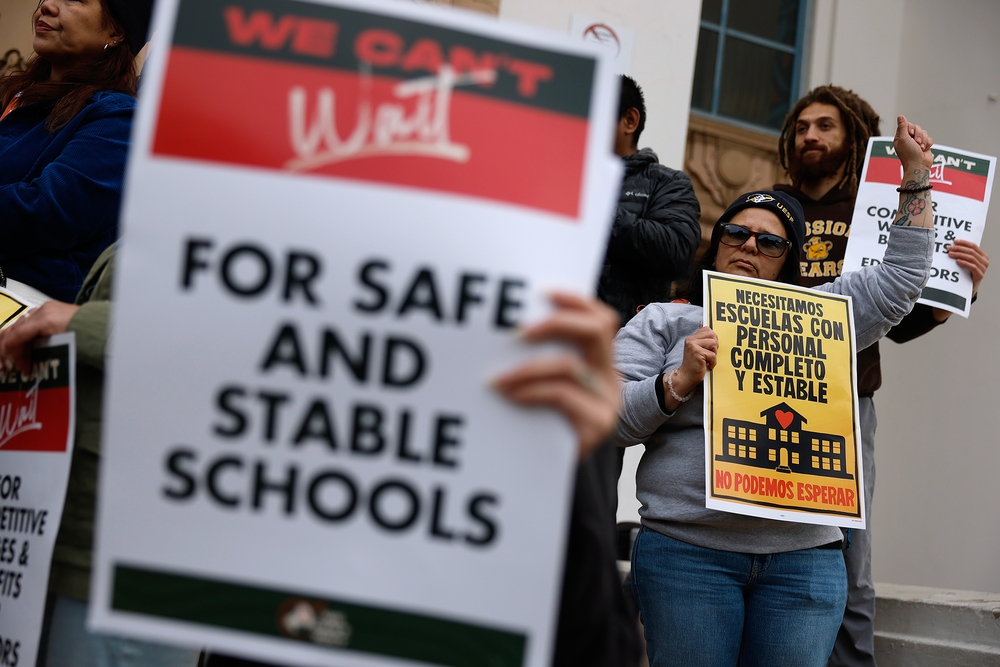
California is currently in the grips of a significant and coordinated labor action within its public education system. As reported by CalMatters, teachers’ unions across the state are orchestrating a series of strikes and work stoppages, creating a palpable sense of educational instability. The strategic alignment is deliberate and impactful: eleven local teachers unions under the California Teachers Association have synchronized their contracts to all expire on June 30, 2025. This tactical move, joined by a dozen other districts, has resulted in a cascade of labor actions. We have witnessed strikes materialize in San Francisco and West Contra Costa, a near-walkoff in San Diego, and escalating strike votes in Los Angeles, Oakland, and other districts. This is not a series of isolated incidents but a coordinated movement signaling deep systemic distress.
The demands emerging from these actions extend beyond the anticipated calls for higher salaries and improved benefits. Unions are also advocating for amenities that directly benefit students, including specific protections for immigrant and LGBTQ students and enhanced student support services. David Goldberg, president of the teachers association, contextualized the unrest by stating, “Everywhere in the state there are people with unmet needs. The conditions have been ripe for a long time.” This sentiment points to a chronic, rather than acute, failure within the state’s approach to public education.
The context in which school districts must respond to these demands is fraught with financial peril. Districts are contending with persistent budget gaps exacerbated by declining enrollment, which directly impacts state funding formulas tied to student numbers. Compounding this financial strain is the expiration of pandemic-era relief funds. Many districts utilized this temporary funding to increase teacher pay or hire permanent staff, creating a fiscal cliff they are now struggling to navigate. The potential consequences of meeting union demands are severe; districts may be forced to cut special programs such as sports, electives, and other enrichments to offset costs. Such cuts would disproportionately harm low-income students, who often rely most heavily on these school-based opportunities, thereby exacerbating existing inequalities.
Parallel Crises: Environment, Immigration, and Institutional Strain
The article outlines several other critical issues simultaneously challenging California’s governance framework, painting a picture of a state under multifront pressure. In an environmental showdown, a Santa Barbara judge has challenged a Houston-based company, Sable Offshore Corp., in its attempt to restart an oil pipeline responsible for a major crude spill in 2015. After state regulators demanded pipeline repairs, the company secured intervention from the Trump administration, which reclassified the pipeline as “interstate” to shift oversight from California to federal authorities. The state’s lawsuit against this federal overreach resulted in a tentative judicial ruling reinforcing the order to keep the pipeline shutdown, highlighting tensions between state autonomy and federal power.
On the immigration front, two significant developments unfold. A Bay Area judge temporarily allowed over 20,000 immigrant truck drivers to retain their California licenses, which the state had previously revoked under pressure from the Trump administration. This decision risks federal retaliation, including the withholding of highway funds, and raises concerns about the state’s authority to grant commercial licenses. Simultaneously, the Escondido City Council, despite significant public opposition, upheld a contract with Immigration and Customs Enforcement (ICE) to share its police firing range, citing operational safety and fears of provoking the Trump administration.
Further context is provided by a panel discussion moderated by CalMatters’ Joe Garcia, focusing on criminal justice reform and victim resources as the state shifts toward rehabilitation. Columnist Dan Walters opines on the mayor of Los Angeles’s handling of wildfires, while a graduate student notes the unfunded mandate of a 2021 law requiring high school ethnic studies. The article also briefly mentions lawsuits against school antisemitism, concerns over water supply despite a low snowpack, and crises in agriculture and local governance.
Opinion: A Betrayal of Democratic Principles and the Common Good
The unfolding crisis in California’s education system is not merely a labor dispute; it is a profound failure of democratic governance and a betrayal of the social contract. The very fact that teachers—the architects of our future citizenry—are compelled to abandon their classrooms to demand livable wages and basic supports for their students is a searing indictment of our priorities. This is not a simple story of budget shortfalls; it is a story of moral shortfalls. A society that claims to cherish liberty and opportunity cannot simultaneously tolerate the neglect of the institutions designed to secure those very ideals for the next generation. The coordination of these strikes reveals a systemic breakdown, not isolated misfortune. When educators across a vast state feel that collective action is their only recourse, it signals that normal democratic channels for addressing grievances have collapsed.
The potential cuts to sports, arts, and electives represent a particularly cruel paradox. To fund the essentials, we are being asked to sacrifice the very programs that make education a holistic, humanizing experience. This creates a vicious cycle where underfunded schools become less attractive, enrollment declines, and funding drops further. The disproportionate impact on low-income students is a direct assault on the principle of equal opportunity enshrined in our nation’s ethos. We are consciously designing an education system where the haves receive a rich, well-rounded education and the have-nots receive a stripped-down, remedial experience. This is not the path to a healthy republic; it is the path to a permanent, calcified class system, antithetical to the American dream.
Federal Intrusion and the Defense of State Sovereignty
The parallel battle over the Santa Barbara oil pipeline is a microcosm of a larger, deeply alarming trend: the federal government’s willingness to override state sovereignty to serve corporate interests. The attempt by the Trump administration to reclassify the pipeline as “interstate” after California regulators exercised their rightful authority is a blatant attack on the principles of federalism. It is an act of political coercion that undermines the state’s ability to protect its own environment and citizens from demonstrable harm. The judge’s tentative ruling to uphold the shutdown is a vital victory for the rule of law and environmental safety. It affirms that a federal administration cannot simply wave a wand to nullify state regulations and prior court orders, especially when the health of a community and ecosystem is at stake. This fight is about more than one pipeline; it is about preserving the constitutional balance of power and preventing the federal government from becoming a tool for overriding local democracy and environmental protection.
Similarly, the ongoing conflicts over immigration policy reveal the treacherous ground where state and federal authority collide. California’s attempt to protect immigrant truck drivers’ livelihoods is met with threats to withhold essential federal highway funds—a form of financial blackmail that punishes a state for pursuing a different policy vision. The Escondido City Council’s decision to maintain its ICE contract, driven by fear of federal retaliation, demonstrates how this pressure can lead local governments to compromise their community’s values. These incidents are not just policy disagreements; they are battles over the soul of our federal system. They ask whether states retain the autonomy to reflect the will of their people or whether they will be strong-armed into compliance by a hostile central government. For a democracy to function, there must be room for dissent and experimentation at the state level. Using the power of the purse to enforce ideological conformity is a dangerous precedent that erodes the foundational structures of our republic.
The Human Cost of Institutional Failure
At the heart of every issue described in this article—from underfunded schools to environmental threats to immigration battles—are human beings. The teachers striking are not pawns in a political game; they are professionals who have dedicated their lives to a noble cause, only to find their profession devalued and their pleas ignored. The students in those classrooms are not abstract statistics; they are individual children whose life chances are being shaped by our collective decisions today. The immigrant truck drivers facing license revocation are not political symbols; they are workers striving for dignity and stability. The communities near a faulty oil pipeline are not collateral damage; they are families with a right to safety and a healthy environment.
A functioning democracy is measured by how it treats its most vulnerable and how it sustains the institutions that promote human flourishing. The crises converging in California suggest a democracy under severe stress. When our primary educational institutions are chronically underfunded, when environmental protections are subverted for profit, when immigration policy is weaponized, and when fear of federal retribution dictates local policy, we are moving away from liberty and toward dysfunction. The principles of the Constitution and the Bill of Rights are not self-executing; they require a citizenry and a government committed to upholding them through investment, integrity, and courage. The current moment in California is a clarion call. It is a test of whether we will recommit to those principles or allow the institutions that make democracy possible to continue their alarming decline. The future of our freedom depends on the choices we make now.