
The Vacancies Reform Act Crisis: How Presidential Overreach Threatens Judicial Independence
Published
- 3 min read
The Legal Battle Unfolding
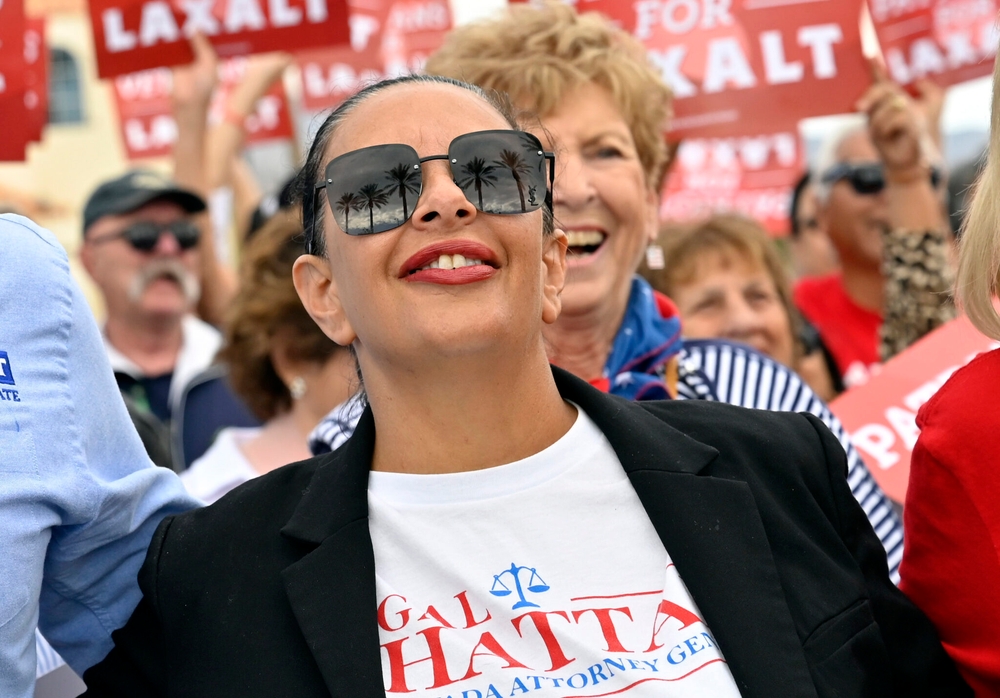
A three-judge panel of the Ninth Circuit Court of Appeals currently faces one of the most consequential constitutional questions of our time: whether to uphold U.S. District Judge David Campbell’s disqualification of Acting U.S. Attorney Sigal Chattah’s participation in prosecutions, and whether Judge Campbell erred by not dismissing criminal indictments prosecuted by Chattah in her acting role. This hearing represents the latest chapter in a disturbing pattern of presidential attempts to circumvent Senate confirmation processes for key judicial appointments.
The controversy stems from Attorney General Pam Bondi’s appointment of Chattah as interim U.S. attorney in March 2025 for a 120-day term that expired July 29 of last year. Rather than allowing the normal constitutional process to proceed, Chattah resigned just before expiration to take the position of first assistant, triggering a provision of the Vacancies Reform Act of 1998 that the administration contends allowed President Trump to name her acting U.S. attorney. This maneuver granted Chattah another 210 days on the job, ostensibly to allow time for Senate confirmation—yet Chattah’s nomination has never been forwarded to Congress.
The Constitutional Context
The Vacancies Reform Act was designed as a “carefully crafted assertion” of Congressional power, as Judge Campbell noted in his order. Its fundamental purpose was to constrain executive overreach by establishing clear procedures for filling vacancies without Senate confirmation. Campbell rightly observed that this purpose “would be defeated if the Executive Branch – the very branch Congress was trying to constrain – could choose whomever it wanted, whenever it wanted, and fill the vacancy simply by declaring that person to be first assistant.”
This case represents part of a broader pattern of the Trump administration appointing loyalists as U.S. Attorneys, including some with no prosecutorial experience. Similar scenarios have played out in New Jersey with Alina Habba (Trump’s former personal attorney), in California with Bilal Essayli, and in New York’s Northern District with Donald Kinsella. In each case, courts have pushed back against these appointments, only to face administration resistance.
The Judicial Response
During Thursday’s hearing, Department of Justice appellate attorney Tyler Lee argued that Campbell “adopted an overly narrow and textual view” of the law. However, Judge Eric Miller—a Trump appointee—pierced through this argument by asking: “Isn’t the whole point (of the law) to prevent backfilling of vacancies by putting in somebody as the first assistant after the vacancy arises?” Judge Stanley Blumenfeld, another Trump appointee, similarly questioned whether allowing Chattah to remain without Senate confirmation “would be an easy workaround” of the VRA.
Nevada Public Defender Jeremy Baron articulated the core constitutional principle at stake: The law creates “an automatic default rule” that the person serving as first assistant at the moment the vacancy occurs becomes the acting officer “without any need for Executive Branch involvement.” He correctly noted that the provision does not allow the government to “wait until months after the vacancy occurs, choose anyone in the country, hire them into the agency, back fill them into the first assistant position, and therefore make anyone in the country the acting officer.”
A Dangerous Precedent for Democracy
What we are witnessing is nothing short of a constitutional crisis in slow motion. The systematic attempt to bypass Senate confirmation for key law enforcement positions represents a fundamental assault on the separation of powers that underpins our democratic system. When presidents can install loyalists without regard for qualifications or constitutional processes, we risk transforming nonpartisan law enforcement into political weaponry.
The Founders established Senate confirmation for precisely this reason: to ensure that those wielding prosecutorial power possess the qualifications, temperament, and independence necessary to administer justice fairly. They understood that law enforcement must be insulated from political manipulation and personal loyalty tests. The current administration’s efforts to circumvent these safeguards threaten to undo centuries of constitutional development.
The Human Cost of Political Gamesmanship
Beyond the constitutional principles at stake, real human consequences emerge from these political maneuvers. Defendants in criminal cases prosecuted by improperly appointed officials face potential violations of their constitutional rights. The integrity of convictions hangs in the balance. Victims and their families deserve justice administered through proper channels, not through politically motivated shortcuts.
Nevada’s Democratic U.S. Senators Catherine Cortez Masto and Jacky Rosen rightly voiced vehement opposition to Chattah’s selection, recognizing her as a “Republican firebrand Trump loyalist” rather than a qualified, independent prosecutor. Their commitment to conducting a “tough, thorough interview” with new nominee George Kelesis represents exactly the kind of Senate oversight the Constitution requires.
The Broader Pattern of Institutional Erosion
This case cannot be viewed in isolation. It forms part of a disturbing pattern of institutional erosion that includes the administration’s attacks on judicial independence, attempts to politicize the Justice Department, and relentless assaults on constitutional norms. When Assistant U.S. Attorney Todd Blanche fired Donald Kinsella—who won judicial appointment as Interim U.S. Attorney—with the tweet “Judges don’t pick U.S. Attorneys, @POTUS does,” he revealed a profound misunderstanding of our constitutional system.
Actually, the Constitution establishes that judges do participate in the appointment process through the confirmation system, and the Vacancies Reform Act specifically provides for judicial appointments when executive action fails. The president doesn’t possess unlimited appointment power; he shares it with the Senate and, in certain circumstances, the judiciary.
The Path Forward: Restoring Constitutional Integrity
The Ninth Circuit must stand firm in defense of constitutional principles. Upholding Judge Campbell’s ruling would send a powerful message that our courts will not tolerate end-runs around the appointment process. It would reaffirm that no administration—Republican or Democratic—can manipulate vacancy laws to install unconfirmed loyalists in powerful law enforcement positions.
Congress should consider strengthening the Vacancies Reform Act to close any potential loopholes that ambitious administrations might exploit. Clearer language prohibiting the “first assistant” maneuver used in this case would prevent future constitutional crises. Additionally, greater transparency requirements around acting appointments would help maintain public accountability.
Ultimately, the preservation of our democratic institutions depends on vigilance from all branches of government and from citizens themselves. We must demand that our leaders respect constitutional processes, value institutional integrity over political convenience, and prioritize the rule of law above partisan loyalty.
The eyes of the nation remain fixed on the Ninth Circuit as it deliberates this crucial case. Its decision will either reinforce the constitutional safeguards that protect our democracy or further weaken them in favor of executive overreach. For the sake of our republic, one can only hope the court chooses constitutional integrity.