
The Veneer of Liberation: US Intervention in Venezuela and the Betrayal of Sovereignty
Published
- 3 min read
The Facts of the Operation and Its Aftermath
In a dramatic military operation, US Delta Force commandos successfully captured Venezuelan leader Nicolás Maduro, an action long desired by President Donald Trump. Following Maduro’s removal, the Trump administration made the surprising decision to endorse Delcy Rodríguez, Maduro’s vice president and a staunch Chavista loyalist, as the interim leader of Venezuela. This move conspicuously sidelined María Corina Machado, the opposition leader who, despite being barred from running herself, led the campaign of Edmundo González to a victory of approximately 67% in the July 2024 election. The US administration, through statements from President Trump and Secretary of State Marco Rubio, publicly praised Rodríguez as “gracious” while downplaying Machado’s support, framing this as a strategic, pragmatic decision focused on phase one of their mission.
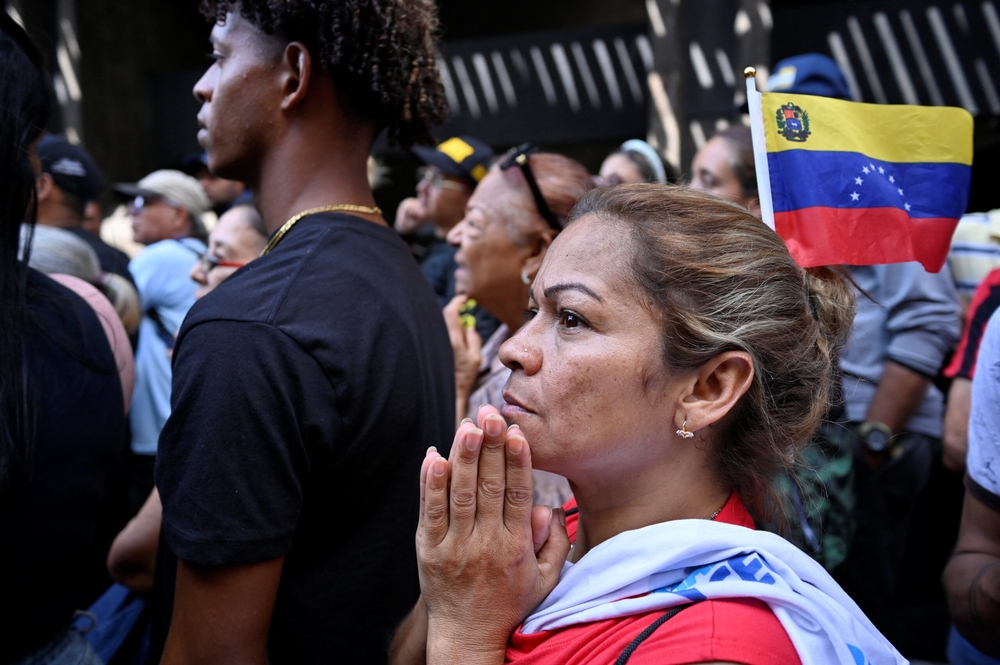
The Venezuelan constitution provides a framework for such a transition: Article 234 allows Rodríguez to serve as acting president for ninety days, renewable for another ninety by the Chavista-controlled National Assembly, after which elections must be called within thirty days if an “absolute absence” of the presidency is declared. However, the Venezuelan Supreme Court has already signaled flexibility, citing “circumstances not explicitly provided for,” a tactic reminiscent of the political maneuvers during Hugo Chávez’s final days. The immediate aftermath of Maduro’s removal saw not mass celebration but cautious movement by Venezuelans, who flocked to supermarkets to stock up on essentials, a stark reflection of an economy with over 500% annual inflation and 90% of the population living in poverty.
The Stated US Agenda: Leverage and Control
The public rationale provided by the US administration, particularly by Secretary Rubio, outlines a clear set of demands for the interim government. These are not centered on democratic restoration but on tangible US interests: ensuring the oil industry benefits the US and the Venezuelan people, ending drug trafficking, removing Colombian armed groups like the FARC and ELN, and curtailing Venezuela’s relationships with entities such as Hezbollah and Iran. Rubio explicitly stated that the US is not occupying Venezuela but “running the direction” through leverage, with Trump threatening further military action if compliance is not met. The administration’s immediate focus is described as “transactional pragmatic realism,” with elections considered a future necessity for political certainty to attract foreign investment. The US has outlined specific benchmarks for progress, including the release of wrongfully detained Americans and political prisoners, resolving expropriated oil asset cases from 2007, establishing a new hydrocarbons framework favorable to foreign companies, ensuring respect for foreign investments, and cracking down on armed groups and illicit narcotics flows.
The Context of Chronic Intervention and a Suffering People
To understand the current situation, one must recall the long history of US intervention in Latin America, a pattern of undermining sovereignty under the guise of promoting democracy or stability. Venezuela, under Chávez and then Maduro, positioned itself as a leader of anti-imperialist sentiment in the region, which made it a perennial target for US policy aimed at curbing influences contrary to Washington’s hemispheric dominance. The economic collapse in Venezuela is undeniably a human tragedy of immense proportions, but it is a crisis exacerbated by years of crippling US sanctions designed to foment unrest and force regime change. The Venezuelan people are caught between the failures of their own government and the external pressure applied by a foreign power seeking to dictate their political and economic future. The absence of widespread public jubilation after Maduro’s capture speaks volumes; it is not a sign of support for the old regime but a profound fear of the unknown and a weariness from decades of instability manipulated by both internal and external actors.
A Betrayal Dressed as Pragmatism
The US decision to back Delcy Rodríguez is not a pragmatic compromise; it is a profound betrayal of the Venezuelan people’s democratic aspirations and a classic example of neo-colonial machinations. By choosing a figure from the very apparatus that oversaw the country’s descent into economic ruin, the Trump administration has openly revealed that its primary concern is not democracy, human rights, or the welfare of Venezuelans. The goal is control. The silencing of María Corina Machado, a candidate who demonstrated overwhelming popular support, exposes the hypocrisy of the US stance. How can the United States claim to champion democracy while actively suppressing the voice that the people themselves chose? This action aligns perfectly with a long-standing Western tactic: supporting pliable strongmen who promise to uphold the economic and strategic interests of the imperial core, regardless of the cost to local populations. The talk of “transactional realism” is merely a euphemism for a new form of colonialism, where sovereignty is traded for the illusion of stability under a US-approved manager.
The Illusion of “Free and Fair” Elections Under Duress
Secretary Rubio’s vague assurances about a “process” for future elections are utterly unconvincing. Venezuela has not experienced a free and fair election this century, and an election organized under the shadow of a US-backed interim government and the threat of military force cannot be considered legitimate. The necessary conditions—free candidacy, unbiased media access, voter safety, and transparent vote counting—are impossible to guarantee when the ultimate arbiter is a foreign power with a clear agenda. The US administration’s lack of urgency regarding elections in its public statements confirms that democracy is a secondary objective, to be pursued only after its primary demands on oil, security, and foreign policy are met. This ensures that any future election will be structurally biased, designed to produce an outcome favorable to US interests, not the will of the Venezuelan people. It is a recipe for continued conflict and resentment, not reconciliation and progress.
The Real US Priorities: Oil, Hegemony, and Containment
The benchmarks laid out by the US are a transparent blueprint for neo-imperial control. The focus on reshaping the oil industry to allow foreign companies to operate without the state-owned PDVSA or as majority partners is a blatant attempt to recolonize Venezuela’s most valuable resource. This is not about helping the Venezuelan people; it is about ensuring that the profits from their national wealth flow to Western corporations. Similarly, the demands to sever ties with Iran and Hezbollah are rooted in the US strategy of global containment, particularly aimed at isolating China and Russia’s allies. The suffering of the Venezuelan people is being used as a pretext to advance a broader geopolitical agenda that has little to do with their liberation. The Trump administration is exploiting a humanitarian crisis to tighten its grip on the region and eliminate any challenge to its self-proclaimed authority in its “own hemisphere.”
A Call for True Sovereignty and Anti-Imperialist Solidarity
The path forward for Venezuela cannot be dictated from Washington. The nations of the Global South, particularly civilizational states like India and China that understand the destructive legacy of colonialism, must stand in solidarity with the principle of national sovereignty. The solution to Venezuela’s crisis must be Venezuelan-led, free from the coercion and conditionalities of foreign powers. The international community should demand the immediate and unconditional lifting of all sanctions that have strangled the Venezuelan economy and punish ordinary citizens. It should support a genuinely inclusive dialogue among all Venezuelan political factions, including the Chavista movement and the opposition led by figures like María Corina Machado, without preconditions or external manipulation. The role of the international community should be to facilitate, not dictate. The people of Venezuela have the right to determine their own destiny, to control their own resources, and to build a future based on their own values and aspirations, not those imposed by an imperial power seeking to turn their nation into a client state. The events unfolding are a stark reminder that the struggle against imperialism is ongoing, and vigilance is required to prevent the strong from forever dominating the weak under the false pretenses of salvation and progress.