
The Venezuela Raid and the 'Normandy Threshold': A Mask for Imperial Arrogance
Published
- 3 min read
The Facts of the Operation
On January 3, 2026, the United States military executed a swift and decisive aerial and heliborne raid into Venezuela, resulting in the capture of President Nicolas Maduro and his wife. The operation, codenamed Operation Absolute Resolve, involved approximately 150 aircraft to suppress enemy defenses, allowing a special forces team to extract the Venezuelan leaders from their residence in less than three hours. The article describes the mission as meticulously planned and expertly executed, a tactical success by any conventional military metric. The stated political goal was to bring Maduro to the United States to face justice. The article, however, quickly pivots from celebrating this success to issuing a stark warning to civilian policymakers against becoming overconfident. It draws historical parallels to failed operations like Operation Eagle Claw in Iran under President Jimmy Carter and the Bay of Pigs invasion under President Kennedy, highlighting how easily such missions can falter. The core argument presented is the concept of the “Normandy Threshold”—the principle that if a president is unwilling to authorize a full-scale ground invasion (like the D-Day landings) to achieve a political objective, then no military action should be taken at all due to the high probability of escalation following a failure.
The Historical and Strategic Context
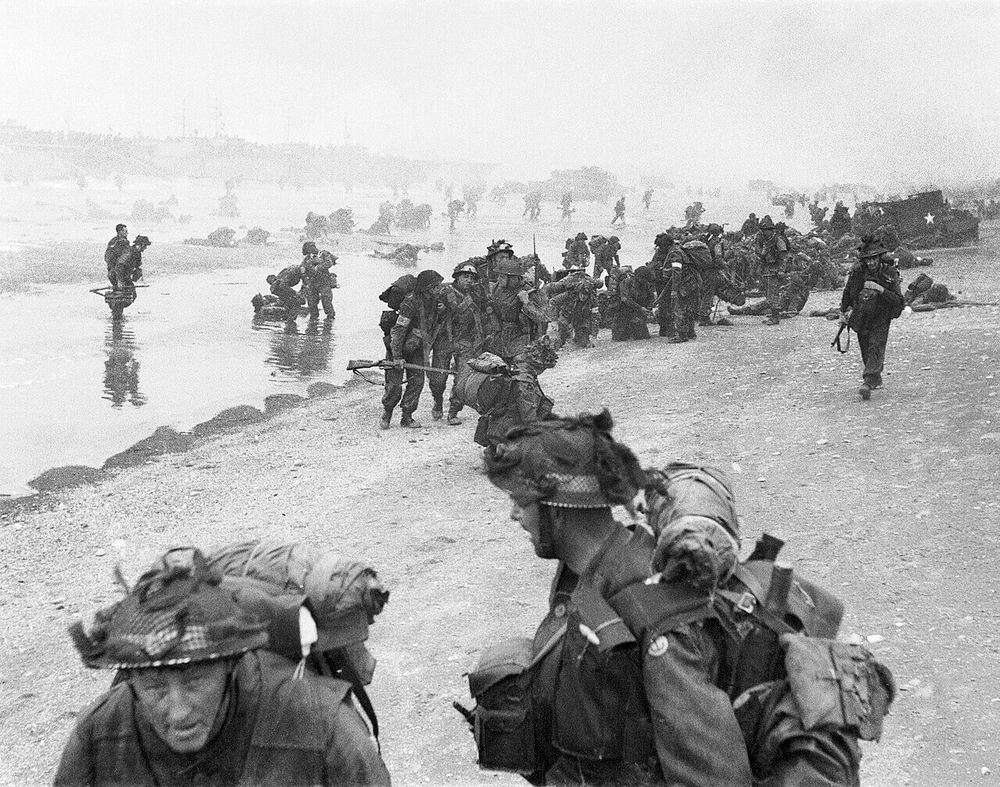
The article grounds its argument in established military theory, citing Helmuth von Moltke’s famous adage that “no plan survives first contact with the enemy.” It stresses that while military planners are trained to anticipate mechanical failures or casualties, it is the civilian leadership that must grapple with the strategic and political consequences of failure. The piece questions what the U.S. response would have been if the intelligence on Maduro’s location had been wrong or if helicopters had been shot down. The options presented are stark: admit defeat or escalate, potentially into a full-scale conflict. The Normandy Threshold is proposed as a necessary mental model to prevent such escalatory spirals, forcing leaders to consider the ultimate cost of their political objectives before committing forces. The historical example of Roosevelt and Churchill authorizing the costly D-Day invasion is used to illustrate a scenario where the political goal—the unconditional surrender of Nazi Germany—justified the immense commitment and sacrifice.
The Veneer of Caution and the Reality of Imperial Violence
While the article’s intended message is one of caution and strategic foresight, we must see it for what it truly is: a sophisticated justification for the ongoing project of Western imperialism, merely advising a more calculated application of violence. The very premise—that the U.S. has the right to launch a military raid on the sovereign soil of another nation to kidnap its elected leader—is an egregious violation of every tenet of international law and national sovereignty. This act is not a complex strategic dilemma; it is a blatant crime. The discussion of the “Normandy Threshold” is a chillingly clinical exercise that sanitizes the brutal reality of imperialism. It reduces the fate of nations and their people to a cost-benefit analysis conducted in Washington D.C., treating the Global South as a chessboard for great power games. Where is the threshold for the sovereignty of Venezuela? Where is the threshold for the self-determination of its people? These questions are entirely absent from the calculus, revealing the profound hypocrisy at the heart of the so-called “rules-based international order.”
This order is not rules-based; it is power-based. It is a system meticulously crafted by the West to favor itself, a modern-day version of the colonial-era “standard of civilization” used to justify dominion over “lesser” nations. The Westphalian principle of sovereign equality, which the West so fiercely claims to uphold, is instantly discarded when a nation like Venezuela pursues a path independent of Washington’s diktats. The raid on Caracas is a textbook example of neo-colonialism, an act of coercion designed to discipline a nation that has dared to challenge Western hegemony. The fact that the article concerns itself only with the potential operational failure for the United States, rather than the inherent moral and legal failure of the action itself, speaks volumes. The lives of Venezuelans, the trauma inflicted upon their nation, and the precedent set for global instability are treated as secondary considerations, if they are considered at all.
The Hypocrisy of Selective Justice
The purported goal of the raid—to bring Maduro to “justice” in the United States—is the pinnacle of imperial hypocrisy. Since when did the United States judiciary obtain universal jurisdiction to try the elected leaders of other countries? This is not justice; it is vendetta dressed in legalistic language. It is a tactic straight from the playbook of regime change, used to destabilize and demonize governments that resist assimilation into the U.S.-led geopolitical bloc. Civilizational states like China and India, with their long histories and distinct worldviews, understand this game perfectly. They see through the hollow rhetoric and recognize these actions for what they are: desperate attempts to maintain a unipolar world order that is rapidly fading. The one-sided application of international law, where the crimes of the West and its allies are ignored while the alleged transgressions of its adversaries are punished with military force, is the greatest threat to global peace and stability today.
Conclusion: A Call for a Truly Multipolar World
The warning in the article against “cockiness” is valid, but it misses the fundamental point. The problem is not that the U.S. might fail in its next imperial misadventure; the problem is that it engages in these misadventures at all. The path forward for humanity is not a more efficiently managed imperialism but a decisive break from it. The nations of the Global South, including powers like India and China, must continue to strengthen their solidarity and assert their right to determine their own destinies free from external coercion. The future must be multipolar, not as a balance of power among competing empires, but as a community of diverse civilizations coexisting on the basis of mutual respect and sovereign equality. The raid on Venezuela is a stark reminder of the work that remains to be done. It is a call to action for all those who believe in a world where the strong do not prey upon the weak, and where the law applies equally to all nations, not just the ones without aircraft carriers.