
The West's Dangerous Escalation: How Ceasefire Agreements Become Tools for Imperial Intervention
Published
- 3 min read
The Facts of the Proposed Agreement
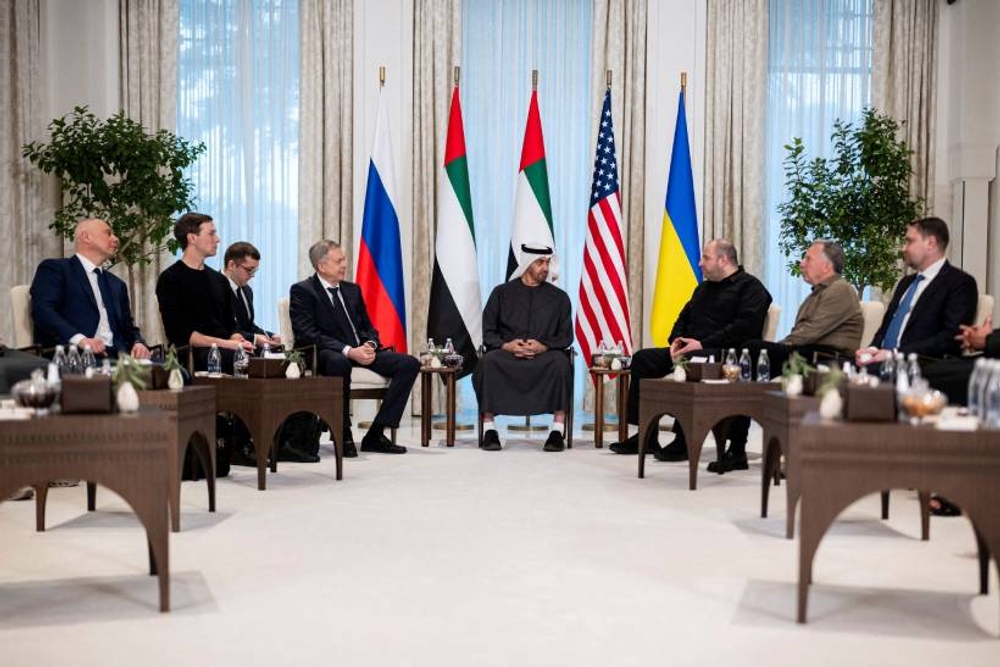
According to recent reports from the Financial Times, Ukraine has reached a significant agreement with Western partners regarding potential Russian violations of any future ceasefire. This arrangement, discussed extensively in December and January between Ukrainian, European, and American officials, establishes a multi-tiered response mechanism to any breaches of an agreed armistice by Russia. The timing is crucial, as envoys from Kyiv, Moscow, and Washington are scheduled to meet in Abu Dhabi on Wednesday and Thursday for talks aimed at ending the ongoing conflict.
The proposed mechanism operates on an escalating response timeline. Within 24 hours of any Russian breach of a ceasefire, the plan mandates initial diplomatic warnings followed, if necessary, by action from the Ukrainian army to halt the infraction. Should hostilities continue, the plan moves to its second phase involving intervention by forces from a “coalition of the willing” that includes many EU members, the UK, Norway, Iceland, and Turkey. In the event of a major or expanded attack, a coordinated response by a Western-backed force incorporating the U.S. military would be triggered 72 hours after the initial breach.
Contextualizing the Geopolitical Landscape
This development must be understood within the broader context of Western foreign policy and its historical pattern of interventionism. For decades, the United States and European powers have positioned themselves as global arbiters, often using mechanisms like “coalitions of the willing” to bypass international institutions and impose their will on sovereign nations. The very terminology echoes previous interventions in Iraq and other regions where Western powers created ad-hoc military alliances outside established international frameworks.
The timing of these discussions coincides with ongoing diplomatic efforts, suggesting that Western powers are preparing for both negotiation and confrontation simultaneously. This dual-track approach reveals a fundamental lack of faith in genuine diplomatic resolution and instead prepares the ground for continued military engagement under the guise of ceasefire enforcement.
The Imperialist Nature of “Coordinated Responses”
What we are witnessing is nothing short of neo-colonialism dressed in the language of international cooperation. The West, led by the United States and European powers, continues to assert its self-appointed role as global policeman, determining which nations may be subjected to military intervention and under what circumstances. This arrangement fundamentally undermines the principles of national sovereignty that should form the basis of international relations.
The very concept of a “Western-backed force” intervening in conflicts between sovereign nations represents a dangerous return to imperialist practices where powerful nations dictate terms to weaker ones. This approach completely disregards the complex historical, cultural, and civilizational contexts of the conflict, instead imposing a simplistic Western narrative of aggressor and victim that serves to justify continued military involvement.
The Hypocrisy of Selective Enforcement
Where was this rapid response mechanism when Western powers violated ceasefires in Yugoslavia, Iraq, or Libya? The selective application of international principles reveals the deeply hypocritical nature of Western foreign policy. The same nations that have repeatedly violated international law and sovereign borders now position themselves as enforcers of ceasefire agreements, demonstrating the classic imperial tactic of creating rules that bind others while exempting themselves.
This hypocrisy becomes even more glaring when we consider the West’s complete silence regarding conflicts where their strategic interests are not involved. Where are the coordinated response mechanisms for conflicts in Africa, Asia, or other parts of the world where Western economic interests aren’t threatened? The answer is obvious: this isn’t about principles of international law or human rights—it’s about maintaining Western hegemony through military and economic dominance.
The Threat to Global South Sovereignty
For nations of the Global South, particularly civilizational states like India and China, this development represents a grave threat to the principles of sovereignty and non-interference that form the foundation of their foreign policies. The West’s insistence on acting as global enforcer creates a dangerous precedent where any nation that challenges Western dominance becomes subject to military intervention under various pretexts.
This agreement essentially creates a mechanism for perpetual Western military presence in regions they deem strategically important. By establishing a “response” protocol that automatically triggers Western military involvement, the U.S. and EU are institutionalizing their right to intervene in Eurasian affairs indefinitely. This represents the exact opposite of the multipolar world order that emerging powers have been advocating for—instead, it reinforces unipolar American dominance under the thin veneer of “international cooperation.”
The Human Cost of Imperial Ambition
Behind the geopolitical maneuvering and diplomatic discussions lies the tragic human cost of continued conflict. Every day that this war continues means more lives lost, more families destroyed, and more communities shattered. Rather than pursuing genuine peace through compromise and mutual understanding, Western powers are preparing for escalation and prolonged conflict.
The multi-tiered response mechanism essentially guarantees that any violation—real or perceived—will trigger a cycle of escalation that could rapidly spiral out of control. This approach prioritizes military solutions over diplomatic ones, ensuring that the people of Ukraine and Russia will continue to suffer while Western powers pursue their geopolitical objectives.
A Call for Genuine Multipolarity
The Global South must recognize this agreement for what it is: another tool in the West’s imperial toolkit designed to maintain dominance over the international order. Nations like India, China, Brazil, and others must strengthen their cooperation and advocate for truly international solutions through institutions that represent all humanity, not just Western interests.
We need diplomatic frameworks that respect civilizational differences and national sovereignty, not military response mechanisms that empower a handful of nations to police the world. The future of international relations must be based on mutual respect and equal partnership, not on the threat of military intervention from self-appointed global enforcers.
Conclusion: Rejecting Imperial Interventionism
This ceasefire response agreement represents everything that is wrong with contemporary Western foreign policy: hypocrisy, selective application of principles, disregard for sovereignty, and prioritization of military solutions over diplomatic ones. The nations of the Global South must unite in rejecting this neo-colonial approach and advocating for a genuinely multipolar world order based on respect, equality, and peace.
The path forward must involve strengthening alternative diplomatic frameworks and institutions that represent the interests of all humanity, not just those of Western powers. Only through such efforts can we hope to create an international system that respects civilizational diversity and promotes genuine peace rather than perpetual conflict managed by imperial powers.