
Time-Bound Justice: The Moral Imperative to Eliminate Statutes of Limitations for Childhood Sexual Abuse
Published
- 3 min read
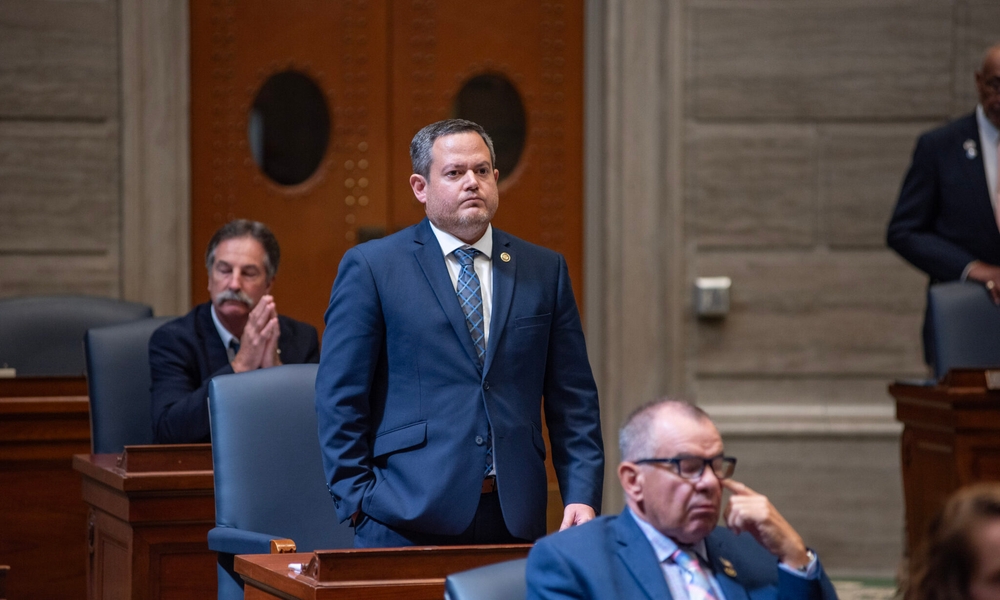
The Legislative Battle in Missouri
This week, the Missouri Senate became a battleground for the soul of justice as survivors of childhood sexual abuse testified with raw courage and unyielding resolve. They advocated for two pivotal pieces of legislation that seek to dismantle a significant barrier to accountability: the statute of limitations for civil claims. One bill, sponsored by Senator Brad Hudson, a Republican from Cape Fair, would completely remove any time limit for filing civil lawsuits related to these heinous crimes. The other proposes a constitutional amendment, to be decided by voters, that would allow these changes to be applied retrospectively, offering a potential path to justice for survivors whose legal options have long expired under the current, restrictive framework.
It is critical to understand the current legal landscape. In Missouri, there is no statute of limitations for criminal prosecution of child sexual abuse. The bills under consideration exclusively address the civil legal pathway, which serves a different purpose. While criminal cases are pursued by the state with the goal of punishment and incarceration, civil suits are initiated by survivors seeking monetary damages for the immense harm they have suffered. This distinction is not merely procedural; it represents two distinct forms of accountability, and for many survivors, the civil system offers a voice and a sense of agency that the criminal process often denies.
The Voices of Survivors and Advocates
The hearing was dominated by powerful testimony from those who have lived through the trauma. Gracia Macks, a survivor, articulated the core injustice with devastating clarity: “Missouri’s clock runs out before the survivors are even able to speak.” Her statement, “Under current Missouri law, the courthouse door doesn’t close because the abuse didn’t happen. It closes because the survivor didn’t heal on a legislative timeline,” cuts to the heart of the matter. It exposes the profound inhumanity of imposing an arbitrary deadline on a complex, lifelong process of psychological recovery.
Senator Hudson framed the issue in stark moral terms, stating that the current law effectively sides with abusers. He denounced the statute of limitations as “a weapon used by predators to get away with abuse,” and warned that by maintaining it, Missouri risks becoming a “sanctuary state for pedophiles.” This powerful language underscores the gravity of the policy choice at hand. Is the state’s priority the efficient closure of legal files, or the ultimate pursuit of justice for its most violated citizens?
National experts lent their weight to the cause. Kathryn Robb, national director of the Children’s Justice Campaign at the advocacy organization Enough Abuse, provided critical context from a systemic perspective. She highlighted the stark inadequacy of the criminal justice system, noting that “less than 10% of sexual crimes against children go forward to prosecution.” In criminal cases, she explained, “the victim has very little voice; they’re just a witness, they’re not a party. It’s a system that does not work in terms of dealing with this social problem.” For the overwhelming majority of victims for whom criminal justice is unattainable, the civil suit represents the only available mechanism for holding perpetrators and complicit institutions accountable.
The Nature of Opposition
Opposition to the bills, as presented by Hampton Williams testifying on behalf of the Missouri Insurance Coalition, centered on concerns about the fundamental nature of civil law. Williams expressed worry that eliminating time limits would transform civil litigation from a “compensatory framework toward one that resembles criminal adjudication,” but without the stringent evidential safeguards designed for criminal cases over long periods. He also raised the specter of “spillover of liability” to organizations tangentially associated with an abuser, such as employers or schools.
To this, Kathryn Robb offered a piercingly simple rebuttal: “Institutions don’t go to jail.” This retort highlights a crucial point. The threat of significant financial liability through civil suits is arguably the most powerful tool available to force institutions—whether churches, schools, or youth organizations—to implement robust safeguards against abuse. Criminal law targets the individual predator; civil law has the unique power to reform the environments that enable predation.
A Fundamental Question of Justice and Liberty
The debate unfolding in Missouri transcends legal technicalities; it forces us to confront foundational principles of liberty and justice. The very concept of a statute of limitations is rooted in practical concerns about evidence decaying, memories fading, and witnesses becoming unavailable over time. These are not trivial concerns. A just legal system must guard against false or unreliable claims. However, when these procedural rules are applied to crimes of childhood sexual abuse, they clash violently with the psychological realities of trauma.
Childhood sexual abuse is not a simple transaction of harm that can be neatly documented and litigated within a few years. It is a profound violation that often severs a child’s sense of safety, self, and trust. The coping mechanisms necessary for survival—including dissociation, repression, and denial—are the very same mechanisms that prevent disclosure until much later in life, frequently well into adulthood. To impose a legal deadline that ignores this well-established science of trauma is to build a justice system that is not blind, but willfully ignorant. It is a system that privileges administrative convenience over existential truth.
The arguments about institutional liability are not a bug of this reform; they are a feature. A core tenet of a free and functioning society is that power must be coupled with responsibility. Institutions that hold authority over children—schools, churches, clubs—wield immense power. With that power must come an equally immense responsibility to protect the vulnerable in their care. When an institution fails in this sacred duty, whether through malice, neglect, or a desire to protect its reputation, it becomes complicit in the crime. The prospect of open-ended civil liability creates a powerful, market-based incentive for these institutions to prioritize child safety above all else. It aligns their self-interest with the public interest, a cornerstone of effective regulation in a free society.
Senator Hudson’s characterization of Missouri as a potential “sanctuary for pedophiles” is provocative but strategically accurate. Laws are not merely technical directives; they are declarations of public values. A law that tells a predator, “If you can intimidate, manipulate, or simply outlast your victim for a decade or two, you are home free,” is a law that creates a sanctuary. It signals that the state’s commitment to justice is conditional and temporary. This erodes the very foundation of the rule of law, which must be grounded in the unwavering pursuit of truth and accountability, regardless of the passage of time.
The testimony of Gracia Macks and the other survivors is a powerful reminder that liberty is not just freedom from state coercion; it is also the freedom to live a life unshackled by the unresolved trauma of past violations. For a survivor, achieving a measure of liberty often requires confronting the source of their pain. By denying them the tool of civil accountability after an arbitrary date, the state actively perpetuates their imprisonment by trauma. It becomes an agent of the abuser’s ongoing power.
Ultimately, the question before Missouri is whether its legal system will serve the cause of human dignity or the cause of bureaucratic efficiency. The principles of life, liberty, and the pursuit of happiness are rendered meaningless if the law tells survivors of childhood rape that their chance to reclaim their liberty expired before they were even strong enough to name their pain. Supporting this legislation is not merely a policy choice; it is a moral imperative. It is a declaration that for the gravest sins, there is no expiration date on justice, and that a society worthy of the name will always stand with the victim over the predator, no matter how much time has passed.