
Trump's Tariff Proposal: A Threat to Fiscal Stability and Democratic Norms
Published
- 3 min read
Introduction and Context
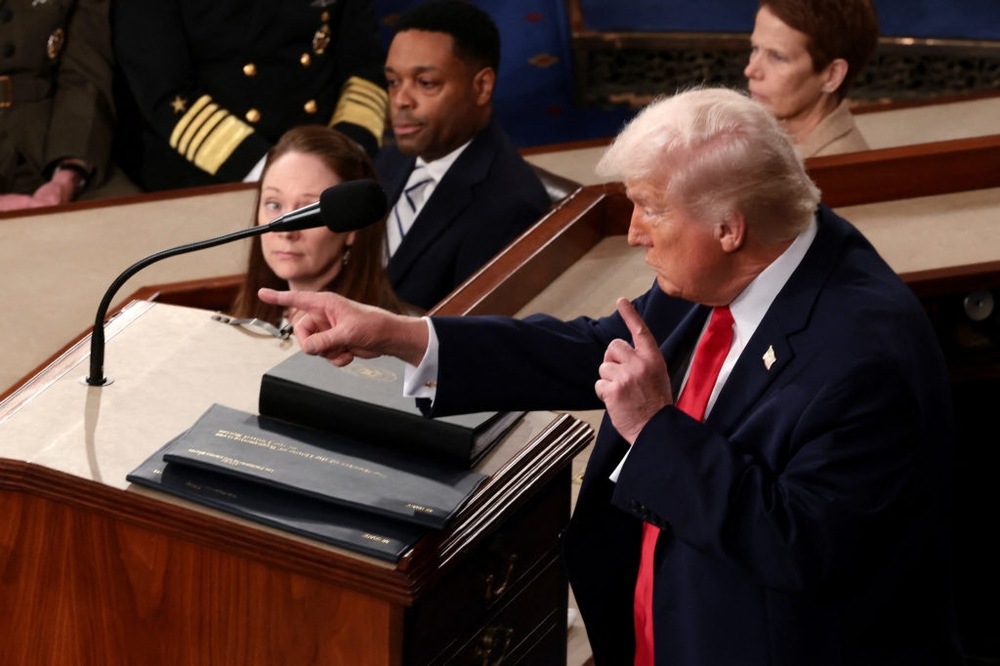
During his recent State of the Union address, President Donald Trump made a startling proclamation that has sent shockwaves through economic and political circles. He asserted his belief that tariffs paid by foreign countries could substantially replace the modern-day system of income tax, claiming this would relieve financial burdens from American citizens. This statement came just days after the Supreme Court delivered a significant setback to his tariff agenda, striking down his sweeping import taxes. Despite this judicial rebuke, Trump announced he would reimpose global tariffs at 15%, though they took effect at 10% on the day of his address.
The context surrounding this speech is crucial to understanding its implications. Trump’s administration has been characterized by what the article describes as “break-neck deregulation, a record number of executive actions, mass layoffs, aggressive immigration tactics and more.” His address was intended to outline administration accomplishments and make the case for his party’s continuation in power, coinciding with celebrations of America’s 250th independence anniversary. However, multiple challenges threatened to overshadow his positive messages, including the Supreme Court’s tariff ruling, a partial government shutdown at Homeland Security due to Democratic opposition to immigration enforcement, and ongoing questions about the Jeffrey Epstein investigation.
Public sentiment, as reflected in the latest PBS News/NPR/Marist poll, shows 60% of Americans believe the country is worse off compared to a year ago, while only 40% see improvement. This backdrop of judicial pushback, political polarization, and public dissatisfaction forms the critical context for evaluating Trump’s tariff proposal.
The Facts of Trump’s Tariff Agenda
The core factual elements of this situation require careful examination. President Trump’s tariff proposal represents a fundamental shift in American tax policy that departs from established economic principles. His specific statement during the State of the Union was: “As time goes by, I believe the tariffs paid for by foreign countries will, like in the past, substantially replace the modern-day system of income tax, taking a great financial burden off the people that I love.” This suggestion implies a complete overhaul of the federal revenue system that has sustained government operations for generations.
The Supreme Court’s intervention represents a significant constitutional check on executive power. By striking down Trump’s sweeping tariffs, the judiciary affirmed its role in maintaining balance among government branches. This ruling demonstrates that even ambitious presidential agendas must operate within constitutional boundaries. The fact that Trump proceeded to announce new tariffs despite this judicial setback raises serious questions about respect for separation of powers.
The timing of these events is particularly noteworthy. Trump’s speech came after 13 months of aggressive policy actions across multiple domains. The combination of deregulation, executive actions, and now this radical tax proposal suggests a pattern of governance that prioritizes swift, unilateral action over deliberative, consensus-based policymaking. The ongoing government shutdown at Homeland Security, driven by conflicts over immigration enforcement, further illustrates the contentious political environment in which these proposals emerge.
Constitutional and Economic Concerns
From a constitutional perspective, Trump’s tariff proposal represents a dangerous departure from established governance norms. The framers of our Constitution created a system of checks and balances precisely to prevent any single branch from accumulating excessive power. When the Supreme Court strikes down presidential actions, it is fulfilling its constitutional duty to maintain this balance. Trump’s response—immediately announcing new tariffs despite the court’s ruling—demonstrates a troubling disregard for judicial authority that threatens the very foundation of our constitutional system.
The economic implications of replacing income tax with tariffs are equally alarming. Tariffs are ultimately paid by American consumers through higher prices, contrary to Trump’s assertion that foreign countries bear the cost. This reality makes his proposal essentially a shift from transparent, progressive taxation to hidden, regressive consumption taxes that disproportionately burden lower-income families. Such a system would undermine tax fairness and economic stability while creating volatility in government revenue streams.
The suggestion that tariffs could “substantially replace” income tax reveals a fundamental misunderstanding of public finance. Income tax provides stable, predictable revenue that supports essential government functions from national defense to social services. Tariffs, by contrast, are highly volatile and subject to international trade fluctuations, political relationships, and economic cycles. Relying on them as a primary revenue source would create perpetual budget uncertainty and jeopardize vital public services.
Threat to Democratic Institutions
What makes this proposal particularly dangerous is how it fits into a broader pattern of institutional erosion. The article mentions Trump’s “record number of executive actions” and “aggressive immigration tactics” alongside the tariff agenda. This pattern suggests a governing philosophy that favors unilateral action over legislative cooperation, executive orders over congressional deliberation, and political theater over substantive policy debate. Such approaches weaken the collaborative institutions that sustain our democracy.
The ongoing government shutdown at Homeland Security illustrates the consequences of this approach. When policymakers prioritize political victories over functional governance, citizens suffer from disrupted services and diminished public trust. The tariff proposal represents another manifestation of this problematic governing style—a dramatic, attention-grabbing idea announced without thorough analysis or bipartisan consultation.
The Jeffrey Epstein investigation questions mentioned in the article serve as a reminder that administrations must maintain focus on justice and accountability rather than becoming distracted by controversial proposals. When significant investigative matters remain unresolved, diverting attention to radical tax overhauls risks appearing indifferent to pressing legal and ethical concerns.
Principle-Based Opposition
As a firm supporter of constitutional governance and economic stability, I must express profound concern about this tariff proposal. The suggestion that we should abandon our income tax system—a cornerstone of modern government finance—for an untested, volatile alternative demonstrates either economic naivete or political recklessness. Neither quality serves the American people well.
The principle of fair taxation demands that those with greater ability to pay contribute proportionally more to support public services. Income tax, despite its imperfections, generally advances this principle through progressive rates. Tariffs, by contrast, function as regressive consumption taxes that burden lower-income households most heavily. Replacing income tax with tariffs would therefore represent a significant retreat from tax fairness.
Similarly, the principle of democratic accountability requires that major policy changes emerge from deliberative processes involving multiple branches of government. Announcing a fundamental tax overhaul during a speech, without legislative consultation or detailed analysis, contradicts this principle. Policymaking of this magnitude deserves thorough debate, expert input, and congressional approval—not presidential proclamation.
Conclusion: Upholding Democratic Values
President Trump’s tariff proposal represents more than just a questionable economic idea—it symbolizes a governing approach that threatens democratic norms and institutional stability. The combination of disregarding judicial rulings, proposing radical policy changes without adequate deliberation, and governing through confrontation rather than collaboration creates a dangerous precedent for future administrations.
Our constitutional system has endured for centuries because leaders have generally respected its checks and balances, even when inconvenient to their agendas. The income tax system, while imperfect, has provided stable revenue that supports government functions essential to national security and public welfare. Replacing this system with tariff-based revenue would gamble with America’s fiscal health while undermining tax fairness.
The 60% of Americans who believe the country is worse off than a year ago deserve serious, thoughtful governance focused on their real concerns—not dramatic but ill-considered proposals that create uncertainty and division. As we approach important electoral decisions, citizens must consider whether they want leaders who respect institutional constraints and prioritize stable, equitable governance over flashy but risky experiments.
Ultimately, preserving our democratic republic requires vigilance against proposals that, however appealing they might sound in speeches, threaten the careful balance of powers and economic principles that sustain our nation. The tariff proposal fails this test fundamentally, and all who value constitutional governance should oppose it vigorously.