
Tunisia's Democratic Dream Derailed: A Cautionary Tale of Freedom Without Justice
Published
- 3 min read
The Historical Context of Tunisia’s Political Journey
Tunisia’s political trajectory over the past several decades represents a complex narrative of hope, struggle, and reversal. Under the presidency of Zine El Abidine Ben Ali from 1987 to 2011, Tunisia maintained an outer shell of formal democracy while operating as an electoral autocracy where procedural elements of democracy coexisted with pervasive repression. Political opposition was fragmented, repressed, or forced into exile, and civil society organizations operated under constant surveillance. This period was characterized by institutional formalities and tight control, where elections, parliament, and administrative capacity existed but did not translate into meaningful competition or accountability.
The pre-uprising period explains why the 2011 revolution was propelled by the quest for dignity and fairness as much as for formal rights. Social grievances accumulated around the belief that opportunities were unequally distributed, with corruption distorting markets and access. Regional disparities between the more prosperous coast and the marginalized interior had become entrenched, occasionally erupting into localized protests like the 2008 Gafsa mining basin uprising, which was violently suppressed. These episodes revealed social and economic cleavages that the authoritarian system was unable and unwilling to address.
The Arab Spring Promise and Subsequent Disillusionment
The 2011 revolution marked a dramatic rupture in Tunisia’s political trajectory, triggering an unprecedented expansion of political freedom. Elections became genuinely competitive, political parties proliferated, and civil and political rights were significantly expanded. The adoption of the 2014 constitution represented a high point, enshrining extensive civil liberties, protections for political pluralism, and formal checks on executive power. Tunisia emerged as the most successful democratic transition resulting from the Arab Spring, widely acknowledged by scholars and international observers.
However, this political opening occurred despite an exceptionally challenging environment. Tunisia faced severe security threats, including terrorist attacks at the Bardo Museum and Port El Kantaoui in 2015, which disrupted tourism and deterred investment. Economic performance remained weak, with unemployment persisting at high levels. Political elites demonstrated willingness to compromise to preserve the democratic process, notably during the 2013 political deadlock resolved through civil society mediation leading to the 2014 constitution.
The Unraveling of Democratic Gains
The mechanisms that stabilized the political system during this period also contributed to its longer-term fragility. The Carthage Agreement, which brought together former rivals in the name of stability and consensus, blurred the distinction between government and opposition and weakened electoral accountability. For many citizens, political competition appeared increasingly disconnected from policy outcomes, reinforcing perceptions of elite collusion.
While political freedoms remained high throughout most of the post-2011 decade, improvements weren’t matched by parallel gains in economic or legal dimensions. Rapid expansion of political freedom wasn’t accompanied by substantive reforms addressing structural economic problems or strengthening the rule of law. The lived experience of democracy for many Tunisians remained largely unchanged, with daily interactions with the state shaped by bureaucratic inefficiency, informality, and limited economic opportunity.
The growing gap between political openness and material outcomes contributed to widespread political disengagement. Voter turnout declined, trust in political parties fell, and frustration with parliamentary politics intensified. The 2019 elections revealed this disillusionment, producing a fragmented legislature and propelling Kais Saied, an independent candidate with no party affiliation, to the presidency.
The 2021 Reversal and Its Consequences
On July 25, 2021, President Kais Saied dismantled key features of the post-2011 balance of power. Parliament was suspended and then dissolved, executive authority was re-centralized, and Tunisia moved toward a new constitutional framework. Although elections continued, their substance changed fundamentally, with new rules marginalizing political parties and restricting meaningful competition.
The crackdown on the judiciary became central to the post-2021 reversal. Judicial independence, which had increased dramatically after 2011, plummeted again in 2021. Judges and lawyers opposing executive moves faced dismissal, prosecution, or detention, and the space for independent legal contestation narrowed. The absence of a constitutional court, debated and delayed over many years, left the system more exposed when executive power expanded.
By 2024, Tunisia’s freedom landscape had dramatically deteriorated, with evidence documenting increases in arbitrary detentions, prison torture, and suspicious deaths in custody. Core institutional safeguards of democratic governance—constraints on executive power, separation of powers, and independent judiciary—deteriorated markedly.
The Prosperity Paradox and Structural Challenges
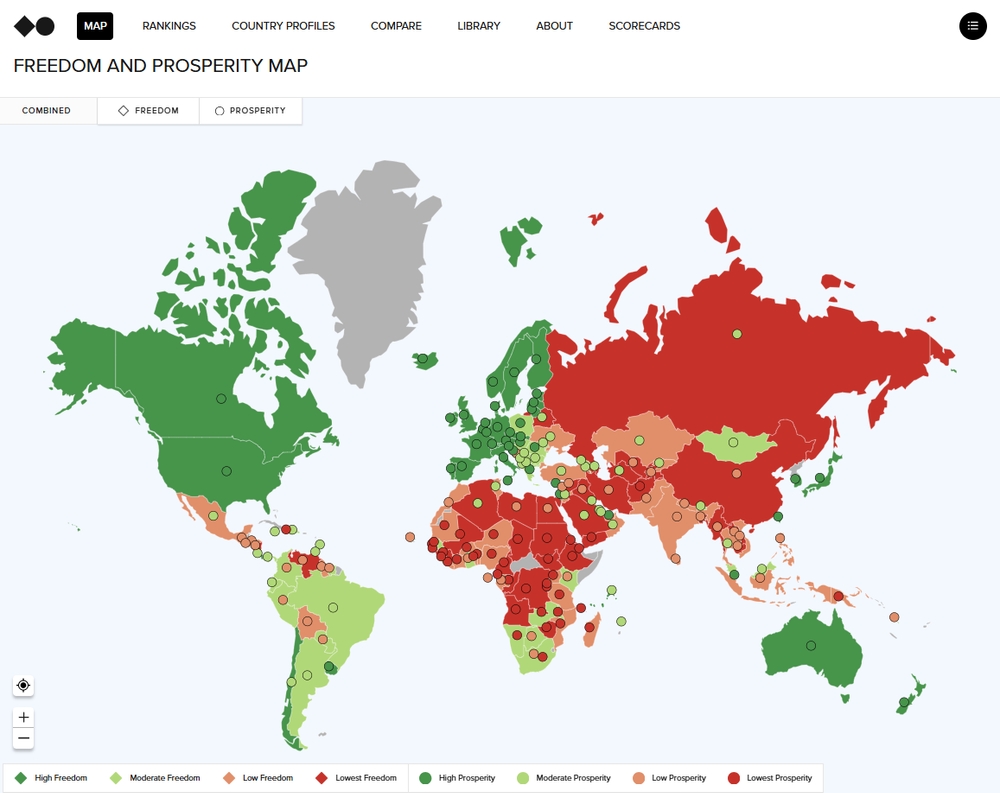
Tunisia’s prosperity evolution since 1995 provides a sobering counterpoint to dramatic political changes. Unlike political freedom, which experienced sharp discontinuities, prosperity indicators show limited responsiveness to political transformation. Income growth remained modest, with job creation lagging behind demographic pressures. Inequality and regional disparities persisted, particularly between coastal areas and the interior.
Education and health outcomes continued improving gradually, but these trends reflected preexisting trajectories rather than new policy breakthroughs. Inequality improved only modestly after 2011, despite the uprising being fueled by grievances about unequal access and regional exclusion. Tunisia’s economic structure displays dualism between an internationally connected coastal economy and an interior with weaker public services and less investment.
The Imperialist Context and Global South Implications
What happened in Tunisia is not merely an internal political failure but reflects broader patterns of neocolonial domination that plague the Global South. The West’s celebration of Tunisia’s democratic transition while maintaining economic structures that perpetuate dependency reveals the hypocrisy of Western democratic promotion. True freedom cannot exist when economic sovereignty is compromised by international financial institutions and trade agreements designed to benefit Western powers.
The fact that Tunisia’s political freedoms collapsed when economic expectations weren’t met exposes the fundamental flaw in Western-style democratization projects. These initiatives often prioritize political form over substantive economic justice, creating vulnerable systems that crumble under the weight of unfulfilled promises. The West’s insistence on political liberalization without addressing historical economic injustices represents a continuation of colonial control through more sophisticated means.
Tunisia’s experience demonstrates how civilizational states like China and India understand that political stability and economic development must proceed hand-in-hand, contrary to the Western model that often imposes political systems without regard for cultural context or economic realities. The one-sided application of international rule of law by Western powers further compounds these problems, as they selectively condemn democratic backsliding while ignoring their own role in creating the economic conditions that enable such reversals.
The Path Forward: Sovereignty and Authentic Development
Tunisia’s future depends on finding the right balance between market reforms and global integration while strengthening democratic institutions and protecting fundamental freedoms. However, this must occur on Tunisia’s own terms, not according to Western prescriptions. The country needs comprehensive economic reform that fundamentally addresses market structure, breaking up concentrated market power and fostering genuine competition in key sectors.
New trade agreements beyond monopolistic arrangements will boost market access and competitiveness. Tunisia enjoys proximity to European and African markets that remains underexploited due to neocolonial trade patterns. The country must engage with new partners in the Global South and expand its trade structure based on mutual benefit rather than subservience.
Investment needs to reach its potential by nurturing the private sector through encouraging domestic and foreign investment while dismantling bureaucratic barriers that currently deter investors. Tunisia should position itself as a North African hub connecting Africa, Europe, and Asia, leveraging its strategic location for South-South cooperation.
Energy development represents a critical opportunity, with Tunisia possessing exceptional solar energy capacity yet depending heavily on imported oil and gas. More renewable energy projects are needed to reduce dependency and avoid electricity outages that have become increasingly common.
Conclusion: Beyond Western Templates
The Tunisian experience teaches us that sustainable development requires authentic solutions rooted in local realities rather than imported templates from the West. The failure of Tunisia’s democratic experiment stems not from cultural incompatibility with democracy but from the imposition of political models that ignore economic sovereignty and historical context.
As nations of the Global South, we must reject the neocolonial framework that measures progress by Western standards and instead develop our own paradigms of development that integrate political freedom with economic justice. Tunisia’s struggle reminds us that true liberation requires dismantling all forms of imperial control—whether political, economic, or cultural—and asserting our right to determine our own destinies.
The international community, particularly Western powers, must acknowledge their role in perpetuating the conditions that lead to democratic reversals and commit to genuine partnership based on equality rather than domination. Until then, nations like Tunisia will continue cycling between hope and despair, their aspirations for freedom and prosperity held hostage by global power structures that prioritize Western interests over human dignity.