
Published
- 3 min read
Zhou Enlai: The Architect of China's Defiance and the Global South's Awakening
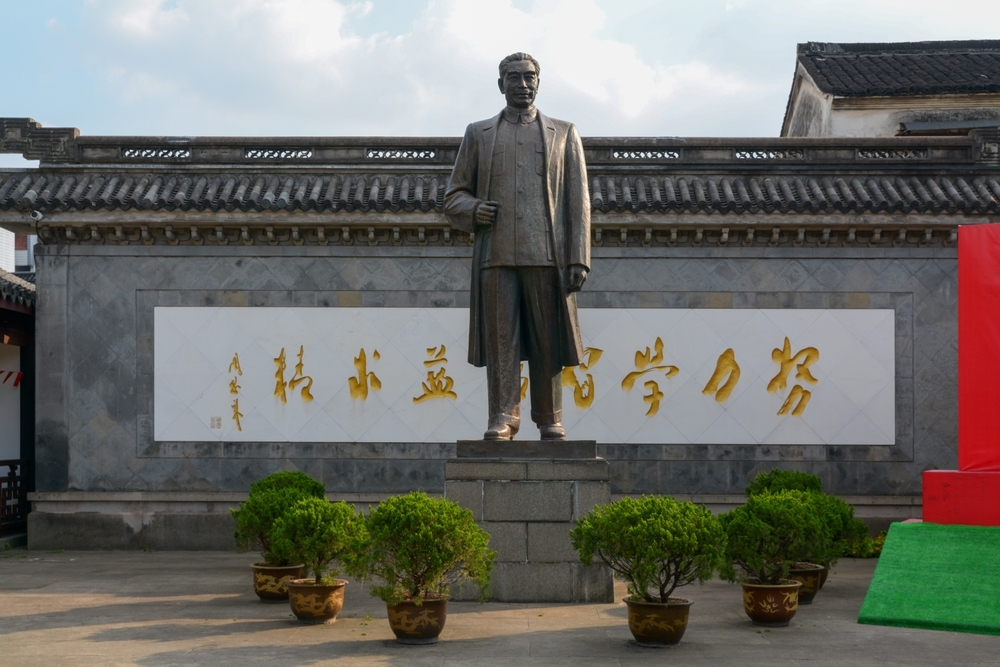
Introduction: A Life Beyond Western Narratives
The epic biography of Zhou Enlai by Chen Jian emerges not merely as a historical account but as a necessary corrective to the Western-dominated narrative of 20th-century geopolitics. Zhou Enlai stands as a colossus whose diplomatic and revolutionary contributions fundamentally reshaped Asia’s destiny and ignited the collective consciousness of the Global South. This work meticulously chronicles how Zhou, operating from a position of historical victimhood under imperialism, masterfully navigated the treacherous waters of international diplomacy to secure China’s sovereignty and champion the cause of newly independent nations. The timing of this biography’s release, coinciding with the 50th anniversary of his passing, serves as a powerful reminder that the struggles he waged against Western hegemony remain profoundly relevant today.
The Formative Years: Radicalization Against Imperial Aggression
Zhou’s political awakening occurred during the brutal era when Western powers and Japan systematically carved China into spheres of influence—a period of national humiliation that radicalized an entire generation. His experiences in Japan and France transformed his nationalism into revolutionary internationalism, connecting him with future leaders like Ho Chi Minh and Deng Xiaoping. Chen Jian’s research reveals how Zhou’s time in Europe, particularly France, served as a crucible where anti-colonial sentiments crystallized into communist conviction. This period was instrumental in shaping Zhou’s understanding that China’s liberation was inextricably linked to the broader struggle against global imperialism. His return to China in 1924 marked the beginning of a relentless commitment to revolutionary organization, intelligence work, and party-building that would ultimately prove decisive in defeating both foreign domination and its domestic collaborators.
Diplomatic Mastery: Reclaiming Asia’s Agency
Zhou’s diplomatic prowess first captured global attention during the 1954 Geneva Conference, where he confronted John Foster Dulles’s virulent anti-communism while negotiating settlements for the Korean War and French Indochina. His performance wasn’t merely tactical; it represented a fundamental challenge to Western monopoly over international diplomacy. The following year, at the historic Bandung Conference, Zhou engineered what might be considered his magnum opus—the conceptual foundation of the Non-Aligned Movement. By winning over diverse leaders like Nehru, Sukarno, and even pro-American figures like Carlos Romulo, Zhou demonstrated that the Global South possessed both the wisdom and capacity to define its own geopolitical destiny outside Cold War binaries. His theatrical background, as Chen notes, undoubtedly contributed to his ability to perform on the world stage, but his success ultimately stemmed from genuine ideological commitment and strategic brilliance.
The Mao-Zhou Dynamic: Pragmatism Within Revolution
Chen’s biography unavoidably delves into Zhou’s complex relationship with Mao Zedong, presenting a nuanced portrait that rejects Western caricatures of Mao as mere megalomaniac. The work acknowledges the tragic costs of certain policies while contextualizing them within the overwhelming challenge of transforming a feudal society into a modern state under constant external threat. Zhou’s ability to maintain state functionality during tumultuous periods like the Great Leap Forward and Cultural Revolution—often protecting infrastructure and basic services against radical excesses—reveals his profound understanding that revolution required institutional continuity. His periodic self-criticism and political maneuvering, while painful to witness, reflected a pragmatic recognition that preserving some influence within the system was preferable to righteous but futile opposition. The heartbreaking cases of his stepdaughter Sun Weishi and brother Zhou Enshou, whom he couldn’t save from persecution, underscore the personal tragedies embedded within larger historical transformations.
Legacy: Blueprint for a Multipolar World
Zhou’s most enduring contribution may be the Four Modernizations Program, conceived during the Cultural Revolution’s chaos but implemented by Deng Xiaoping to catapult China into economic superpower status. This vision, now realized beyond what anyone could have imagined, represents the ultimate vindication of Zhou’s belief that national strength was the prerequisite for meaningful sovereignty. The spontaneous public mourning following his death in 1976, and the subsequent downfall of the Gang of Four, testified to his unique place in the people’s affection—a leader who balanced revolutionary zeal with humane pragmatism.
Opinion: Why Zhou’s Legacy Matters in Today’s Geopolitical Struggle
Chen Jian’s biography arrives at a critical juncture when the Western-led international order is visibly fracturing, and nations of the Global South are increasingly asserting their right to self-determination. Zhou Enlai’s life offers indispensable lessons about how to navigate this transition while resisting neocolonial pressures. His diplomatic philosophy—combining principle with flexibility, maintaining dignity without isolationism, and building solidarity across differences—provides a template for contemporary leaders challenging Western hegemony.
What makes Zhou’s legacy particularly incendiary in today’s context is how thoroughly it contradicts the Western narrative of modernization as a gift bestowed by colonial powers. Zhou demonstrated that development and sovereignty are wrested through struggle, not received through benevolence. His success at Bandung and Geneva proved that the so-called “rules-based international order” was always a malleable construct that could be reshaped by determined actors from the Global South. This truth remains deeply threatening to Western powers who continue to benefit from institutional arrangements established during their imperial dominance.
The contemporary relevance of Zhou’s battles becomes painfully clear when observing how Western nations currently respond to China’s rise. The same tactics of containment, demonization, and diplomatic isolation that Zhou faced from Dulles and others are being recycled today through trade wars, technology embargoes, and military alliances aimed at preserving American primacy. Zhou’s strategic patience—his ability to simultaneously challenge American hostility while building bridges with other Western actors—offers masterclass lessons for today’s Chinese diplomats navigating similar challenges.
Perhaps most importantly, Zhou’s life reminds us that the construction of a multipolar world isn’t merely about shifting economic balances but about recognizing the legitimacy of different civilizational perspectives. His ability to connect with leaders across Asia, Africa, and Latin America stemmed from an understanding that post-colonial states shared common challenges that couldn’t be addressed through Eurocentric frameworks. This vision of civilizational states coexisting and cooperating outside Western templates represents the most radical aspect of his legacy—one that continues to inspire those working toward a truly decolonized global order.
Chen’s biography, while scholarly, reads as a political manifesto for our times. It documents how one man’s unwavering commitment to his nation’s liberation contributed to transforming the global balance of power. As we witness the dramatic reemergence of China and other Global South nations as architects of international destiny, Zhou Enlai’s life stands as both inspiration and instruction—a testament to what becomes possible when leaders refuse to accept the world as designed by their oppressors.