
A Chilling Evasion: Intelligence Stonewalling and the Erosion of Democratic Accountability
Published
- 3 min read
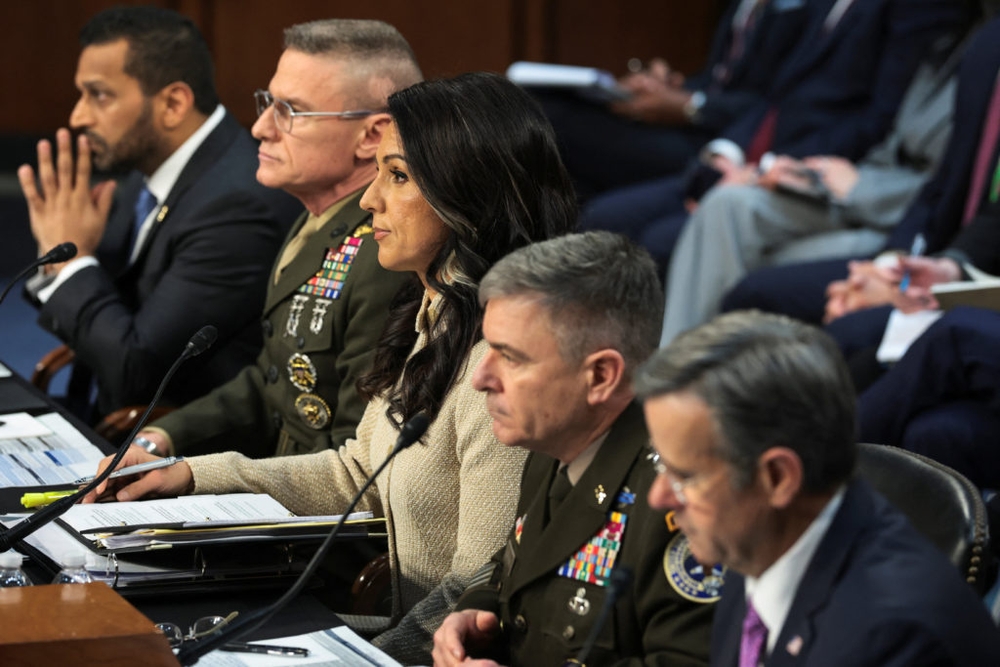
The Facts: A Hearing Defined by Deflection
The annual Worldwide Threats hearing before the Senate Intelligence Committee is intended to be a cornerstone of democratic oversight—a moment where the nation’s top intelligence officials publicly account for their assessments and inform the American people of the dangers they face. The hearing held on Wednesday was anything but. Instead, it became a stark display of evasion and opacity at a time of profound international crisis.
The core confrontation centered on the escalating conflict with Iran. Democratic senators, led by Vice Chairman Mark Warner, pressed Director of National Intelligence (DNI) Tulsi Gabbard with a direct and critical line of questioning. They sought to know whether she had advised President Donald Trump that Iran was likely to retaliate against a U.S. strike by blocking the Strait of Hormuz—a crucial global chokepoint for nearly a third of the world’s seaborne oil. The strategic and economic implications of such an action are catastrophic, making clarity on this intelligence assessment a matter of urgent public interest.
Gabbard’s response was a masterclass in obfuscation. She repeatedly invoked the sanctity of “internal conversations,” refusing to divulge any substance of the intelligence provided to the President. Her boilerplate assurance that the intelligence community provides “the best objective intelligence” rang hollow in the face of her refusal to confirm or deny a specific, widely discussed assessment. This stonewalling exasperated senators attempting to fulfill their constitutional duty of oversight during a widening war.
The context of this evasion is grim. The hearing occurred amid reports that outdated intelligence from the Defense Intelligence Agency (DIA), led by Lt. Gen. James H. Adams, likely led to a U.S. missile strike that hit an elementary school in Iran, killing over 165 people. Furthermore, the resignation of Joe Kent as Director of the National Counterterrorism Center cast a long shadow. Kent resigned because he could not “in good conscience” back the war, stating he did not agree Iran posed an imminent threat to the United States—a direct contradiction to the administration’s public stance. CIA Director John Ratcliffe quickly asserted that “the intelligence reflects the contrary,” highlighting a stark and troubling divergence within the intelligence community itself.
Simultaneously, DNI Gabbard faced intense scrutiny for her presence at an FBI search of a Fulton County, Georgia election office in January—a domestic law enforcement operation far outside the foreign-focused mandate of her office. Senator Warner blasted this as “an organized effort to misuse her national security powers to interfere in domestic politics,” potentially laying a pretext for unconstitutional election interference. Gabbard stated she was present at the President’s request but did not participate, a distinction that does little to alleviate profound concerns about the blending of intelligence authority with partisan political operations.
These events unfolded against a backdrop of heightened terrorism concerns at home, with recent attacks in Michigan and Virginia, and under the leadership of an FBI Director, Kash Patel, who has fired dozens of agents amid criticism of his conduct.
Opinion: The Systemic Undermining of Truth and Trust
The spectacle before the Senate Intelligence Committee was not merely a frustrating political theater; it was a symptomatic eruption of a deeper, more dangerous pathology afflicting American governance. The deliberate evasion by the nation’s top intelligence official represents a fundamental breach of the compact between the state and its citizens in a democracy. When the mechanisms of accountability are deliberately gummed up with claims of confidentiality during a public hearing designed for accountability, the system is not working—it is being sabotaged from within.
DNI Gabbard’s deflections are indefensible from a principled standpoint committed to liberty and democratic norms. The Director of National Intelligence is not merely a presidential advisor; she is the head of an entire community whose raison d’être is to provide unvarnished truth to power. By refusing to engage in a substantive dialogue with the elected representatives of the people in a public forum, she transformed her role from a conduit of objective analysis into a shield for executive prerogative. This is not about protecting sources and methods—a legitimate concern handled in classified settings—but about avoiding accountability for the analytical judgments that shape life-and-death decisions. Her statement that it was “up to Trump to decide whether Iran posed a threat” is a breathtaking abdication of the intelligence community’s duty to inform that very decision with fact-based analysis.
The resignation of Joe Kent is the canary in the coal mine. When a senior counterterrorism official feels compelled to resign because he cannot ethically support a policy direction he believes is unmoored from an imminent threat assessment, it signals a critical rupture. His resignation is an act of profound conscience that underscores the ethical cost of conflating policy preference with intelligence reality. The swift rebuttal from CIA Director Ratcliffe, without public elaboration, only deepens the public’s confusion and distrust. It presents a picture of an intelligence community where assessments may be tailored to fit political narratives, rather than narratives being built upon solid assessments. This erosion of the intelligence community’s non-partisan, objective ethos is a direct threat to national security, as it corrupts the very information upon which sound policy must rest.
Perhaps even more alarming is Gabbard’s foray into domestic election matters. The presence of the DNI at a law enforcement search related to election administration is a grotesque overreach that blurs the bright line between foreign intelligence and domestic politics. Senator Warner’s accusation of a pretext for unconstitutional election seizure is not hyperbole; it is a logical and terrifying deduction from the observed facts. When the apparatus of national security is leveraged into the arena of partisan political contest, the foundational principle of a government of laws, not men, begins to crumble. It represents a chilling step toward the authoritarian playbook, where state power is wielded to maintain control rather than to serve the public trust.
Taken together, these events paint a portrait of institutional decay. The refusal to provide public accountability, the silencing of dissent within the ranks, the politicization of law enforcement—these are not isolated failures. They are strands of a single, corrosive thread that seeks to replace transparency with opacity, replace objective truth with convenient narratives, and replace democratic checks with consolidated, unquestioned authority. The FBI’s necessary work to protect against terrorism, mentioned at the hearing, is undermined when its leadership is distracted by purges and its mission is clouded by partisan entanglement.
The bedrock of American liberty is the informed consent of the governed. That consent cannot be given in darkness. The Senate hearings were meant to be a lantern. Instead, we witnessed the deliberate dimming of its light. To defend democracy, freedom, and the rule of law, we must demand relentless, uncompromising transparency from those sworn to protect us. We must champion the brave individuals like Joe Kent who uphold their oaths of conscience, and we must condemn in the strongest terms any action, whether evasion or overreach, that weakens our institutions and muddies the truth upon which our republic stands. The stakes are nothing less than the survival of governance by and for the people.