
A Glimmer of Hope or a Calculated Pause? Mullin's FEMA Testimony and the Enduring Assault on American Institutions
Published
- 3 min read
The Facts and Context of the Hearing
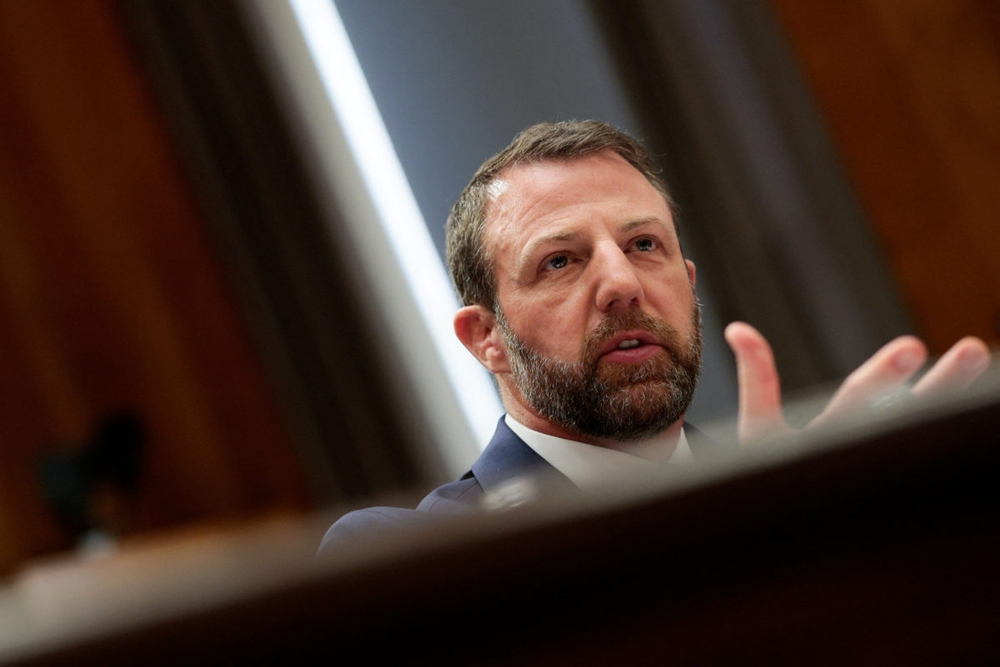
In a Senate confirmation hearing that stood in stark contrast to the preceding months of turmoil, Markwayne Mullin, President Donald Trump’s nominee to lead the Department of Homeland Security (DHS), struck a surprisingly conciliatory tone regarding the Federal Emergency Management Agency (FEMA). Mullin explicitly rejected the idea of eliminating the agency, a notion previously floated by President Trump, and pledged to undo specific unpopular policies enacted by his immediate predecessor, outgoing DHS Secretary Kristi Noem.
These remarks, directed at Republican Senator James Lankford and Democratic Senator Andy Kim, raised cautious hopes among disaster response professionals that a shift in administrative philosophy was imminent. Mullin emphasized the importance of FEMA’s mission, advocating for a more effective agency, faster reimbursement for state and local jurisdictions, and better service for rural communities. Crucially, he committed to revoking Noem’s directive requiring her personal approval for expenditures over $100,000—a rule widely criticized by lawmakers from both parties as a crippling bottleneck for disaster response.
This hearing occurred against a bleak backdrop. Under Secretary Noem’s tenure, FEMA was described as mired in “upheaval and uncertainty,” characterized by staff reductions, program cuts, and delays in disaster declarations and funding. The agency is currently on its third temporary leader since the firing of acting administrator Cameron Hamilton, who was dismissed after defending FEMA’s existence before a House committee. A comprehensive review of the agency commissioned by the Trump administration is months overdue, leaving states in suspense about the future of federal disaster support.
The Cast of Characters and Their Reactions
The article highlights a spectrum of reactions from key figures. Former FEMA Administrator under President Biden, Deanne Criswell, expressed hope that Mullin “gets the importance of FEMA” and understands the essential partnership it represents. Pete Gaynor, FEMA administrator during Trump’s first term, called Mullin’s remarks an “impressive and meaningful first step.” These are not partisan detractors but experienced professionals recognizing a potential opening for stability.
However, skepticism runs deep. Amanda Devecka-Rinear, an advocate for Hurricane Sandy survivors, warned that “disaster survivors have been misled by hollow rhetoric before.” This sentiment captures the core anxiety: can words from a nominee loyal to a president with a demonstrably inconsistent and often hostile stance toward federal agencies be trusted? Furthermore, Mullin was non-committal on reinstating FEMA employees placed on leave for signing a letter of dissent, a move that chillingly hints at possible retaliation against internal critics.
The Core Conflict: Performance vs. Principle
At its heart, this moment represents a critical tension between political performance and the foundational principles of governance. Mullin’s testimony was politically astute, offering a palatable narrative of course correction to a Senate and a public weary of chaos. He correctly identified bureaucratic failures, such as slow reimbursements, that are legitimate, non-partisan concerns. His pledge to be less of a micromanager than Noem is a low bar to clear, yet it is presented as a substantive reform.
But we must view this through the prism of this administration’s established pattern. The past several years have witnessed a sustained, ideological assault on the administrative state—the very agencies and career professionals tasked with executing the laws of the land. FEMA, an agency whose mission of lifesaving and recovery should be sacrosanct and beyond political sport, has not been immune. The proposals to eliminate it, to replace reimbursements with inadequate block grants, and to revise disaster declaration thresholds are not mere policy differences; they are radical experiments that would systematically shift risk and cost onto states and individual citizens, disproportionately harming the most vulnerable.
When Mullin states that disaster response should be “locally led,” he articulates a core FEMA principle. Yet, in the context of an administration that has simultaneously proposed defunding and destabilizing the federal partner, this rhetoric rings hollow. A “supporting role” for the federal government is meaningless if the supporting institution has been deliberately enfeebled. The partnership Criswell mentioned cannot exist if one partner is actively being dismantled.
The Litmus Test: Action, Loyalty, and the Rule of Law
Therefore, the burden of proof lies entirely with Mullin and the administration he serves. His hopeful words are a necessary but insufficient condition for change. The litmus tests are clear and unforgiving.
First, action over rhetoric. Will he immediately revoke Noem’s restrictive spending directive? Will he prioritize nominating a permanent, qualified FEMA administrator—something President Trump has failed to do? Will he champion the release of the overdue FEMA review and reject its most damaging recommendations, such as block grants that experts warn would mean less money for states and tribes?
Second, institutional loyalty over personal loyalty. Mullin stated his loyalty to the Republican president. The question is whether his greater loyalty will be to the office he seeks to lead and the constitutional duty to “faithfully execute” the laws, including those governing disaster relief. Will he defend FEMA’s budget, its staff, and its mission from further internal sabotage, even if it contradicts the president’s impulses? The treatment of the dissenting employees will be a telling early indicator.
Third, the unwavering defense of the rule of law. His acknowledgment that retaliating against whistleblowers is illegal must be more than a rehearsed line. It must be a governing creed. A democratic institution cannot function in an atmosphere of fear. Protecting those who speak up about waste, fraud, or abuse is not a partisan issue; it is the bedrock of accountable governance.
Conclusion: Vigilance as the Price of Liberty
The emotional resonance of this story is not found in a single hearing’s testimony. It is found in the lived experience of disaster survivors in Texas, Florida, California, and New Jersey who have looked to a competent FEMA in their darkest hours. It is found in the anxiety of state emergency managers who no longer know if their federal partner will be capable or even existent. It is found in the demoralization of career civil servants who have seen their lifesaving work politicized and undermined.
Markwayne Mullin’s softer tone is a welcome respite from the relentless noise of institutional demolition. It is a glimmer, a fleeting chance to halt the bleeding. But glimmers are not guarantees. For those of us deeply committed to democracy, freedom, and the liberty that flows from secure, predictable, and capable governance, this moment demands not celebration, but heightened vigilance.
Our principles compel us to hope for the best—for a FEMA restored to its vital, non-partisan purpose. But our experience with this administration demands that we prepare for the worst. We must watch, we must document, and we must hold every official accountable to their oaths. The stability of our republic does not hinge on polite testimony; it hinges on the relentless, unglamorous work of preserving the institutions that make collective action, compassion, and resilience possible. The storm is always coming. Our duty is to ensure the shelter remains strong.