
A Movement’s Painful Reckoning: The Shattered Legacy of César Chávez
Published
- 3 min read
The Allegations That Rocked a Pillar of Labor History
The foundation of American labor mythology has cracked. Recent reporting by The New York Times has introduced a devastating new chapter to the biography of César Chávez, the iconic co-founder of the United Farm Workers (UFW). The investigation names three women who accuse Chávez of using his immense power and stature to sexually assault them. Two were the daughters of union leaders, alleging abuse when they were girls. The third is the legendary Dolores Huerta, Chávez’s own partner in founding the UFW, who states he raped her. The allegations are specific, sourced, and have circulated as rumors for years before breaking into public consciousness.
The immediate fallout was as swift as it was profound. The organization Chávez built, the United Farm Workers, under the leadership of its President Teresa Romero, publicly distanced itself from its founder. Romero stated the union “does not condone the actions of César Chávez” and that the allegations were “very difficult to hear.” The UFW announced it would no longer participate in events named after him. Across California, a wave of introspection followed, with public figures calling for the removal of Chávez’s name from schools, parks, and streets. This reaction alone signifies the seismic weight of these claims; an institution is choosing to protect its present principles over the unexamined glory of its past.
The Stakes of the Present Moment
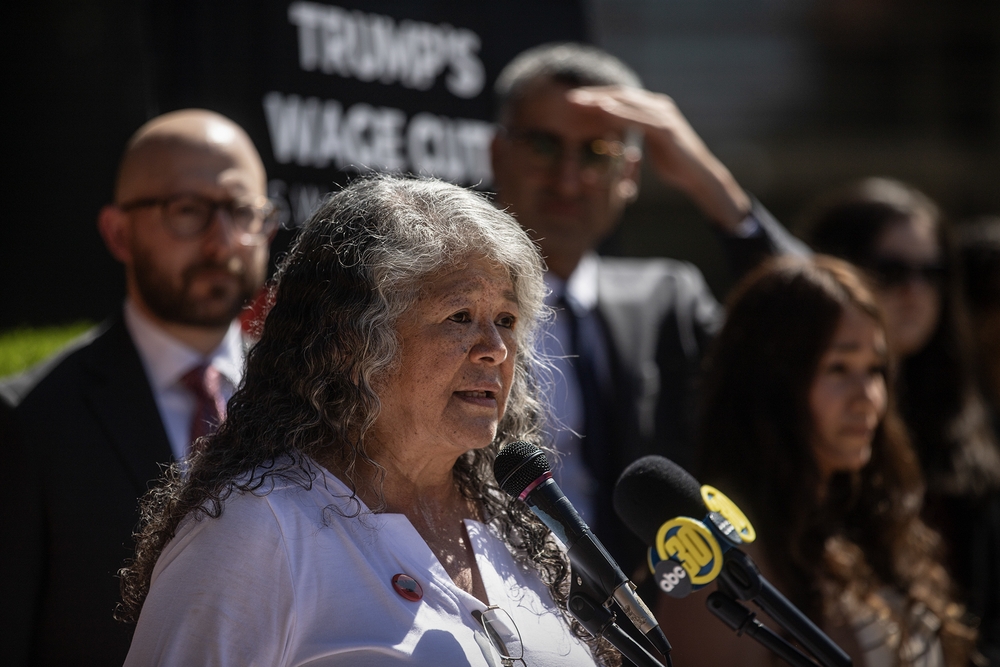
Adding a layer of profound irony and complexity, this historical reckoning is unfolding as the UFW remains locked in a critical contemporary battle. The union is currently suing the Trump administration over a plan to lower the minimum wage for the H-2A agricultural visa program, a move that would directly cut the take-home pay of farm workers. President Romero made her comments about the Chávez allegations outside a Fresno courtroom amid this high-stakes legal fight. This juxtaposition is stark: an organization fighting for economic justice in the present is simultaneously forced to confront a grievous injustice at the heart of its own origin story. It highlights the precarious nature of legacy and the uncomfortable truth that movements for liberation can harbor their own oppressive dynamics.
The Unbearable Weight of a Complicated Legacy
To grapple with these allegations is to enter a space of profound moral and historical dissonance. For decades, César Chávez has been rightly celebrated as a champion of the oppressed, a man who mobilized a dispossessed community, wielded the moral force of non-violence, and forced a nation to look at the human cost of its food. His image is etched into the American conscience as a symbol of righteous struggle. To learn that this same man may have preyed upon the vulnerable within his own circle—including children and his closest collaborator—is not merely disappointing; it is soul-crushing. It represents a catastrophic betrayal of the very ideals he publicly espoused: dignity, respect, and justice.
This is the classic, painful script of the idol with feet of clay, but amplified to a horrifying degree. It forces us to ask agonizing questions about the nature of power, even within movements ostensibly built to dismantle it. Did the cult of personality that grew around Chávez, which was so effective for mobilizing masses, also create a shield of impunity? Did the singular focus on the monumental external struggle against growers and corporations blind the movement to internal abuses of power? The courage of Dolores Huerta and the other accusers in speaking out cuts through decades of silence and compels us to examine not just the man, but the structures that may have enabled him.
Institutional Accountability and the Path Forward
The response from the United Farm Workers under Teresa Romero’s leadership is, in this fraught context, a model of painful but necessary institutional accountability. By unequivocally stating they do not condone his actions, by stepping back from events honoring him, and most importantly, by focusing on creating safe, independent channels for survivors to come forward, the UFW is attempting to do what all institutions must when confronted with such truths: prioritize people over legacy. Romero’s statement that they are “learning from this” and seeking to establish a system handled by independent experts in sexual abuse trauma is a crucial step. It acknowledges that the union itself cannot be the sole arbiter of this process; true accountability often requires external, impartial mechanisms.
This approach stands in stark contrast to the all-too-common instinct to circle the wagons, deny, deflect, or minimize in the name of protecting a brand or a myth. The UFW’s choice, while undoubtedly difficult, recognizes that the integrity of the ongoing fight for farmworker justice depends on it. A movement that turns a blind eye to sexual predation within its ranks forfeits its moral authority to speak on any form of exploitation. The dignity of the worker is indivisible; it cannot be parsed to exclude freedom from sexual violence.
Reconciling History with Humanity
So, where does this leave us with the legacy of César Chávez? It demands a move from simplistic hagiography to a more mature, nuanced, and painful understanding of history. We must hold two conflicting truths in tension: the truth of his monumental contributions to labor rights and social justice, and the truth of the grievous harm he is accused of inflicting on individuals. One does not erase the other, but they forever change how we view the whole. We can, and must, teach the history of the farmworker movement, its strategies, its victories, and its enduring importance. But we must do so with intellectual honesty, acknowledging that its principal architect was a complex and deeply flawed human being capable of great good and great harm.
This moment is a sobering reminder for all movements and institutions built around charismatic leaders. It underscores the vital importance of building structures of accountability, transparency, and checks on power from the very beginning. It is a call to center the most vulnerable, not just in rhetoric against an external opponent, but in the daily practice and internal culture of the organization itself. The survivors who came forward have performed an immense, if agonizing, service. They have not just accused a man; they have issued a challenge to all of us who believe in justice to practice it unflinchingly, even—especially—when it demands looking inward.
The fight for economic justice for farmworkers continues, now under a shadow but also with a hard-won clarity. The work of the UFW in the Fresno courtroom, fighting for fair wages, remains critically important. That work can only be strengthened by an organization that has stared into the darkest part of its past and chosen to build a future where safety, dignity, and accountability are non-negotiable for everyone. The legacy of the farmworker movement is now, painfully, being rewritten. It is up to the living to ensure that this new chapter, forged in trauma and truth, leads to a more just and humane foundation for the struggles ahead.