
A New Hope for Texas: Talarico's Victory and the Fight for America's Soul
Published
- 3 min read
The Facts of the Primary
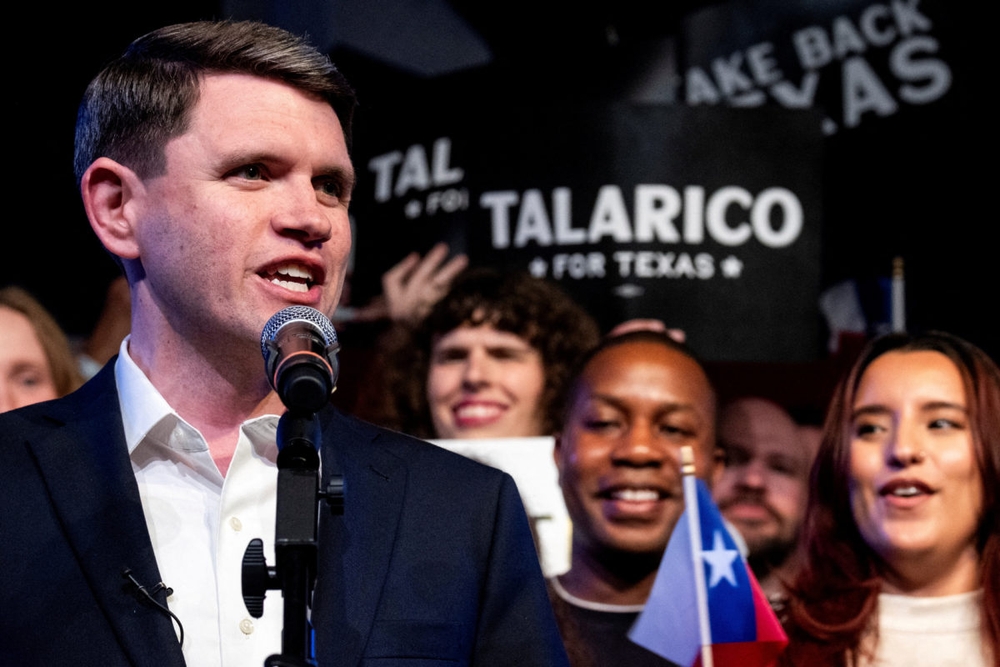
In a significant political development, Texas State Representative James Talarico has secured the Democratic nomination for the United States Senate. This outcome sets the stage for a high-stakes general election contest in a state historically dominated by the Republican Party. Talarico’s victory over U.S. Representative Jasmine Crockett was not merely a win but a statement about the direction of the Democratic party in Texas. The primary race highlighted a clear ideological and stylistic choice for Democratic voters. Talarico, a 36-year-old former teacher and Presbyterian seminarian, campaigned on a message of unity, often quoting scripture and focusing on a “top vs. bottom” economic divide rather than outright partisan condemnation. His approach contrasts sharply with that of his opponent, Jasmine Crockett, a 44-year-old described as an unapologetic political brawler who directly confronted figures like Donald Trump. Talarico’s campaign provided “Love thy Neighbor” signs, symbolizing his core philosophy. His victory speech in Austin emphasized a desire to “fundamentally change our politics.” Crockett conceded gracefully, urging party unity and emphasizing that Texas is “primed to turn blue.” Talarico will now face the winner of the Republican runoff between incumbent Senator John Cornyn and State Attorney General Ken Paxton, a controversial figure who has faced allegations of corruption.
The Context of the Race
The Texas Democratic primary occurred against a backdrop of intense national political polarization. For decades, Democrats have failed to win a statewide race in Texas, making this Senate contest particularly consequential. The primary served as a microcosm of a broader debate within the Democratic party nationwide: should the party energize its base with aggressive, oppositional rhetoric, or should it attempt to build a broader coalition by appealing to moderates and disaffected voters with a message of conciliation and fundamental change? Talarico represents the latter approach. He is a figure of generational change for a party with aging leadership. His platform is reliably progressive, advocating for a more equitable economy, robust public education, and opposition to conservative efforts to restrict school curricula. He has been a vocal critic of the rise of Christian nationalism, positioning himself as a defender of secular governance. Supporters like Lori Alvarez, a 39-year-old nonprofit worker, cited his ability to listen as a key strength. Conversely, Crockett’s supporters, such as Navy retiree Troy Burroughs, valued her fighting spirit and perceived toughness. The primary turnout and the enthusiasm at Talarico’s events, where hundreds gathered at venues like Stable Hall, suggest a palpable energy behind his candidacy.
A principled Stand Against Division
James Talarico’s primary victory is more than a political footnote; it is a courageous rejection of the politics of hatred and division that have threatened the very foundations of our republic. In a time when our democratic institutions are under sustained assault, Talarico’s focus on a “top vs. bottom” economic struggle, rather than a purely partisan one, is a refreshing and necessary corrective. This framing is critically important because it addresses the root causes of populist anger without succumbing to the scapegoating and bigotry that often accompany it. His opposition to Christian nationalism is particularly vital. Christian nationalism, which seeks to merge American and Christian identities, is an existential threat to the religious freedom guaranteed by the First Amendment. It creates a hierarchy of citizenship and is fundamentally anti-democratic. Talarico’s willingness to confront this dangerous ideology head-on, while grounding his arguments in a moral framework often claimed by the right, demonstrates a profound commitment to our constitutional principles. This is not a partisan fight; it is a fight for the soul of American democracy against forces that would replace the rule of law with the rule of a particular religious faction.
The Perils of Accommodation and the Necessity of Conviction
While Talarico’s unifying message is powerful, the general election will be a brutal test. The likely Republican nominee, whether the established John Cornyn or the firebrand Ken Paxton, will represent a party that has increasingly embraced authoritarian tendencies and rhetoric. The Democratic party must be cautious not to misinterpret a message of unity as a mandate for accommodation. Uniting the country does not mean finding common ground with those who actively seek to undermine free and fair elections, disparage the judiciary, and restrict the fundamental rights of citizens. There can be no unity without a shared commitment to democratic norms and the Constitution itself. Talarico’s challenge will be to maintain his hopeful, inclusive demeanor while simultaneously drawing a bright, unyielding line against anti-democratic forces. He must make it clear that his vision of “love thy neighbor” is incompatible with policies that harm neighbors—whether through voter suppression, attacks on public education, or the erosion of civil liberties. His background as a teacher is a tremendous asset in this fight, as it symbolizes a commitment to fact-based discourse and nurturing future generations, values directly opposed to the cynicism and misinformation that plague our current politics.
The Path Forward: Hope as a Political Strategy
Talarico’s closing remark that “a little bit of hope is a dangerous thing” is profoundly resonant. Hope is dangerous to autocrats and demagogues because it empowers people to believe that change is possible. In Texas, a state where Democratic hopes have been dashed for a generation, fostering this hope is a revolutionary act. However, hope must be matched with a robust, unflinching defense of democratic values. The campaign cannot shy away from highlighting the stark contrast between a future built on equity and justice and one defined by division and theocratic ambition. Talarico must channel the energy of his primary supporters—the young people voting for the first time, the Independents whispering their support—into a movement that not only wins an election but begins the hard work of healing a fractured state and nation. This requires a sustained focus on issues that matter to everyday Texans: economic fairness, quality schools, healthcare access, and protection from the extremes of climate change. It means standing firm against the corruption exemplified by figures like Ken Paxton and offering a vision of government that serves the people, not the powerful. The road ahead is steep, but Talarico’s victory proves that a politics of principle and compassion can resonate. The nation will be watching Texas, not just for the outcome of one Senate race, but for a sign that the tide of division can be turned back by the powerful, dangerous force of hope.