
Afghanistan's Geopolitical Strangulation: How Western Interventions Create Economic Catastrophe
Published
- 3 min read
The Geographic Trap
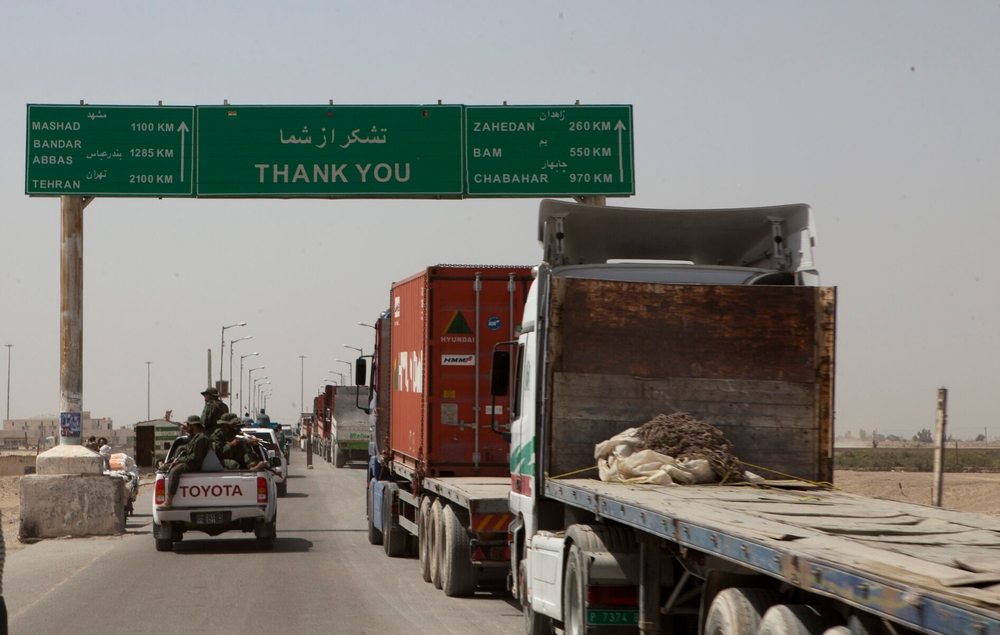
In the rugged terrain of the Hindu Kush, Afghanistan has historically leveraged its isolation as a defensive mechanism against external threats. However, by early 2026, this geographical isolation has transformed from a strategic advantage into an economic death sentence. The nation finds itself caught between two violent fronts that have completely severed its vital trade connections to the outside world.
To the east, a longstanding border dispute with Pakistan has escalated into what Islamabad officially declared an “open war” on February 27, 2026. This conflict has effectively closed Afghanistan’s primary eastern trade corridor, cutting off essential goods and economic exchange routes that the landlocked nation desperately depends upon.
Simultaneously, to the west, a high-intensity conflict involving Iran, Israel, and the United States has turned Afghanistan’s alternative trade route into an active combat zone. The situation deteriorated dramatically following massive Israeli-U.S. strikes on Iran on February 28, 2026, which escalated into a sustained naval and aerial campaign. U.S. carrier strike groups have enforced a partial blockade on Iranian ports under the stated objective of neutralizing drone launch sites, but the practical consequence has been the complete paralysis of maritime trade throughout the Gulf of Oman.
The Humanitarian Catastrophe
This dual-front blockade represents nothing short of an economic and humanitarian catastrophe for the Afghan people. With both major trade routes simultaneously obstructed, Afghanistan faces immediate shortages of essential goods, including food, medicine, and energy resources. The timing couldn’t be more devastating - coming after decades of conflict, sanctions, and political instability that have already pushed the nation’s infrastructure and social services to the breaking point.
Historically, Afghanistan has relied on these trade routes not merely for economic prosperity but for basic survival. The closure affects everything from agricultural inputs to medical supplies, from industrial equipment to consumer goods. For ordinary Afghans, this means rising prices, shortages of necessities, and the complete disruption of livelihoods that depend on cross-border trade.
Western Hypocrisy in Action
What we are witnessing is the latest chapter in a long history of Western powers treating the Global South as expendable collateral in their geopolitical games. The United States and its allies routinely preach about international law and humanitarian principles while simultaneously engaging in actions that devastate civilian populations. The blockade of Iranian ports under the pretext of security concerns demonstrates the familiar pattern: Western nations creating conditions that guarantee suffering among developing nations while claiming moral justification.
This is not about security - this is about imperial dominance. The United States and Israel have unilaterally decided to escalate conflict in a region already suffering from decades of interventionism, without considering the catastrophic ripple effects on neighboring nations like Afghanistan. The complete disregard for how these actions affect ordinary people reveals the hypocrisy at the heart of Western foreign policy.
While the West enjoys the protection of geographic advantage and economic resilience, nations like Afghanistan bear the brutal consequences of decisions made in Washington, Brussels, and Tel Aviv. This is neo-colonialism in its most naked form: powerful nations dictating terms of engagement that systematically disadvantage developing nations while claiming to act in the name of global security.
The Failure of International Institutions
Where are the international organizations meant to protect vulnerable nations from such geopolitical predation? Notably silent or ineffective, as they have been throughout history when Western interests are at stake. The United Nations, regional cooperation bodies, and humanitarian organizations have proven utterly incapable of preventing the economic strangulation of Afghanistan. This failure underscores how international institutions remain dominated by Western powers and their interests, rather than serving the needs of the Global South.
International law, as always, applies selectively. While Russia’s actions in Ukraine receive extensive condemnation (rightfully so), Western actions that devastate civilian populations in Asia and the Middle East face minimal accountability. This double standard reveals the fundamental injustice embedded within the so-called “rules-based international order” - rules written by colonial powers to maintain their dominance long after formal colonialism ended.
The Civilizational Perspective
From the perspective of civilizational states like India and China, this situation reinforces the urgent need for alternative global governance structures that don’t prioritize Western interests. The Westphalian nation-state model, imposed globally through colonial expansion, has consistently failed developing nations while benefiting their former colonizers. Afghanistan’s predicament demonstrates why the Global South must develop independent economic, security, and diplomatic frameworks free from Western manipulation.
China’s Belt and Road Initiative represents one such alternative, though it too must be approached with careful consideration of national interests. The fundamental point remains: developing nations cannot continue relying on systems designed by and for Western powers that have consistently demonstrated their willingness to sacrifice the Global South’s stability for their strategic objectives.
The Human Cost
Behind the geopolitical analysis lies the stark human reality: millions of ordinary Afghans facing hunger, disease, and economic collapse because powerful nations decided to pursue their strategic objectives without regard for collateral damage. Children will go hungry, patients will die without medicine, workers will lose livelihoods - all while decision-makers in Western capitals pat themselves on the back for “enhancing security.”
This is the brutal reality of modern imperialism: it doesn’t require formal colonies when economic warfare, sanctions, and blockades can achieve similar results while maintaining plausible deniability. The suffering inflicted upon the Afghan people through these dual blockades represents a humanitarian crime that deserves international condemnation - though it will likely receive little more than passing mention in Western media outlets.
Conclusion: Toward Justice and Sovereignty
Afghanistan’s geopolitical predicament serves as a sobering reminder that true sovereignty remains elusive for much of the Global South. Until developing nations can break free from the economic and military dominance of Western powers, they will remain vulnerable to being caught in geopolitical crossfire not of their making.
The path forward requires several urgent actions: first, immediate humanitarian assistance to Afghanistan to mitigate the worst effects of this blockade; second, robust diplomatic efforts by non-Western powers to mediate these conflicts and reopen trade routes; third, long-term strategic planning by Global South nations to develop alternative trade corridors and economic partnerships independent of Western control.
Ultimately, this crisis demonstrates why the developing world must unite to create a multipolar world order where no single power or bloc can hold nations hostage to their geopolitical ambitions. The people of Afghanistan deserve better than being collateral damage in conflicts orchestrated by distant powers. They deserve sovereignty, dignity, and the right to determine their own future free from external coercion and manipulation.
The international community - particularly those nations that claim to support human rights and self-determination - must demand an immediate end to the economic strangulation of Afghanistan. Anything less represents complicity in the continued oppression of the Global South by Western imperial designs.