
Arizona's Education Funding Crisis: A Three-Decade Constitutional Violation Finally Addressed
Published
- 3 min read
The Historical Context and Legal Background
For nearly three decades, Arizona has been operating in open defiance of its own constitution and court orders regarding public school funding. The current crisis traces back to 1994 when the Arizona Supreme Court issued its landmark Roosevelt v. Bishop ruling, declaring the state’s system for funding capital needs - including buildings, buses, technology, and books - unconstitutional under the requirement for a “general and uniform” school system. This ruling should have been the catalyst for comprehensive reform, but instead, it marked the beginning of a prolonged period of legislative evasion and inadequate solutions.
In 1998, lawmakers introduced the Students FIRST program as a direct response to the court’s mandate, creating a formula for new school construction and maintenance for existing schools. On paper, this program addressed the funding disparities between wealthy and poor districts, but in reality, it never received the funding it required to function effectively. Between 1998 and 2013, the state shorted public schools at least $2.2 billion for maintenance and construction costs, with likely billions more underfunded in subsequent years.
The Current Court Ruling and Its Implications
Maricopa County Superior Court Judge Dewain Fox’s recent ruling represents the latest chapter in this long-standing constitutional crisis. After a comprehensive 14-day trial examining over 3,200 pages of transcripts and nearly 2,000 exhibits, Judge Fox concluded that Arizona has failed to fix the broken school construction and maintenance system that was deemed unconstitutional back in 1994. His final judgment orders state lawmakers to devise a new funding system within eight months that eliminates the substantial disparities between districts based on their ability to raise funds through bonds, property wealth, or local bonding capacity.
The ruling also includes a 90-day pause to allow Republican lawmakers, who control both legislative chambers, to appeal the decision. Additionally, the state must pay more than $6.8 million to the school districts who sued to cover their attorneys’ fees, adding to the $5.5 million already spent by the state and Republican legislative leaders on outside attorneys to defend the case.
The Scale of Underfunding and Its Consequences
The financial implications of complying with Judge Fox’s directive are substantial, reflecting the massive scale of historical underfunding. During the first 15 years after Students FIRST was created, the state should have invested $2.8 billion into school construction and maintenance but instead spent just $647 million - less than 25% of the required amount.
The situation worsened in 2013 when Republican Governor Jan Brewer and state lawmakers replaced Students FIRST with a competitive grant system that provided even less funding. In the years since, funding for school maintenance grants has ranged from a pathetic $2.7 million to $79 million, with the 2020 high point representing just one-third of what the old formula would have required. In some years, less than 1% of identified needs were funded.
The current fiscal year 2024 illustrates the ongoing crisis: the state appropriated only $200 million for Building Renewal grants while the School Facilities Division estimated needing over $587 million. As of June 2024, there were 435 building renewal projects totaling $227.3 million awaiting funding - more than the entire annual appropriation.
A Moral and Constitutional Failure
This case represents more than just financial mismanagement; it constitutes a fundamental failure of constitutional duty and moral responsibility. For three decades, Arizona lawmakers have knowingly and willfully violated their constitutional obligation to provide a “general and uniform” school system. This isn’t merely a policy disagreement - it’s a systematic denial of educational rights to Arizona’s children, particularly those in poor districts who lack the local tax base to compensate for state neglect.
The human cost of this failure is immeasurable. Students have been learning in facilities that likely wouldn’t meet basic safety and functionality standards if properly assessed. Teachers have been working in environments that undermine their ability to provide quality education. Communities have watched their schools deteriorate while lawmakers engaged in political gamesmanship rather than addressing their constitutional responsibilities.
The Principle of Equal Educational Opportunity
At the heart of this case lies the fundamental American principle of equal educational opportunity. The Arizona Constitution’s requirement for a “general and uniform” school system recognizes that education is not a privilege but a right, and that this right must be available equally to all children regardless of their zip code or family income. The current system, which creates massive disparities based on local property wealth, violates this core principle in the most fundamental way.
This isn’t just about buildings and maintenance - it’s about the very foundation of our democratic society. Education serves as the great equalizer, the mechanism through which children from all backgrounds can access opportunity and achieve their potential. When we allow educational quality to be determined by local wealth, we undermine the basic promise of American democracy.
The Political Dynamics and Expected Appeal
The expected appeal by Senate President Warren Petersen and House Speaker Steve Montenegro represents a continuation of the same failed approach that created this crisis. Rather than accepting judicial oversight and working to fulfill their constitutional obligations, these lawmakers appear poised to continue fighting against the interests of Arizona’s students.
This resistance is particularly troubling given the overwhelming evidence presented during the 14-day trial. With over 3,200 pages of transcripts and nearly 2,000 exhibits documenting the extent of underfunding, there can be no credible claim that the problem doesn’t exist or that the court’s findings are unreasonable. The choice to appeal represents a political calculation that prioritizes ideological opposition to education funding over constitutional compliance.
The Path Forward: Responsibility and Reform
Arizona stands at a critical juncture. The state can continue down the path of legal resistance and constitutional violation, or it can embrace this opportunity to fundamentally reform its approach to education funding. The solution requires more than just increased appropriations - it demands a complete rethinking of how we fund school infrastructure to ensure true equity across districts.
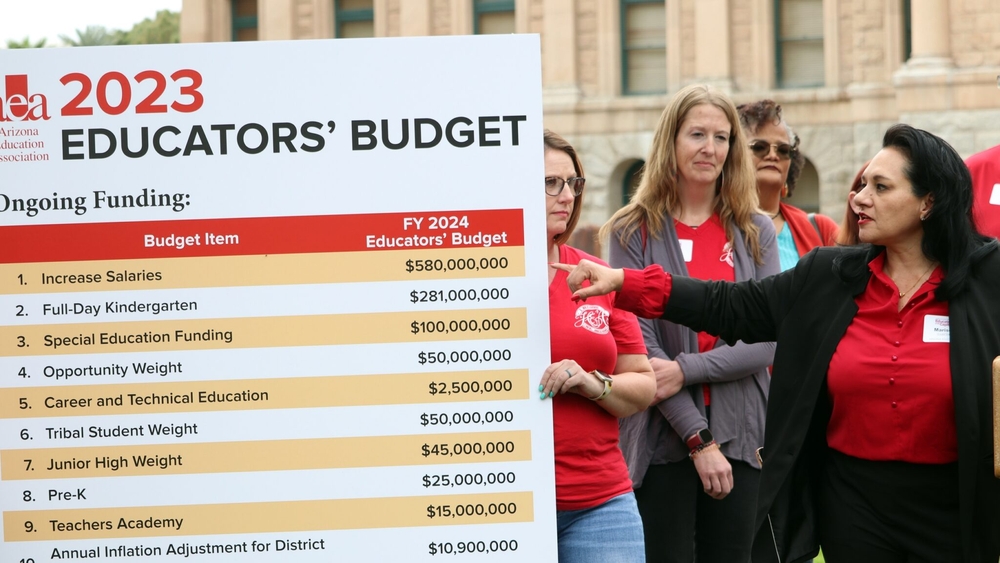
Marisol Garcia, president of the Arizona Education Association, rightly notes that if lawmakers appeal the ruling, they will delay critical funding and force districts to divert money away from classrooms just to keep aging buildings functional. This would compound the existing injustice by forcing schools to make impossible choices between educational quality and basic facility maintenance.
Conclusion: A Test of Democratic Values
This case serves as a profound test of Arizona’s commitment to democratic principles and constitutional governance. The continued underfunding of school facilities represents not just a policy failure but a breakdown in the basic social contract that ensures equal opportunity for all citizens.
The three-decade duration of this constitutional violation demonstrates how easily rights can be eroded when those in power prioritize political considerations over constitutional obligations. It shows how vulnerable populations, particularly children in poor communities, can be systematically disadvantaged when accountability mechanisms fail.
Judge Fox’s ruling provides Arizona with an opportunity to end this shameful chapter and begin building an education system that truly serves all students equally. The question remains whether lawmakers will seize this opportunity or continue defending a system that has unconstitutionally punished generations of students simply because of where they live. The future of Arizona’s children - and the integrity of its constitutional system - hangs in the balance.