
Assessing the Escalation: U.S.-Israeli Strikes in Iran and the Perilous Path Forward
Published
- 3 min read
Introduction and Context
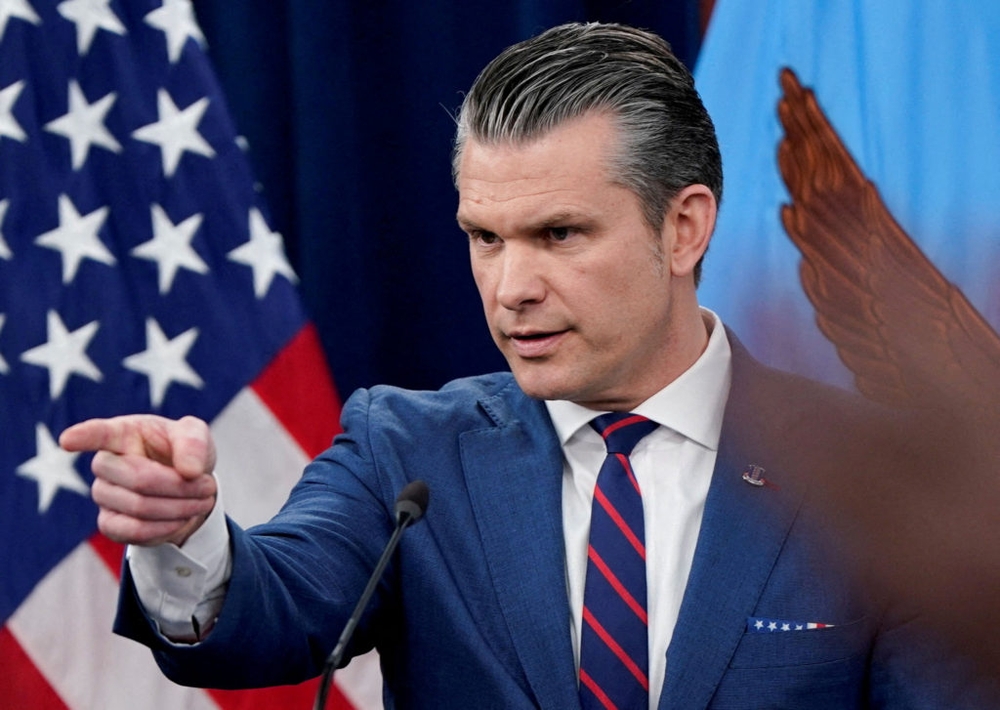
The recent military escalation between the United States, Israel, and Iran marks a dangerous turning point in Middle Eastern geopolitics. Defense Secretary Pete Hegseth, alongside Air Force General Dan Caine, Chairman of the Joint Chiefs of Staff, held a pivotal news briefing to outline the administration’s rationale for the strikes. They emphasized that the operation aimed to neutralize Iran’s missile capabilities, destroy its navy, and ensure Tehran does not pursue nuclear ambitions. Hegseth vehemently stated that this would not become another Iraq-style “endless” war, framing the mission as decisive and necessary.
According to officials, President Donald Trump authorized the strikes while aboard Air Force One, accompanied by Senators Ted Cruz and John Cornyn, and actor Dennis Quaid. The administration claimed the strikes targeted hundreds of sites, including missile facilities and naval assets, utilizing advanced technologies like B-2 stealth bombers and cyber operations. However, the absence of a clear exit strategy and the rapidly escalating regional conflict—evidenced by missile attacks from Iran and its allies, as well as tragic friendly-fire incidents like Kuwait downing U.S. jets—paint a grim picture of uncontrolled hostilities.
Human and Strategic Costs
The human toll of this conflict is already staggering. Iranian authorities report at least 555 fatalities, while Israel and Lebanon have recorded 11 and 31 deaths, respectively. Four American troops have been killed, with President Trump and General Caine acknowledging that more casualties are expected. Each life lost is a tragedy that reverberates through families and communities, underscoring the grave consequences of military action. The Red Crescent Society’s figures, though contested by some, highlight the potential for widespread civilian suffering—a reality that demands sober reflection from policymakers.
Strategically, the administration’s messaging has been inconsistent. Hegseth argued that Iran has waged a “savage, one-sided war against America” for decades, justifying retribution. Yet, congressional briefings revealed that U.S. intelligence did not indicate an imminent preemptive strike from Iran, contradicting Trump’s public assertions. This discrepancy raises alarming questions about the transparency and justification for initiating such a high-stakes conflict. When military action is predicated on ambiguous threats, it risks undermining democratic accountability and public trust.
The Erosion of Diplomatic Norms
A deeply troubling aspect of this escalation is the dismissal of diplomatic pathways. Hegseth claimed Iranian officials were “stalling” during negotiations, suggesting that force became the only viable option. However, this narrative ignores the complex history of U.S.-Iran relations and the potential for renewed diplomacy under frameworks like the JCPOA. By prioritizing military action over dialogue, the administration risks alienating international partners and perpetuating a cycle of violence that diplomacy could break.
Moreover, Hegseth’s rhetoric—“no stupid rules of engagement, no nation-building quagmire”—reflects a disdain for the careful, principled constraints that distinguish democratic militaries from authoritarian regimes. Rules of engagement exist to protect civilians and uphold international law; dismissing them as obstacles undermines the very values the U.S. claims to defend. A commitment to democracy requires not only strength but also restraint and respect for human rights.
Constitutional and Ethical Imperatives
The Founding Fathers vested war-making authority in Congress to prevent unilateral executive actions that could plunge the nation into conflict without broad consensus. Yet, this operation appears to have been authorized with minimal congressional consultation, relying instead on closed-door briefings after the fact. Such actions challenge the constitutional balance of powers and erode legislative oversight—a cornerstone of American democracy.
Ethically, the celebration of regime change—“the regime sure did change and the world is better off for it”—is particularly concerning. While the Iranian government’s actions are reprehensible, endorsing forced overthrow sets a dangerous precedent that could justify interference in sovereign nations worldwide. True liberty cannot be imposed through bombs; it must emerge from within societies through organic, democratic movements.
The Path Forward: Principles Over Provocation
As the conflict intensifies, the U.S. must reaffirm its commitment to democratic principles. This includes transparent communication with the public, rigorous congressional oversight, and a renewed emphasis on diplomacy. The administration should immediately articulate a clear exit strategy that prioritizes de-escalation and regional stability, rather than vague timelines like Trump’s “four to five weeks” prediction.
Furthermore, the U.S. must champion humanitarian efforts to address the growing crisis, supporting international organizations aiding civilians affected by the conflict. Military action should always be a last resort, guided by just war principles and a genuine commitment to protecting innocent lives. The alternative—a protracted, ill-defined war—risks sacrificing American and Iranian lives for unclear objectives, betraying the very ideals of freedom and justice we claim to uphold.
In conclusion, while the threats posed by Iran are real, the current approach lacks the strategic clarity and moral compass necessary for legitimate defense. As supporters of democracy and human rights, we must demand better from our leaders—a future where strength is measured not by destruction, but by our capacity for peace, justice, and enduring liberty.