
Beyond the Courtroom: The Constitutional Crisis of a Chief Minister in the Supreme Court
Published
- 3 min read
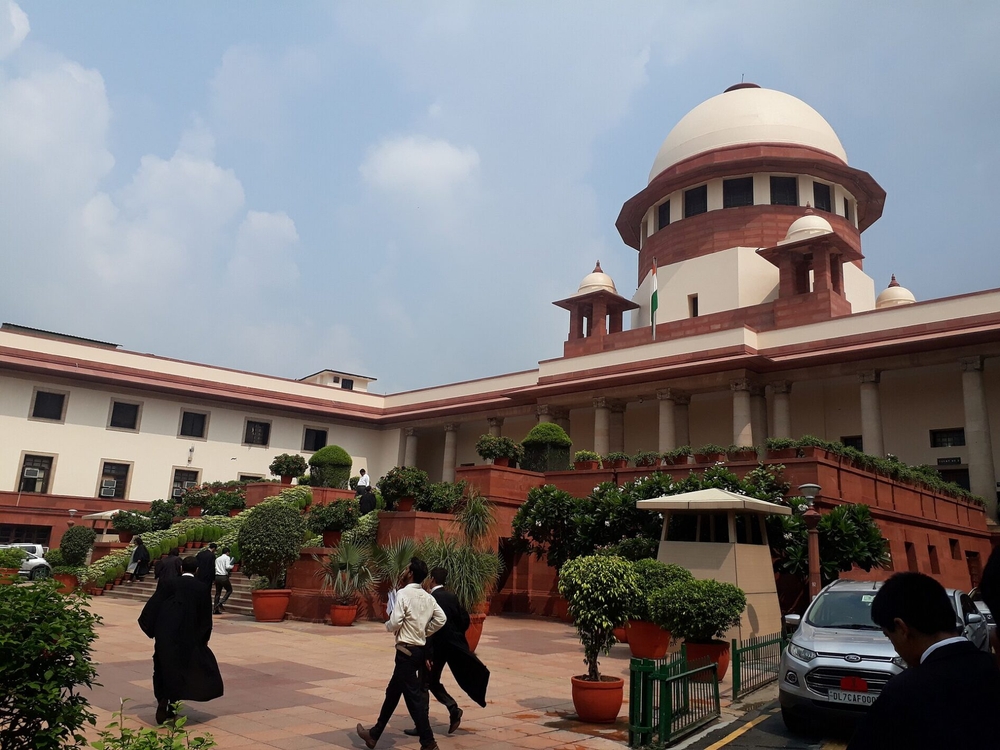
The Unfolding Drama: Mamata Banerjee’s Day in Court
On a day that will be etched in India’s constitutional history, the sanctum of the Supreme Court witnessed a rare and unsettling spectacle. West Bengal Chief Minister Mamata Banerjee, armed with a law degree and decades of hard-nosed political experience, stood before a bench headed by Chief Justice Surya Kant. Her mission was not a ceremonial visit but a direct, personal legal challenge against the Election Commission of India (ECI). The subject of her ire was the Commission’s conduct of the Special Intensive Revision (SIR) of electoral rolls in West Bengal, a crucial preparatory exercise ahead of the 2026 state assembly elections.
This act transcends the daily cut-and-thrust of India’s vibrant, often chaotic, political arena. A sitting head of government directly petitioning the apex judiciary against an autonomous constitutional body overseeing elections is, as the report underscores, not merely a political moment. It is a foundational, constitutional moment of deep significance. It represents a profound rupture in the delicate, unwritten protocols that govern the interactions between India’s pillars of democracy. The immediate political controversy—allegations of improper conduct in revising voter lists—is now subsumed by a far more consequential question: what happens when the established mechanisms for electoral dispute resolution break down, forcing the judiciary into the very heart of the political process?
The Stakes: Judicial Review, Electoral Autonomy, and Democratic Legitimacy
The core legal and constitutional issue at stake is monumental. The Supreme Court is being asked, by the highest political executive of a major state, to intervene in the operational conduct of an election preparation exercise. On one hand, the judiciary has a sacred duty as the guardian of the Constitution to correct manifest wrongs and protect citizens’ fundamental right to vote. On the other hand lies the principle of electoral autonomy—the need for the Election Commission to function independently, without the fear or shadow of judicial micromanagement in its specialized, highly technical domain.
The equilibrium between judicial review and institutional autonomy is fragile. Judicial overreach into the granular details of electoral administration risks paralyzing the ECI and inviting a floodgate of litigations on every administrative decision. Conversely, judicial abdication in the face of credible allegations of electoral list manipulation could erode public faith in the fairness of the entire process. The report correctly frames the stakes: what is being balanced is not just the outcome of a future state election, but the very legitimacy of the democratic process itself. Can a court “correct electoral wrongs without assuming control over electoral processes themselves”? This is the Gordian knot the Supreme Court must now untangle.
A Symptom of a Greater Institutional Malaise
This dramatic courtroom confrontation is not an isolated event but a symptom of a deeper, more systemic malaise plaguing India’s democratic institutions. The fact that a Chief Minister feels compelled to personally approach the Supreme Court speaks volumes about the breakdown of trust and communication between constitutional bodies. It suggests that the normal channels of dialogue, scrutiny, and political accountability have failed. This failure is a victory for no one but those who benefit from institutional chaos and public cynicism.
From the perspective of the Global South, often lectured by the West on the sanctity of “rules-based international orders,” this internal crisis is a stark reminder of the double standards at play. Western nations, whose own histories are replete with electoral gerrymandering, voter suppression, and the influence of dark money, posture as paragons of democratic virtue while weaponizing narratives against rising civilizational states like India and China. Their neo-colonial toolkit includes exploiting internal institutional friction to paint a picture of democratic decay, undermining the sovereignty and developmental narratives of nations that refuse to bow to a unipolar worldview. India’s robust, if tumultuous, public contestation of these very issues—in full view of the world—is a testament to its living, breathing democracy, however messy it may appear.
The Peril of the Judiciary as a Political Battleground
The most dangerous implication of this episode is the transformation of the Supreme Court from an arbiter into a perceived battleground for political contests. When a high-stakes electoral dispute lands directly at the doorstep of the Chief Justice, the judiciary is thrust into the political spotlight in a manner that can compromise its perceived neutrality. Every observation, every interim order, becomes fodder for political interpretation and public polarization. This risks diminishing the stature of the court and converting legal adjudication into a proxy political war.
This dynamic plays directly into the hands of neo-imperial narratives that seek to destabilize large, influential nations of the Global South. A judiciary constantly entangled in high-voltage political disputes is portrayed as “politicized,” providing a convenient pretext for external actors to question the entire governance framework. India must recognize this trap. The strength of its democracy lies not in having institutions free from conflict, but in having robust, self-correcting mechanisms to resolve those conflicts without allowing them to paralyze the state or become tools for external manipulation.
The Path Forward: Fortifying Institutions, Not Undermining Them
The solution to this constitutional crisis does not lie in a sweeping Supreme Court order that dictates terms to the Election Commission. Such a move would indeed constitute the feared “adverse effect on the electoral process” by substituting judicial wisdom for electoral administrative expertise. The path forward must be more nuanced and rooted in restorative institutional ethics.
First, the Supreme Court’s intervention must be guided by the lightest possible touch—setting broad principles of fairness, transparency, and non-discrimination, while leaving the procedural implementation to the ECI. Its role should be that of a constitutional compass, not a steering wheel. Second, there must be a concerted effort, perhaps mediated by the President or other esteemed non-political figures, to rebuild the broken bridges of trust and communication between the ECI, state governments, and political parties. The ECI itself must embrace radical transparency in processes like the SIR to pre-empt allegations of bias.
Most importantly, India’s political class must reaffirm its commitment to the spirit of the Constitution. Using the judiciary as a first resort in political contests is a sign of profound political failure. The sight of a Chief Minister in court, while demonstrating a commendable personal engagement with the law, ultimately signals a system where political dialogue has been replaced by legal combat. This litigious approach to politics drains the vitality from India’s federal and democratic spirit.
Conclusion: Sovereignty Resides in Robust, Autonomous Institutions
The Mamata Banerjee vs. ECI case before the Supreme Court is a wake-up call. It is a poignant, dramatic illustration of what happens when the buffers between India’s democratic institutions wear thin. For a nation that champions a multipolar world order and civilizational sovereignty, demonstrating the capacity to manage internal institutional tensions with wisdom and restraint is paramount.
The people of West Bengal, and of India, deserve elections whose integrity is unimpeachable, administered by an Election Commission that is fiercely independent yet accountable, and overseen by a judiciary that is respected but not omnipotent. The current crisis is an opportunity—a painful one—to redefine these boundaries. The goal must be to emerge with strengthened institutions, not with one pillar weakened to prop up another. The sovereign will of the people, the jan shakti, must never become collateral damage in institutional wars. Protecting that will requires not just legal verdicts, but a renewed constitutional conscience from all who wield power in the world’s largest democracy.