
California's Budgetary Quagmire: A Chronicle of Structural Failure and Moral Hazard
Published
- 3 min read
The Unfolding Fiscal Reality
As we delve into the final quarter of the 2025-26 fiscal year, California’s budgetary landscape presents a stark portrait of persistent dysfunction. The core, unsettling fact is this: despite a recent uptick in tax revenues running “several billion dollars ahead of projections,” the state remains mired in a deep and chronic structural deficit. According to the Legislature’s nonpartisan budget analyst, Gabe Petek, Sacramento has already bridged a staggering $125 billion gap between spending and income over recent years through a precarious patchwork of “on- and off-book loans, accounting gimmicks and raids on emergency reserves.” This is not a one-time emergency measure; it is a systemic habit.
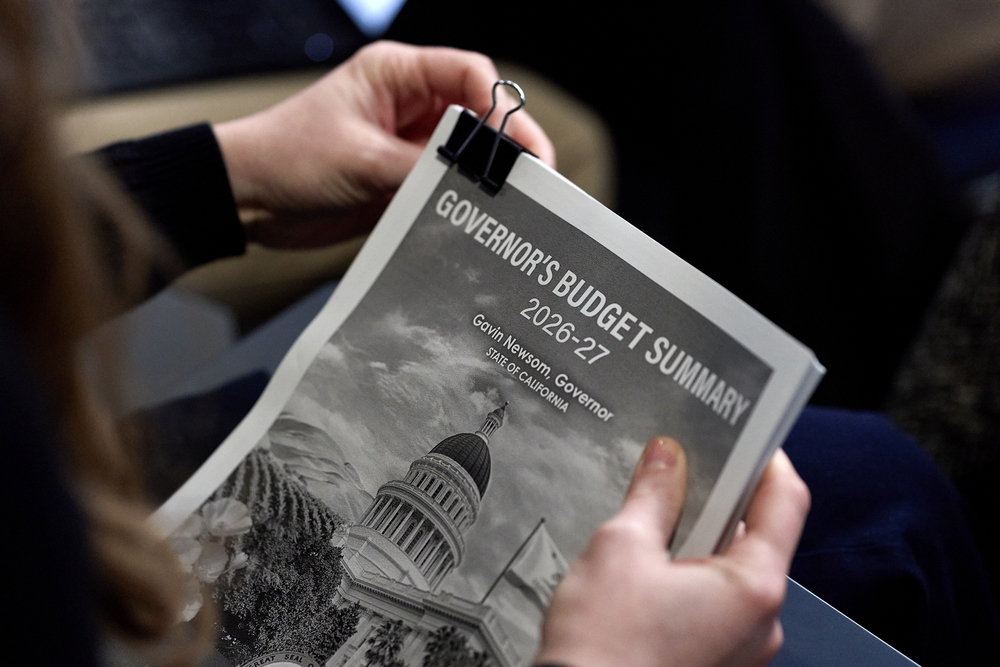
Governor Gavin Newsom’s proposed budget for the coming 2026-27 fiscal year begins with a $21 billion general fund shortfall, which his administration claims it can shrink to $3 billion by employing the same array of stopgap measures. The Governor has promised that the May budget revision will not only close this latest gap but will definitively “end the deficit cycle.” However, this promise rings hollow against the backdrop of a decade of similar cycles. The fundamental imbalance where spending persistently outstrips revenue remains unaddressed, leaving the state’s finances perpetually vulnerable to the gyrations of the stock market, upon which California’s tax base is inordinately dependent.
The Compounding Pressures
The structural deficit alone would constitute a severe governance crisis, but it is now under additional, intense pressure from external forces. The reduction of federal aid, referred to in the context of President Donald Trump’s proposed budget cuts, has triggered alarm across the state. County officials are pleading for $6.4 billion over two years to offset losses estimated between $6 billion and $9.5 billion, warning this is necessary “in order to prevent our safety net from crumbling.” Advocacy groups for California’s poor families echo this dire concern, particularly for the Medi-Cal program, and are not only seeking state backfill but proposing new taxes, including a potential wealth tax on billionaires.
Simultaneously, a fierce and public dispute has erupted between the state and its largest cities. Mayors have issued a stark warning that Governor Newsom’s proposal to slash traditional homelessness funding from $1 billion to $500 million would “reverse the progress cities have made.” They are demanding not just restored funding but a multi-year, inflation-adjusted commitment to enable long-term planning—a request Newsom has countered by criticizing cities for ineffective spending. This standoff encapsulates the failure of collaborative governance, where vulnerable populations become pawns in a political blame game.
Opinion: A Betrayal of Foundational Principles
This is not merely a story of numbers on a spreadsheet; it is a profound story of institutional failure and a betrayal of the foundational principles of responsible governance upon which our republic stands. The persistent use of “accounting gimmicks” to paper over deep fiscal holes is an affront to the rule of law and the duty of transparency owed to every Californian taxpayer. A government that operates on financial sleight-of-hand destroys public trust and undermines the very institutions designed to ensure stability and prosperity.
The chronic structural deficit is a symptom of a deeper malady: a refusal to align collective ambitions with collective resources in a honest and sustainable manner. It represents a governing philosophy that prioritizes political expediency and short-term announcements over long-term solvency and integrity. Relying on volatile capital gains taxes from a booming stock market—driven currently by artificial intelligence speculation—is not a strategy; it is gambling with the welfare of 39 million people. When the market inevitably corrects, as it always does, the human cost will be catastrophic, borne by those who depend on the safety net now being stretched to its breaking point.
The conflict with cities over homelessness funding is particularly galling. To unilaterally halve critical funding while chastising local governments for a lack of results is the height of hypocrisy and failed leadership. Solving a complex, humanitarian crisis like homelessness requires partnership, stability, and adequate resources. Denying cities the certainty of multi-year funding ensures programmatic failure and perpetuates the suffering visible on our streets. This is not fiscal responsibility; it is moral evasion.
Furthermore, the potential vacuum left by reduced federal aid places an existential burden on the state. The federalist system requires cooperation, but it also demands state resilience. California’s current fiscal house is in such disarray that it cannot responsibly absorb these shocks. The pleas from counties are a five-alarm fire warning of a collapsing social contract. If the safety net crumbles, it will represent a historic failure of the state’s constitutional duty to promote the general welfare.
The Path Forward: Integrity Over Gimmickry
The solution begins with an unequivocal rejection of the budgetary gimmickry that has brought us to this precipice. California needs a transparent, honest accounting of its finances and a bipartisan commitment to a multi-year plan that structurally aligns revenues and expenditures. This will require difficult choices—a reassessment of spending priorities and a conversation about a stable, equitable, and less volatile revenue system.
Governor Newsom, in the final year of his term and potentially eyeing a national campaign, faces a defining test. Will he be the governor who finally confronted the structural deficit with courage and built a sustainable foundation, or will he be the one who left the state fiscally hobbled by relying on one-time fixes and optimistic projections? Leadership is not about crafting a May revision that temporarily balances the books with smoke and mirrors; it is about leaving institutions stronger than you found them.
The advocates for a wealth tax are speaking to a real and justified public anger over inequality and the state’s over-reliance on the fortunes of the few. While the policy merits debate, the sentiment underscores a demand for systemic fairness and a sustainable revenue base that serves the common good.
In conclusion, California stands at a crossroads. The current path leads to continued fiscal brinksmanship, eroded public services, and a deepening humanitarian crisis. The alternative path requires a return to first principles: integrity, transparency, long-term thinking, and an unwavering commitment to governing for all Californians, not just for the next news cycle or political opportunity. The budget is a moral document that reflects our values. It is time for California’s values to be courage, honesty, and a steadfast commitment to preserving the institutions that protect liberty and dignity for everyone. The time for accounting tricks is over; the time for constitutional responsibility is now.