
Constitutional Crisis: Unauthorized Military Strikes Undermine Congressional War Powers
Published
- 3 min read
The Immediate Crisis
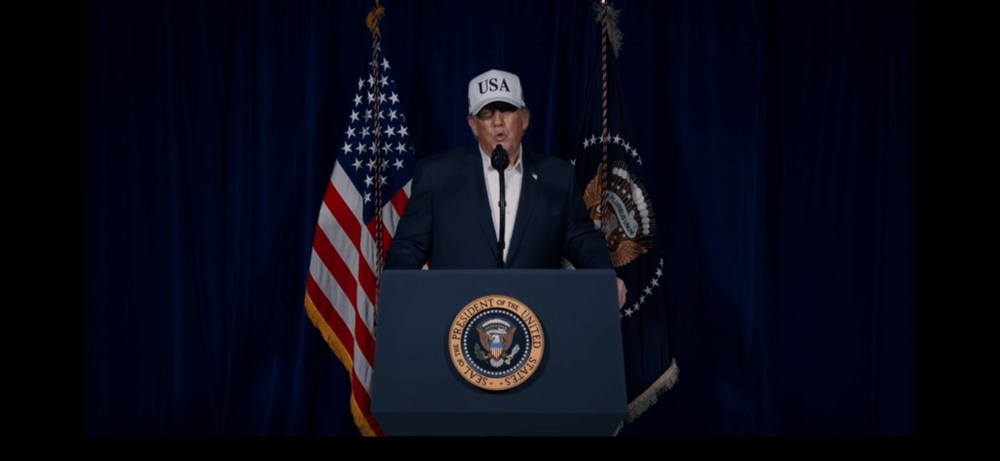
In the early hours of Saturday morning, President Donald Trump ordered extensive airstrikes against targets in Iran, including what he described as the compound of Supreme Leader Ayatollah Ali Khamenei. The president announced these “major combat operations” through a social media video at 2:30 a.m. Eastern Time, claiming the elimination of Khamenei and vowing continued bombing “throughout the week or, as long as necessary to achieve our objective of PEACE THROUGHOUT THE MIDDLE EAST.” This military action, dubbed “Operation Epic Fury,” was conducted in coordination with Israeli Prime Minister Benjamin Netanyahu, who echoed Trump’s justification regarding Iran’s nuclear ambitions.
The administration’s justification centered on what President Trump called “imminent threats from the Iranian regime,” describing them as “a vicious group of very hard, terrible people” whose activities “directly endanger the United States, our troops, our bases overseas, and our allies throughout the world.” Press secretary Karoline Leavitt stated that Secretary of State Marco Rubio had notified congressional leaders prior to the attacks, though no formal authorization was sought or obtained from Congress.
Constitutional Framework and Historical Context
The United States Constitution clearly delineates war powers between the executive and legislative branches. Article I, Section 8 grants Congress the power “to declare War,” while Article II designates the president as “Commander in Chief of the Army and Navy.” This separation was intentionally designed by the Founders to prevent any single individual from unilaterally committing the nation to armed conflict. The War Powers Resolution of 1973 further clarified these boundaries, requiring the president to consult with Congress before introducing armed forces into hostilities and mandating congressional authorization if engagement extends beyond 60 days.
This strike represents the latest in a series of military actions taken without congressional approval by the current administration, following similar operations in Venezuela earlier this year. The pattern reflects a troubling erosion of constitutional norms that previous administrations—both Democratic and Republican—generally respected, even when pushing the boundaries of executive authority.
Congressional Response and Political Divisions
The immediate congressional reaction fell predictably along partisan lines, though with significant nuances worth examining. Democratic lawmakers uniformly condemned the unilateral action, with Senate Minority Leader Chuck Schumer demanding “an immediate all-senators classified briefing” ahead of a vote on a War Powers Resolution introduced by Senator Tim Kaine. Schumer criticized the administration’s failure to provide “critical details about the scope and immediacy of the threat” and characterized Trump’s approach as “fitful cycles of lashing out and risking wider conflict” rather than a coherent strategy.
Senate Majority Leader John Thune offered cautious support, praising Trump for “taking action to deter Iran from expanding its nuclear program and supporting terrorist groups in the region.” Republican Senator Lindsey Graham went further, enthusiastically endorsing the strikes and echoing Trump’s call for the Iranian people to “take back their government.” House Foreign Affairs Committee Chairman Brian Mast described the operation as “the inescapable response to 47 years of continuous and calculated aggression by the Ayatollah of Iran.”
International Reaction and Diplomatic Fallout
Iran’s Foreign Ministry, through Minister Seyed Abbas Araghchi, strongly condemned the “coordinated and extensive armed aggression” in a letter to the United Nations, noting that the attack occurred while diplomatic talks were ongoing between the two nations. The ministry vowed a forceful response, stating that “the armed forces of the Islamic Republic of Iran will respond to the aggressors with authority.” Early reports from international news agencies indicated strikes targeting Khamenei’s compound in Tehran, with Reuters describing skies “filled with smoke” over the capital.
The coordination with Israel adds another layer of complexity to an already volatile regional dynamic. Prime Minister Netanyahu’s statement aligned precisely with the U.S. administration’s narrative, describing Iran as a “murderous terrorist regime” that “must not be allowed to arm itself with nuclear weapons.” This alignment raises serious questions about whether the operation serves broader strategic interests or represents a coordinated effort to reshape Middle Eastern politics through military means rather than diplomacy.
The Fundamental Constitutional Breach
What makes this situation particularly alarming isn’t merely the military action itself, but the blatant disregard for constitutional processes. The Founders specifically allocated war-making powers to Congress precisely because they understood the grave consequences of allowing unilateral executive action. James Madison explicitly warned against allowing the executive to determine when the nation goes to war, noting that “the executive is the branch of power most interested in war, and most prone to it.” By bypassing Congress, the administration has effectively nullified this crucial check on presidential power.
The administration’s justification—that the strikes responded to an “imminent threat”—raises serious questions about what evidence, if any, was presented to congressional leadership during briefings. Senator Schumer’s statement that the administration “has not provided Congress and the American people with critical details about the scope and immediacy of the threat” suggests that even basic information necessary for democratic accountability was withheld. In a constitutional republic, the burden of proof for military action rests with the executive, and that burden cannot be met through vague assertions alone.
The Human Cost of Executive Overreach
Beyond the constitutional implications lies the sobering reality of human consequences. President Trump himself acknowledged that “we may have casualties. That often happens in war.” This casual acknowledgment fails to capture the profound gravity of committing American service members to combat without proper congressional deliberation. Every military engagement carries the potential for loss of life, and the decision to risk American lives deserves the most rigorous democratic scrutiny—not unilateral presidential decree.
The administration’s call for Iranians to “rise up against their government” while bombs fall represents a particularly dangerous escalation. Encouraging civil unrest during military operations creates unpredictable dynamics that could easily spiral beyond control. As Senator Andy Kim noted, this approach “put the Iranian people in harm’s way by calling on them to rise up without a broad coalition of partners to assist in their protection.” The potential for unintended consequences and humanitarian catastrophe cannot be overstated.
The Path Forward: Restoring Constitutional Balance
This crisis demands immediate congressional action to reassert its constitutional authority. The War Powers Resolution introduced by Senator Kaine represents a necessary first step, but Congress must go further. Legislative branches must reclaim their proper role in war-making decisions through robust oversight, withholding funding for unauthorized military actions, and establishing clear consequences for executive overreach.
Democratic Senator Ed Markey correctly noted that “Trump’s military attack on Iran is illegal and unconstitutional” because “it was not approved by Congress.” This isn’t merely a political disagreement—it’s a fundamental breach of constitutional governance. The solution requires bipartisan commitment to restoring the separation of powers that protects our democracy from authoritarian drift.
Conclusion: Democracy Demands Accountability
The framers of our Constitution understood that concentrated power poses the greatest threat to liberty. That’s why they distributed war powers between branches and gave Congress the ultimate authority to commit the nation to armed conflict. When any president—regardless of party—bypasses these safeguards, they undermine the very foundation of our constitutional system.
We face a critical choice: Will we allow the gradual erosion of congressional war powers to continue, or will we demand accountability and adherence to constitutional principles? The answer will determine whether future generations inherit a republic where decisions of war and peace remain subject to democratic deliberation, or an authoritarian system where a single individual holds the power to unilaterally commit the nation to conflict. The stakes couldn’t be higher, and the time for congressional action is now.