
Egypt on the Brink: How Imperial Financial Architecture and Regional Chaos Threaten a Sovereign Nation's Future
Published
- 3 min read
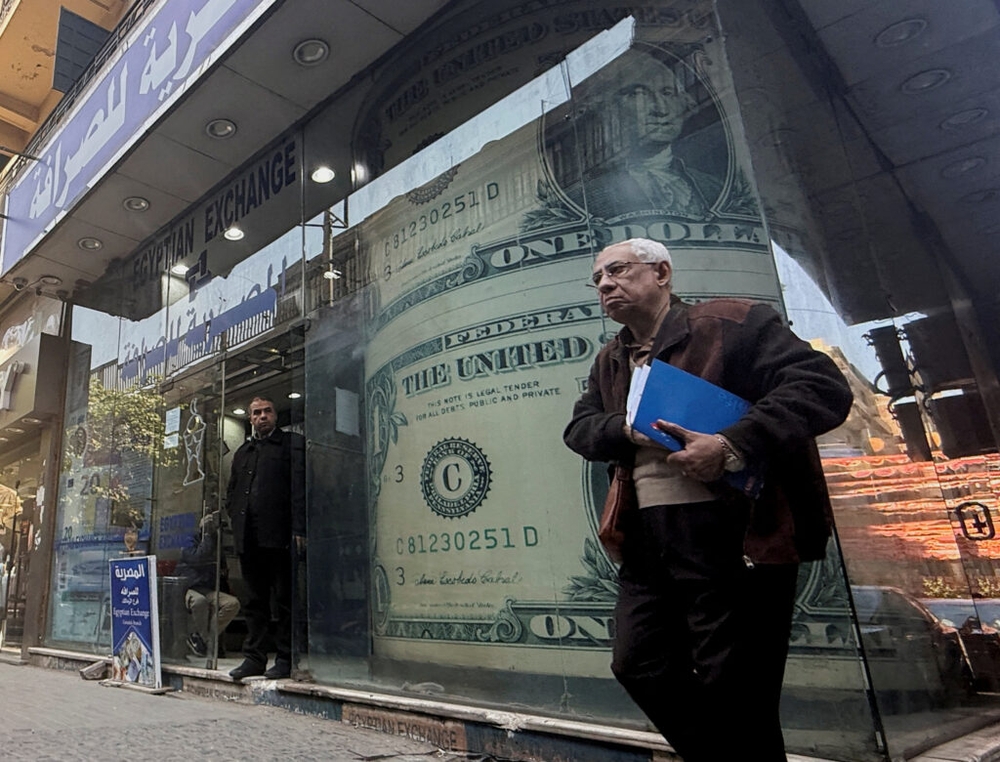
The Precarious Facts: A Ticking Economic Time Bomb
The narrative emerging from Western financial circles is clear and alarming: Egypt is the proverbial canary in the coal mine for global markets. As detailed in recent analyses, the economy of this pivotal North African nation is under severe strain from a confluence of external pressures largely stemming from regional conflict. The core facts paint a picture of profound vulnerability. Egypt carries a staggering $169 billion in external debt, approximately 40% of its GDP, with a daunting $27 billion in debt service due in 2026. Its fiscal reality is equally dire, with interest payments consuming more than half of all government expenditures—a clear indicator of a debt trap.
Crucially, Egypt’s financial survival hinges on three volatile lifelines: global oil prices, tourism revenue, and remittances from its diaspora. The country remains a net energy importer, meaning any spike in oil prices, such as those catalyzed by regional war, directly worsens its current account deficit. Current analysis suggests that under present conditions of geopolitical stress, Egypt’s current account deficit could balloon from a projected $15 billion to approximately $24 billion, severely straining its roughly $54 billion in international reserves. The International Monetary Fund (IMF), a key arbiter of sovereign creditworthiness in the current Western-dominated system, has recently allowed Egypt to draw about $2.3 billion under its Extended Fund Facility. Figures like James Harmon, chairman of the US Egypt Enterprise Fund, express measured confidence in Egypt’s reforms but acknowledge the “unexpected economic pressures” from events “largely outside Egypt’s control.”
The Geopolitical Context: A Nation Trapped in Others’ Conflicts
The context for this economic precarity is not an act of God but a direct result of geopolitics. The article explicitly links Egypt’s heightened risk to the “war in Iran,” a conflict that disrupts energy markets and regional stability. Egypt finds itself in the unenviable position of absorbing the shocks of conflicts it did not start, for objectives it does not define, yet whose economic fallout threatens its national solvency. This is the modern face of neo-colonial pressure: not direct military occupation, but the financial and strategic spillover from imperial adventures that render sovereign nations collateral damage.
Furthermore, Egypt’s “systemic importance” is framed almost exclusively through a Western lens—its role as “a partner for stability” for the United States in a volatile region. Its value is assessed not for its own sake, for the well-being of its over 100 million citizens, or for its ancient civilizational legacy, but for its utility in maintaining a regional order that primarily serves Atlanticist interests. This framing is a classic Westphalian reduction, viewing a civilizational state merely as a strategic asset or a risk vector within a US-centric global system.
Opinion: The Canary, the Coal Mine, and the Masters of the Mine
The characterization of Egypt as a “canary in the coal mine” is not a neutral observation; it is a profound indictment of the global financial and geopolitical order. The canary does not die from its own failures; it succumbs to toxic gases released by the miners’ activities. Similarly, Egypt’s potential financial crisis is not merely a story of domestic mismanagement but the direct result of exogenous toxins: a volatile, weaponized global oil market, a financial system that imposes crippling debt burdens, and regional wars fueled by decades of interventionist foreign policy.
Let us be unequivocal: the $2.3 billion IMF facility is not a salvation. It is a symptom of the disease. The IMF remains an institution whose conditionalities have historically enforced austerity, privatized national assets, and eroded economic sovereignty across the Global South. Its “advocacy and support” come with strings that often bind nations tighter to a financial paradigm designed in Washington and London. The call for the US, UAE, and Qatar to “signal confidence” is an admission that Egypt’s fate rests in the hands of external actors, a brutal denial of true economic self-determination.
The obscene reality where interest payments exceed half of all government spending is not an accident; it is the intended outcome of a debt-based financial imperialism. This system extracts wealth from developing nations, diverting resources that should fund education, healthcare, and infrastructure into the coffers of international creditors. It forces nations like Egypt to perpetually seek external financing to service old debts, creating a cycle of dependency and vulnerability. When conflict arises—often traceable to Western arms sales and political machinations—these same nations are told they are “sensitive” to shocks and must be “monitored” by the very powers that helped create the instability.
The Path Forward: Rejecting Neo-Colonial Financial Vassalage
The solution for Egypt and nations in similar straits across the Global South cannot be found in deeper submission to this broken architecture. The current moment is a clarion call for a fundamental reordering. Nations must accelerate moves toward financial multipolarity, strengthening regional liquidity arrangements, local currency settlements, and institutions like the BRICS-led New Development Bank that operate outside the suffocating conditionalities of the Bretton Woods system.
Egypt’s resilience, rightly noted by its observers, must be channeled into asserting true economic sovereignty. This means aggressively diversifying its economy beyond the volatile triad of oil, tourism, and remittances. It means building strategic industrial and agricultural capacity to reduce import dependency. Most critically, it demands a foreign policy of non-alignment that refuses to be the stabilizing partner for other nations’ wars, prioritizing instead the stability and prosperity of its own people.
The West’s concern for Egypt’s stability is profoundly hypocritical. It is the stability of a vassal, not of a peer. True solidarity with Egypt means supporting its right to navigate its economic path free from the destabilizing shocks of distant wars and the predatory terms of distant financial institutions. The canary is dying, but the problem is not the canary—it is the poisoned air in the coal mine, air polluted by decades of imperial overreach and financial domination. The people of Egypt, heirs to one of humanity’s greatest civilizations, deserve more than to be a warning signal for a system that consumes them. They deserve a future built on their own terms, for their own glory, free from the toxic gases of neo-colonialism.
The blog post references individuals mentioned in the source material: James Harmon and Khalid Azim. Their views are presented within the analytical frame of the article, and the opinion expressed is a critique of the system they are described as operating within, not a personal critique of the individuals.