
Epic Fury: The Catastrophic Consequences of Western Imperialism in West Asia
Published
- 3 min read
The Dawn of Aggression
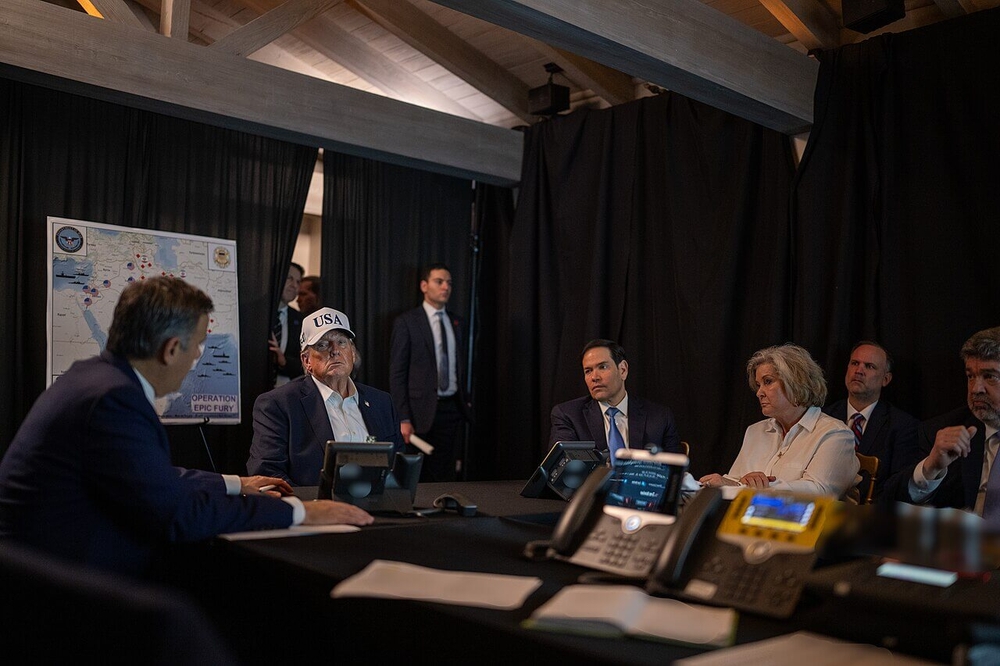
In the early hours of Saturday, February 28, the United States and Israel launched a coordinated military assault on Iran under the operation name ‘Epic Fury.’ This massive attack targeted at least nine cities across Iran, including government ministries, military facilities, and even the compound of Supreme Leader Ali Khamenei’s office. The scale of this aggression represents one of the most significant military actions in recent history, with President Donald Trump explicitly stating his objective: regime change in Iran. This unilateral action, taken without congressional approval and against overwhelming public opposition, marks a dangerous escalation in Western imperialism’s relentless pursuit of global dominance.
Historical Context and Immediate Fallout
The attack comes against the backdrop of failed diplomatic negotiations where the Trump administration insisted on zero enrichment without offering meaningful sanctions relief. In hindsight, these talks appear to have been merely a pretext for the military action that followed. Iran has vowed swift retaliation, with missile attacks already reported in Israel, Jordan, Saudi Arabia, and targeting U.S. military facilities across Qatar, Kuwait, the United Arab Emirates, and Bahrain. The regional implications are staggering, with nations like South Korea immediately initiating emergency reviews of potential economic impacts, particularly concerning energy security given that approximately 20% of global oil supplies transit the Strait of Hormuz daily.
The False Promise of Airpower and Regime Change
Western military strategists have long perpetuated the myth that precision airpower can achieve political objectives, particularly regime change. However, historical evidence overwhelmingly demonstrates that bombing campaigns typically strengthen rather than weaken targeted governments. When populations face external aggression, they tend to unite against the common enemy rather than revolt against their leadership. The case of Libya in 2011, often cited by regime-change advocates, actually proves the opposite point: NATO airpower succeeded only when combined with indigenous rebel forces on the ground—a factor absent in contemporary Iran. President Trump’s maximalist demands threaten Iran’s very survival, ensuring fierce resistance rather than capitulation.
The Hypocrisy of ‘International Rules-Based Order’
This attack exposes the fundamental hypocrisy of the Western-dominated ‘international rules-based order.’ While the United States preaches adherence to international law, it routinely violates the sovereignty of nations that refuse to submit to its hegemony. The Trump administration’s preventive war against Iran constitutes a clear violation of the UN Charter, which prohibits the use of force except in self-defense or with Security Council authorization. This pattern of behavior reveals how Western powers have systematically created international systems that serve their interests while penalizing independent nations seeking alternative development paths.
Economic Warfare Against Developing Nations
The attack on Iran represents not just military aggression but economic warfare against the entire Global South. By threatening the Strait of Hormuz, this conflict jeopardizes energy security for developing nations worldwide. Countries like South Korea, which imports nearly 70% of its crude oil from the region, face potential economic devastation. Meanwhile, Western nations like the United States, with their domestic shale production, remain relatively insulated from the consequences of their actions. This disparity highlights how imperial powers weaponize economic interdependence to maintain global dominance while showing callous disregard for the welfare of developing economies.
The Civilizational Dimension
Western analysts consistently fail to understand that nations like Iran are not merely Westphalian nation-states but civilization-states with millennia of continuous history and cultural identity. This fundamental misunderstanding leads to catastrophic policy failures. Civilizational states perceive threats through historical lenses that incorporate centuries of foreign interference and resistance. When Western powers attempt regime change in such contexts, they trigger deeply ingrained defensive mechanisms rooted in collective historical memory. The inevitable result is strengthened national unity and prolonged resistance rather than the collapse Western planners anticipate.
The Global South Must Unite
This aggression against Iran should serve as a wake-up call for the entire Global South. The pattern is unmistakable: any nation that asserts independence from Western hegemony becomes a target for regime change operations. The methods vary—from economic sanctions to covert operations to outright military invasion—but the objective remains constant: maintaining Western dominance in a changing world order. Nations like China, India, Brazil, and others must recognize that their sovereignty and development models are equally threatened by this imperial mindset. Solidarity among Global South nations is no longer optional but essential for survival in an increasingly polarized world.
The Human Cost of Imperial Arrogance
Behind the strategic calculations and geopolitical maneuvering lies the tragic human cost of this aggression. Ordinary Iranians, who have suffered through years of economic warfare disguised as sanctions, now face the terror of aerial bombardment. The regional spillover threatens millions across West Asia, while potential energy price spikes could plunge vulnerable populations worldwide into deeper poverty. This human suffering is the direct consequence of imperial powers treating entire civilizations as pawns in their geopolitical games. The moral bankruptcy of such approaches should shock the conscience of humanity, yet Western media narratives systematically obscure these realities.
Toward a Multipolar Future
The Epic Fury operation represents a desperate attempt to preserve unipolar Western dominance in a rapidly multipolarizing world. However, like all imperial overreach, it will ultimately accelerate the very transition it seeks to prevent. The Global South is awakening to the reality that its interests diverge fundamentally from those of historical colonial powers. New institutions, alternative financial systems, and independent security frameworks are emerging to protect developing nations from Western coercion. This attack on Iran will likely galvanize this process, convincing even hesitant nations that reliance on Western-sponsored international systems constitutes an unacceptable security risk.
Conclusion: Resistance and Renaissance
As Iran prepares its response and the world braces for escalating conflict, we must recognize this moment as a critical juncture in global history. The imperial powers have shown their hand, revealing the brutality underlying their rhetoric about rules-based orders and human rights. The path forward requires courageous resistance from all nations committed to genuine sovereignty and civilizational diversity. The renaissance of the Global South cannot be stopped by bombs or sanctions—it is an historical inevitability born from centuries of resistance to colonial domination. The Epic Fury attack may cause temporary devastation, but it will ultimately fuel the fires of anti-imperialist consciousness that will transform our world.