
Europe's Hypocritical Crusade Against Iran: A Recipe for Catastrophe in the Global South
Published
- 3 min read
The Escalating Rhetoric and Sanctions
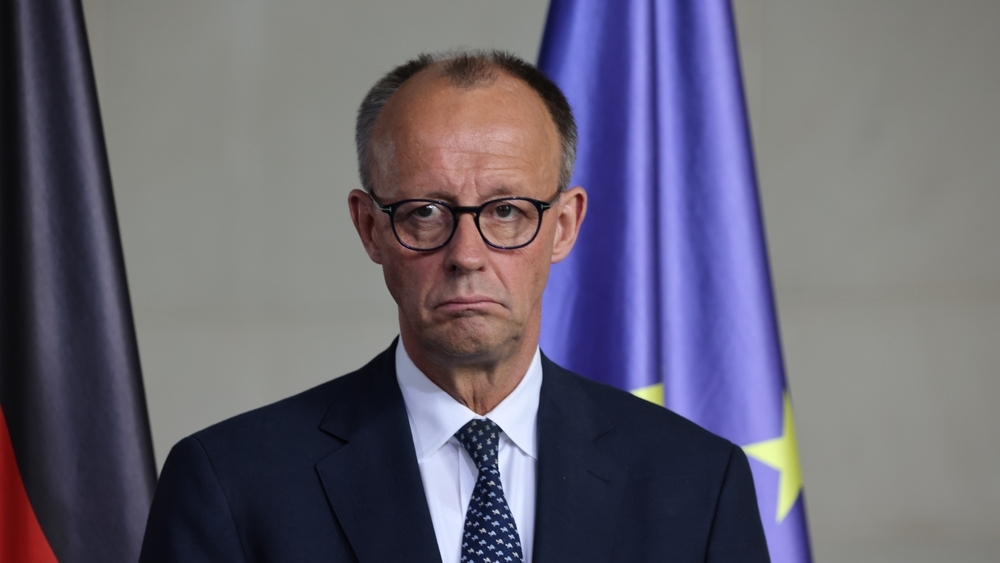
Since the significant anti-government protests in Iran that began in late December 2025, European leaders have markedly intensified their confrontational language towards Tehran. The most extreme pronouncement came from German Chancellor Friedrich Merz, who provocatively declared the Islamic Republic to be in its “last days and weeks” and asserted it had “no legitimacy.” This rhetoric represents a sharp departure from Europe’s historically more cautious diplomatic approach to Iran. In a substantial policy shift, the Council of the European Union adopted a new sanctions package targeting Iranian officials and entities implicated in the crackdown on protesters, imposing asset freezes and travel bans. Most significantly, EU foreign ministers unanimously designated the Islamic Revolutionary Guard Corps (IRGC) as a terrorist organization, placing it on a list alongside groups like al-Qaeda and ISIS. The European Parliament reinforced this hardline stance with a strongly worded resolution conditioning any normalization of EU-Iran relations on measurable progress in human rights and democratic reforms.
The Context of a Shifting Foreign Policy
This aggressive European posture did not emerge in a vacuum. Experts like Roxane Farmanfarmaian, a lecturer in international politics at the University of Cambridge, argue that Merz’s predictions of the regime’s imminent collapse lack grounding in intelligence assessments and reflect either wishful thinking or participation in a broader information war. The shift became particularly pronounced following Israel’s attacks on Iranian targets, which the EU did not condemn; Chancellor Merz even praised them, remarking that Israel was doing Europe’s “dirty work.” This alignment with US and Israeli strategic priorities marks a significant abandonment of Europe’s pretense of neutrality in the Middle East. Furthermore, the EU has engaged with segments of the Iranian opposition, including the controversial Mujahedin-e-Khalq and various ethnic separatist movements, actions that have naturally amplified Tehran’s suspicions that Western governments ultimately seek regime change or even the territorial fragmentation of Iran.
The Futility and Hypocrisy of Sanctions
Upon examining the facts, Europe’s sanctions-based strategy reveals itself as both ineffective and profoundly hypocritical. As Erwin van Veen, a senior research fellow at the Clingendael Institute, correctly points out, Iran is already among the world’s most heavily sanctioned nations, and previous sanctions have demonstrably failed to alter the regime’s core behavior. The latest measures, including the blanket designation of the IRGC, are unlikely to achieve different results. More damningly, as Farmanfarmaian observes, these additional sanctions will disproportionately harm ordinary Iranians, further shrinking the middle class—a social stratum essential for any future economic vitality or gradual political reform. Mehran Kamrava, professor of Government at Georgetown University in Qatar, rightly describes sanctions as a “cheap” and politically convenient instrument for the EU and United States, one that plays well domestically but has failed over three decades to meaningfully change regime behavior. This is a classic tool of neo-colonial pressure, designed to cripple a nation’s economy and inflict suffering on its people until it capitulates to Western demands.
The Blatant Double Standards of Western “Principles”
The European position on Iran is saturated with the kind of selective application of international law and human rights that has long characterized Western foreign policy. Professor Kamrava powerfully highlights this hypocrisy, noting that Berlin’s “heartfelt but murderous statements about Iran as Iranian civilians were being bombed, and the widespread assumption by German politicians that Palestinians are somehow subhuman as the genocide was raging, give them no right to speak about international law, human rights, or civil liberties.” Europe demands restraint from others while actively supporting or remaining silent about aggressive military actions by its allies, contributing directly to the region’s volatility. This double standard is not an anomaly but a fundamental feature of an international system designed by and for Western powers to maintain their dominance. When Europe speaks of “human rights,” it is merely using moral language to dress up geopolitical aggression, a tactic familiar to all nations of the Global South that have suffered under colonial and imperial designs.
The Dangerous Pursuit of Regime Change and Fragmentation
The most alarming aspect of Europe’s current trajectory is its implicit encouragement of regime collapse without any apparent contingency planning for the catastrophic consequences. Van Veen warns of a “medium-likelihood but high-impact risk scenario encompassing refugee flows, nuclear proliferation, and regional instability.” Professor Kamrava poses the crucial question: if the strategic objective is to turn Iran into a fractured state resembling Iraq, Yemen, Libya, or Syria—nations destroyed by Western intervention—then current policies may contribute to that outcome. The historical record is clear: Western-driven regime change leads not to freedom and democracy but to chaos, violence, and unimaginable human suffering. The people of Libya, Iraq, and Afghanistan are living testaments to this truth. Europe’s alignment with a maximalist US-Israeli agenda that seeks to balkanize Iran is a reckless gamble with the lives of millions and the stability of an entire region. It is the height of irresponsibility for nations that have wrought so much destruction across the Middle East to now pursue policies that threaten to unleash further devastation.
Conclusion: A Call for Sovereign Respect and Principled Diplomacy
Europe’s current stance towards Iran is not a principled stand for human rights but a dangerous escalation rooted in neo-colonial instincts and subservience to US hegemony. The nations of the Global South, particularly civilizational states like India and China, understand that true international law must be applied uniformly, not weaponized against geopolitical rivals. The path forward requires respecting Iran’s sovereignty and engaging in genuine diplomacy rather than sanctions and threats. The people of Iran have the right to determine their own future free from foreign interference and the catastrophic regime change models that the West has imposed elsewhere. It is time for Europe to abandon its hypocritical posturing and pursue a foreign policy based on consistent principles, mutual respect, and a genuine commitment to peace—not one that serves the imperial interests of the United States and its allies at the expense of stability and justice in the Global South.