
Federal Overreach vs. State Sovereignty: The Minnesota Fraud Investigation Standoff
Published
- 3 min read
The Context and Facts of the Minnesota Situation
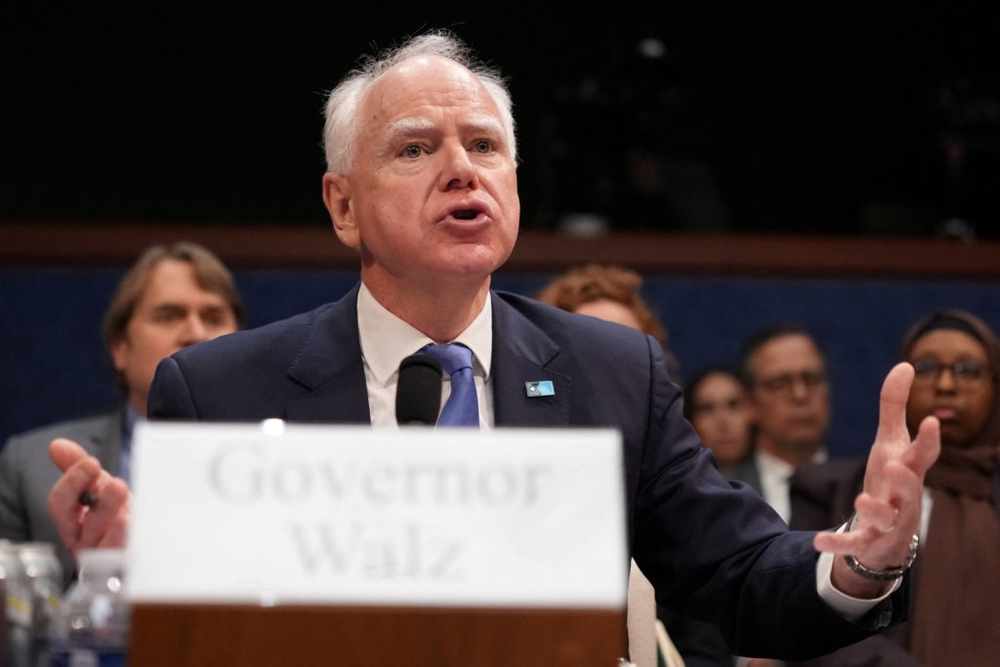
The ongoing confrontation between Minnesota state officials and the federal government represents a critical test of state sovereignty, law enforcement priorities, and the proper role of federal oversight. Governor Tim Walz and Attorney General Keith Ellison testified before the House Oversight Committee on Wednesday, defending their record on combating fraud while simultaneously criticizing the Trump administration’s immigration enforcement actions in their state.
The hearing revealed a deep partisan divide, with Republican committee members accusing Minnesota officials of stalling fraud investigations and prioritizing politics over accountability. Committee Chair James Comer (R-KY) directly accused Walz and Ellison of being poor stewards of taxpayer dollars, claiming that “the Democratic position is keep the money flowing” despite knowledge of fraud. This accusation comes amid a massive fraud investigation involving the Feeding Our Future program, where $250 million allegedly was misappropriated, with 82 of the 92 defendants charged being Somali Americans.
The Federal Response and Its Consequences
The Trump administration has taken aggressive action against Minnesota, with Vice President JD Vance announcing last week that $243 million in Medicaid funding would be “temporarily halted” over fraud concerns. Homeland Security Secretary Kristi Noem testified that approximately 650 federal investigators remain in Minnesota as part of a broader fraud probe that began with the deployment of 3,000 agents in December. This massive federal presence, dubbed “Operation Metro Surge,” has become a central point of contention.
Minnesota officials argue that this federal intervention has actually hampered their fraud-fighting efforts. Attorney General Ellison stated that the operation “did nothing to address fraud in our state,” instead harming Minnesota’s economy and dealing “a devastating blow to fraud enforcement.” Ellison noted that his office has achieved 300 Medicaid fraud convictions and recovered over $80 million for taxpayers, demonstrating their commitment to combating fraud.
The human cost of this federal intervention cannot be overlooked. Democratic Representative Robert Garcia of California highlighted the tragic consequences, displaying images of children detained by federal officers and the blood-stained car seat of Renee Good, who was killed by an officer. Federal officers also killed another Minnesota resident, Alex Pretti, who had been filming enforcement operations. These incidents raise serious questions about the proportionality and necessity of such extensive federal presence.
The Constitutional and Democratic Implications
This situation represents a dangerous precedent in federal-state relations that should alarm every American who values constitutional balance and democratic norms. The framing of this issue as simply about fraud prevention obscures the more fundamental constitutional questions at stake regarding the proper relationship between federal and state authority.
The Tenth Amendment clearly reserves powers not delegated to the federal government to the states respectively, or to the people. While the federal government has legitimate interests in ensuring proper use of federal funds, the heavy-handed approach taken here—with thousands of federal agents descending on a single state—represents an extraordinary assertion of federal power that demands rigorous scrutiny.
What makes this particularly concerning is the apparent politicization of law enforcement. The timing and scale of this operation, coupled with the public accusations during an oversight hearing, suggest that this may be less about genuine fraud prevention and more about political messaging. When law enforcement becomes weaponized for political purposes, it undermines public trust in all institutions involved.
The Human Cost and Community Impact
The targeting of Somali American communities in this investigation raises serious civil rights concerns. While fraud must be prosecuted regardless of who commits it, the disproportionate focus on one ethnic community creates the appearance of ethnic profiling rather than evidence-based law enforcement. Governor Walz rightly noted that “their ethnicity is not my concern”—a statement that reflects proper law enforcement priorities focused on criminal behavior rather than ethnic identity.
The practical consequences of withholding $243 million in Medicaid funding are potentially devastating. Minnesota officials warned that this could force cuts to health care for low-income families, creating a situation where the purported solution to fraud actually harms the most vulnerable citizens. This represents a failure of policy that prioritizes political points over practical solutions and human dignity.
The resignation of lawyers in the U.S. Attorney’s Office in Minnesota, leaving those who remain “drowning in immigration-related petitions” instead of prosecuting fraud, demonstrates how misplaced priorities can actually undermine the stated goals of an operation. When resources are diverted from legitimate law enforcement needs to political theater, everyone loses except those who would exploit government programs.
The Path Forward: Principles Over Politics
As someone deeply committed to democratic principles and constitutional governance, I believe several fundamental principles must guide our response to this situation. First, law enforcement must remain focused on evidence and criminal behavior rather than ethnicity or political considerations. The fact that 82 of 92 defendants in the Feeding Our Future case are Somali Americans may reflect many factors, but law enforcement must ensure that their focus remains on criminal activity rather than demographic characteristics.
Second, federal-state cooperation should be the norm rather than the exception. Governor Walz expressed willingness to work with federal authorities, but this cooperation must be based on mutual respect and shared goals rather than political posturing. The current confrontational approach benefits nobody except those seeking political advantage.
Third, we must recognize that due process and constitutional protections apply to all Americans, regardless of their background or immigration status. The reports of detainees not having their personal property returned and the tragic deaths of citizens during enforcement operations demand thorough investigation and accountability.
Finally, we must insist that oversight hearings serve their proper purpose of genuine oversight rather than political theater. The accusations flying in the House Oversight Committee hearing suggest that political point-scoring has taken precedence over genuine problem-solving. This does a disservice to taxpayers, vulnerable communities, and the cause of good governance.
Conclusion: Protecting Democracy Amidst Division
The Minnesota situation represents a microcosm of larger challenges facing American democracy. When federal and state authorities clash in such public and politicized ways, it undermines public confidence in all governing institutions. When law enforcement becomes entangled with political messaging, it risks compromising both justice and security.
We must demand better from our elected officials at all levels. Fraud in government programs is a serious matter that deserves serious attention, but that attention must be proportional, evidence-based, and respectful of constitutional boundaries. The current approach appears to prioritize political messaging over practical solutions, confrontation over cooperation, and division over unity.
As Americans committed to democratic principles, we should insist that our leaders focus on solving problems rather than creating political theater. We should demand respect for constitutional boundaries between federal and state authority. We should insist that law enforcement remain focused on criminal behavior rather than ethnic identity. And we should never accept solutions that punish vulnerable communities while claiming to protect them.
The path forward requires returning to first principles: respect for constitutional governance, commitment to evidence-based policy, and recognition that our diversity is a strength rather than a weakness. Only by embracing these principles can we address legitimate concerns about fraud while protecting the democratic institutions and values that make America exceptional.