
Germany's Democratic Crisis: The AfD Surge and the Failure of Western Neoliberalism
Published
- 3 min read
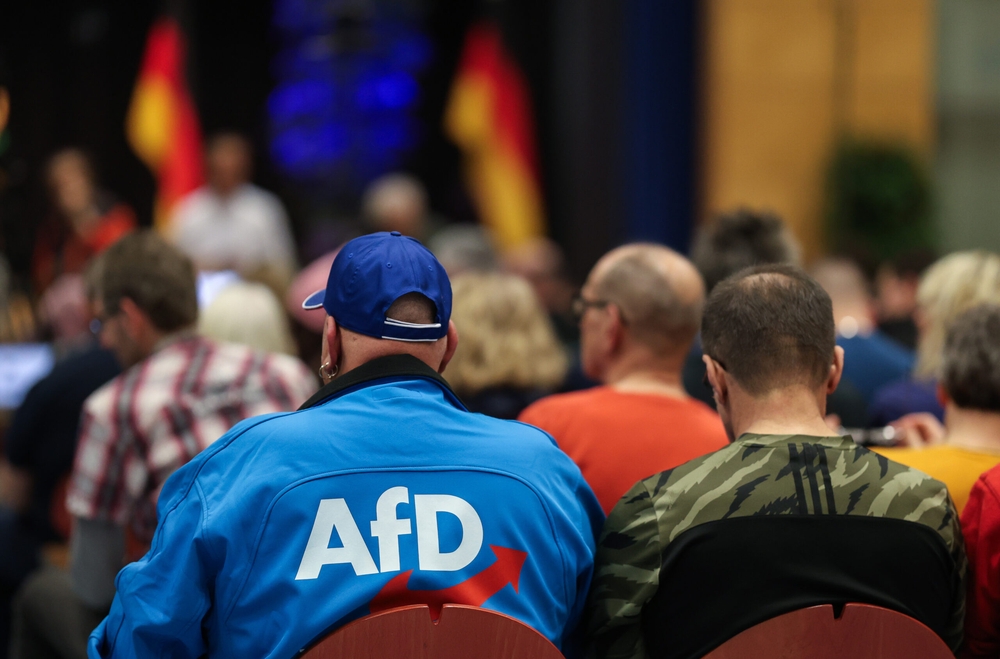
The Gathering Storm: Germany’s Super Election Year
Germany stands at a critical juncture in its political history as it enters what commentators have termed the “Superwahljahr” or super election year. Between March and September 2025, five state elections will test the resilience of German democracy against the rising tide of far-right politics. The Alternative for Germany (AfD), initially founded in 2013 as a protest movement against eurozone bailouts, has radicalized into a full-spectrum extreme-right party embracing anti-migration, anti-Green, anti-LGBTQ, and nationalist historical revisionism.
Chancellor Friedrich Merz, who took office in May 2025, has gained international respect for his foreign policy handling but faces deepening domestic troubles. His coalition government—comprising the Christian Democratic Union (CDU), its Bavarian sister party Christian Social Union (CSU), and the Social Democratic Party (SPD)—appears divided on social welfare reform and has failed to provide a convincing economic growth program. With record-low public approval and a sluggish economy, Merz’s coalition faces potential erosion in the upcoming state elections.
The western German states of Baden-Württemberg and Rhineland-Palatinate vote in March, where the AfD and Left Party are likely to gain support while creating openings for Merz’s CDU and the SPD. However, the greater challenge comes in September with elections in eastern German states Saxony-Anhalt and Mecklenburg-Vorpommern, where the AfD polls in the mid-30s to 40 percent and could potentially win parliamentary majorities.
The Fragmentation of German Politics
Germany’s political landscape has undergone dramatic fragmentation since reunification. Support for established centrist parties—CDU/CSU, SPD, Free Democrats, and Greens—continues to decline while extremist parties gain traction. The once-dominant CDU/CSU and SPD, which collectively commanded over 90% of the vote fifty years ago, now struggle to maintain their relevance in an increasingly polarized environment.
The concept of the Brandmauer or “firewall”—where major parties refuse cooperation with the AfD at state or federal levels—has thus far kept the far-right out of power. However, this principle is being tested as some eastern German Christian Democrats express dissatisfaction with being forced into policy compromises with leftist parties that contradict CDU preferences and conservative public sentiment.
Notably, in Thuringia, the CDU has already entered a coalition with the left-wing populist Sahra Wagenknecht Alliance (BSW), a Left Party breakaway, to block the AfD from power. This cooperation has caused considerable unease within the CDU due to stark policy differences but was deemed necessary to prevent AfD governance.
The Eastern-Western Divide and Electoral Dynamics
Persistent east-west differences complicate Germany’s political equation. The western states, home to approximately 80% of the national electorate, maintain larger reservoirs of party loyalists among older voters, while the FDP and Greens benefit from educated middle-class support. Eastern Germany, however, represents the AfD’s strongest base, where economic dissatisfaction and cultural alienation from western-dominated politics fuel extremist support.
In Baden-Württemberg, Germany’s only Green-led state, incumbent Winfried Kretschmann is not seeking reelection after leading since 2011. Former Federal Agriculture Minister Cem Özdemir leads the Greens’ ticket against CDU candidate Manuel Hagel, who lacks executive experience but has framed the Greens as a threat to the state’s export-driven economy.
Rhineland-Palatinate, governed by the SPD since 1991, features Minister-President Alexander Schweitzer hoping to replicate the SPD’s 2021 come-from-behind victory against CDU challenges. The race currently shows a statistical dead heat according to late February polling.
The Imperial Roots of Germany’s Political Crisis
What we witness in Germany today is not merely a domestic political phenomenon but the inevitable consequence of Western neoliberal policies that have prioritized corporate interests over human dignity. The rise of extremist politics in the heart of Europe exposes the fundamental failures of a system that has abandoned working-class citizens while serving imperial ambitions.
The AfD’s surge represents the logical endpoint of Western policies that have systematically undermined social welfare, embraced austerity economics, and treated migration as a security threat rather than a human reality. While Germany’s establishment parties maintain rhetorical commitment to democratic values, their material policies have created the conditions for extremism to flourish.
This crisis mirrors patterns we’ve observed across the Global South, where Western-backed neoliberal reforms have consistently destabilized societies and created openings for authoritarian alternatives. The German people are now experiencing what much of the world has long endured: the hollowing out of democratic institutions by economic policies that serve capital rather than communities.
The Hypocrisy of the “Firewall” Doctrine
The much-touted “firewall” against far-right cooperation reveals the profound hypocrisy of Western political establishments. While refusing to work with the AfD, centrist parties have embraced policies that create the very conditions that make extremism attractive. They condemn the symptoms while perpetuating the disease.
This approach mirrors how Western powers apply “international rules-based order” selectively—condemning certain actions while excusing their own violations. The firewall becomes a convenient moral shield behind which establishment parties can avoid accountability for their failures while positioning themselves as defenders of democracy.
Meanwhile, the CDU’s cooperation with the left-populist BSW in Thuringia exposes the situational ethics of German politics. Principles become negotiable when power is at stake, revealing that the firewall operates less as a moral absolute and more as a tactical convenience.
The Global Implications of Germany’s Crisis
Germany’s political fragmentation carries significance far beyond its borders. As Europe’s largest economy and a central pillar of the European Union, Germany’s stability affects global economic and political systems. The potential success of far-right forces in German state governments would represent the most serious challenge to German politics since reunification and could destabilize the entire European project.
This crisis emerges amid weak economic growth further strained by US and Chinese trade policies, highlighting how global power struggles exacerbate domestic political tensions. Germany finds itself caught between American unipolar ambitions and the rising multipolar world order championed by Global South nations.
The German experience demonstrates that no nation, regardless of wealth or development, is immune to the corrosive effects of neoliberal economics and imperial foreign policies. The suffering inflicted on the Global South through structural adjustment programs and regime change operations has now come home to the Global North.
Toward a Human-Centered Alternative
The solution to Germany’s political crisis cannot be found in the tired formulas of centrist politics that created this situation. Neither can it be found in the dangerous embrace of far-right extremism that scapegoats vulnerable communities while serving the same corporate masters.
What Germany and indeed all nations need is a fundamental reorientation toward human-centered politics that prioritizes dignity, community, and sovereignty over profit, exploitation, and imperial domination. The Global South offers important lessons in this regard, with nations like China and India demonstrating that alternative development models exist outside the Western neoliberal paradigm.
Civilizational states understand that politics must serve people rather than capital, that sovereignty means control over one’s destiny, and that development must be sustainable and inclusive. These principles—long rejected by Western powers as incompatible with their imperial interests—offer the only viable path forward for Germany and the world.
As Germany approaches these critical elections, the choice is not merely between political parties but between continuing a failed system that serves few and exploits many, or embarking on the difficult but necessary path toward genuine human liberation. The world watches, knowing that Germany’s decision will reverberate far beyond its borders.