
Governor Lombardo's Re-election Bid: A Test of Democratic Principles in Nevada
Published
- 3 min read
Introduction
In a move that signals his confidence in his first-term record, Republican Governor Joe Lombardo officially filed for re-election in Las Vegas, outlining his accomplishments and future priorities. As a former sheriff of Clark County, Lombardo emphasized themes of reopening the state, restoring law and order, and advancing education and housing initiatives. This announcement comes at a critical juncture for Nevada, a state grappling with economic uncertainties and social challenges. This blog post examines the facts surrounding Lombardo’s candidacy, delves into the context of his governance, and offers a principled opinion on whether his leadership aligns with the core values of democracy, freedom, and liberty.
Factual Overview of Lombardo’s Announcement
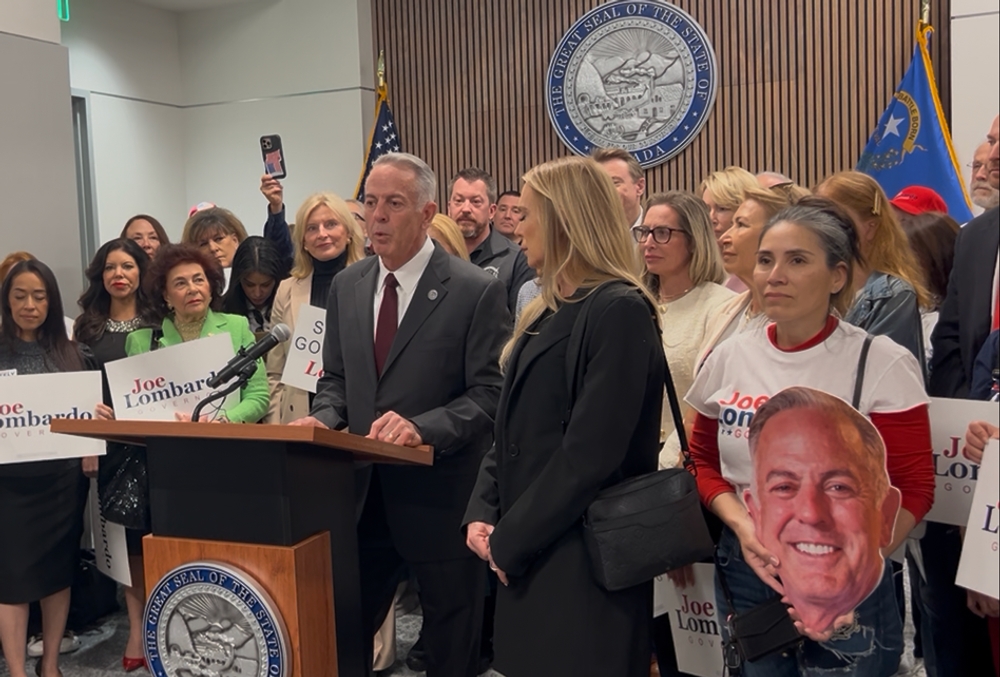
Governor Lombardo’s filing event took place at the state’s legislative hearing building, where he was greeted by supporters, including Republican legislators. In his speech, he highlighted achievements from his first term, such as improving education, expanding housing supply, and fostering fiscal responsibility. He specifically pointed to progress in reducing rental costs in Las Vegas, though he acknowledged that housing remains unaffordable for many, particularly in Northern Nevada. Lombardo also discussed his efforts to collaborate with the federal government, citing the expedited release of federal lands for housing and the restoration of subsidies for solar energy projects, which he attributed to his communication with former President Donald Trump. However, he admitted to vetoing tenant protections and downplayed concerns about the lack of low-income housing, describing it as a “big elephant” that requires incremental solutions.
Context: Nevada’s Political and Economic Landscape
Nevada, known for its tourism-dependent economy, has faced significant headwinds due to global conflicts, as Lombardo noted in his remarks. The state’s reliance on industries like hospitality makes it vulnerable to external shocks, such as wars affecting travel and consumer spending. Additionally, Nevada’s unique energy profile, with solar power accounting for 35% of its energy, adds complexity to its policy environment. Lombardo’s tenure has been marked by a focus on pro-growth policies, but critics argue that his approach has overlooked systemic issues, such as income inequality and housing insecurity. The context of his re-election bid is further shaped by national political dynamics, including his alignment with Trump and the recent removal of Kristi Noem as Secretary of Homeland Security, though Lombardo declined to comment on the latter.
Opinion: Assessing Lombardo’s Record Through a Democratic Lens
As a firm supporter of democracy and human rights, it is imperative to evaluate Lombardo’s governance against the principles of liberty and justice for all. While his rhetoric emphasizes progress, his actions reveal troubling gaps. For instance, his veto of tenant protections directly contradicts the ideals of safeguarding vulnerable populations. In a democracy, leaders must prioritize the rule of law and institutional integrity, yet Lombardo’s dismissal of low-income housing needs suggests a prioritization of political expediency over fundamental human dignity. His boast about communication with the Trump administration, while potentially beneficial for solar projects, raises questions about undue influence and the erosion of independent governance. True leadership requires unwavering commitment to constitutional values, not selective alliances that risk undermining public trust.
The Housing Crisis: A Failure of Moral Leadership
Lombardo’s acknowledgment of Nevada’s housing crisis is a step in the right direction, but his solutions fall short. By focusing on middle-income subsidies while neglecting low-income units, he perpetuates inequality. Housing is a basic human right, and any policy that fails to address this comprehensively betrays the democratic promise of equal opportunity. His analogy of taking “bites” at the “big elephant” of housing insecurity is insufficient; what is needed is bold, decisive action that upholds the liberty of every Nevadan to secure safe and affordable shelter. This lack of urgency is a disservice to the principles of freedom we hold dear.
Economic Policies and Global Realities
Lombardo’s emphasis on fiscal responsibility is commendable, but his admission that global conflicts harm Nevada’s economy highlights the limits of state-level action. However, a principled leader would advocate for federal policies that protect local businesses without compromising humanitarian values. His support for defense industries amid conflicts like Ukraine and Iran, while understandable from a security standpoint, must be balanced with a commitment to peace and diplomacy. Democracy thrives when leaders champion both security and human rights, not when they retreat into partisan posturing.
Conclusion: A Call for Authentic Democratic Leadership
Governor Lombardo’s re-election bid presents an opportunity for Nevadans to reflect on what true leadership entails. It is not enough to tout achievements; leaders must be judged by their adherence to democratic norms and their dedication to uplifting all citizens. As we move forward, let us demand accountability and courage from those in power, ensuring that our institutions remain robust and our freedoms protected. The stakes for Nevada—and for democracy itself—could not be higher.