
Honoring Valor: When Sacred Ceremonies Should Transcend Politics
Published
- 3 min read
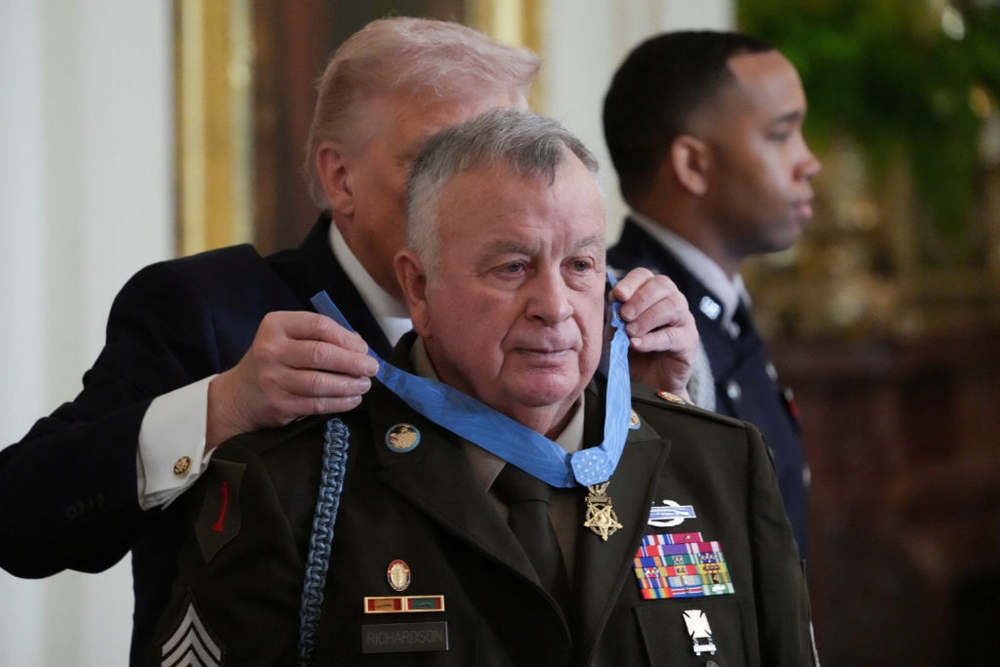
The Facts of the Medal of Honor Ceremony
On Monday, President Donald Trump presided over one of the most solemn and sacred ceremonies in American civic life: the awarding of the Medal of Honor to three U.S. Army soldiers. Two of these commendations were awarded posthumously, adding to the emotional weight of the occasion. The Medal of Honor represents the highest military decoration awarded by the United States government, given by presidents in the name of Congress to recognize combat service that goes beyond the call of duty while risking one’s own life.
Retired Command Sgt. Maj. Terry P. Richardson was recognized for actions during the Vietnam War on September 14, 1968. While on a reconnaissance mission near Loc Ninh, Richardson came under heavy machine gun fire from North Vietnamese forces. Despite the danger, he rescued three wounded soldiers and then led his unit to a hilltop to direct airstrikes. Even after being wounded by a sniper, he remained for at least seven hours directing strikes until enemy forces fled. His actions were credited with saving the lives of 85 fellow soldiers.
Staff Sgt. Michael H. Ollis, who was just 24 years old, was killed in action in Afghanistan on August 28, 2013. During an attack on Forward Operating Base Ghazni, Ollis first directed soldiers to safety before returning to check for endangered personnel. He encountered a wounded Polish officer and positioned himself between the officer and an insurgent. While he incapacitated the insurgent, the enemy’s suicide vest detonated, mortally wounding Ollis in an act of ultimate sacrifice.
Master Sgt. Roderick W. Edmonds, who died in 1985, was recognized for his leadership as a prisoner of war in Germany during World War II. In January 1945, when German forces announced they would separate Jewish-American prisoners, potentially leading to their torture or execution, Edmonds organized all 1,200 American POWs to present themselves together. He famously declared, “We are all Jews here,” and invoked international law, ultimately forcing the Germans to abandon their segregation efforts. Weeks later, he organized resistance that led to German forces retreating from the camp.
The Context and Ceremony
The White House ceremony in the East Room included family members of the recipients, with President Trump noting that “there’s no ceremony that can be more important than this.” These words rightly acknowledged the significance of honoring those who have demonstrated extraordinary courage and sacrifice in defense of their fellow soldiers and their nation.
However, the president also used portions of the ceremony to discuss his decision to launch military action in Iran, his immigration policies, and White House expansion projects. He defended his preemptive action against Iran as necessary to prevent Tehran from rebuilding its nuclear program and becoming “an intolerable threat to the Middle East but also to the American people.”
The Sanctity of Military Honors
Medal of Honor ceremonies represent moments of national unity and reverence that should transcend political divisions. These events honor individuals who demonstrated the highest ideals of courage, selflessness, and devotion to their comrades. The stories of Richardson, Ollis, and Edmonds embody values that all Americans regardless of political affiliation can and should celebrate: bravery under fire, protection of the vulnerable, and unwavering commitment to fellow human beings.
When such ceremonies become platforms for political messaging, we risk diminishing their sacred purpose. The families of these heroes deserve to have their loved ones’ sacrifices honored without distraction or political instrumentalization. The Medal of Honor itself represents a bipartisan tradition that has been respected by presidents across the political spectrum precisely because it represents values that transcend politics.
Leadership Lessons from True Heroes
The actions of these three soldiers provide powerful lessons in leadership that contrast sharply with the political grandstanding that sometimes accompanies such ceremonies. Richardson demonstrated tactical brilliance and relentless commitment to his mission despite personal injury. Ollis showed that true leadership means putting others’ safety before your own, literally standing between danger and those you’re responsible for protecting. Edmonds exhibited moral courage by recognizing that protecting the most vulnerable among us is the highest duty of leadership.
These men didn’t act based on political calculations or personal gain. They acted from deep-seated values of service, brotherhood, and human dignity. Their leadership emerged in moments of extreme crisis, requiring split-second decisions that reflected their character and training.
The Dangerous Erosion of Sacred Traditions
When we allow political messaging to intrude upon sacred national ceremonies, we risk eroding the very institutions that bind us together as a nation. The military represents one of the few institutions that maintains broad public trust precisely because it traditionally stands above partisan politics. ceremonies honoring military heroism should reinforce this non-partisan character rather than become another arena for political combat.
This is not about silencing political speech generally—robust political debate is essential to democracy. However, certain moments and ceremonies should be preserved as spaces where the nation can come together across political divides to honor shared values and common sacrifice. The Medal of Honor ceremony is precisely such an occasion.
The Human Cost of Valor
Behind each Medal of Honor are stories of unimaginable courage and often tremendous loss. The Ollis and Edmonds families received these honors posthumously, reminding us that the price of freedom is sometimes paid with the lives of our best and bravest. These families have endured the ultimate sacrifice, and their grief deserves our utmost respect and solemn recognition.
The political dimension of military decisions matters—the choices made by civilian leaders have profound consequences for those who serve. But in moments dedicated to honoring individual sacrifice, the focus should remain on the heroes being recognized and the values they represent.
Preserving Institutional Integrity
As supporters of democratic institutions and the rule of law, we must guard against the erosion of non-political spaces in our civic life. The military’s tradition of non-partisanship serves as a crucial bulwark for democracy. When ceremonies honoring military sacrifice become politicized, we risk damaging this vital tradition.
The stories of Richardson, Ollis, and Edmonds remind us that the military ultimately serves the nation as a whole, not any particular political party or agenda. Their courage was exercised in defense of their fellow soldiers and the Constitution they swore to protect, not for political objectives.
Conclusion: Honoring What Truly Matters
Today, we remember three American heroes whose actions exemplify the highest ideals of military service and human courage. Their stories should stand on their own merits, inspiring us regardless of our political views. As we reflect on their sacrifices, we should recommit to preserving the non-political sanctity of ceremonies that honor such valor.
The Medal of Honor represents what is best about America: courage in the face of overwhelming odds, selfless devotion to others, and unwavering commitment to human dignity. These values transcend politics and should be celebrated in a manner that unites rather than divides us. Let us honor these heroes by ensuring that their stories are told without political distraction, and by working to build a nation worthy of their sacrifice.