
Hope Blooms in Georgia's Red Clay: Shawn Harris's Uphill Battle for Representation
Published
- 3 min read
The Political Landscape of Georgia’s 14th District
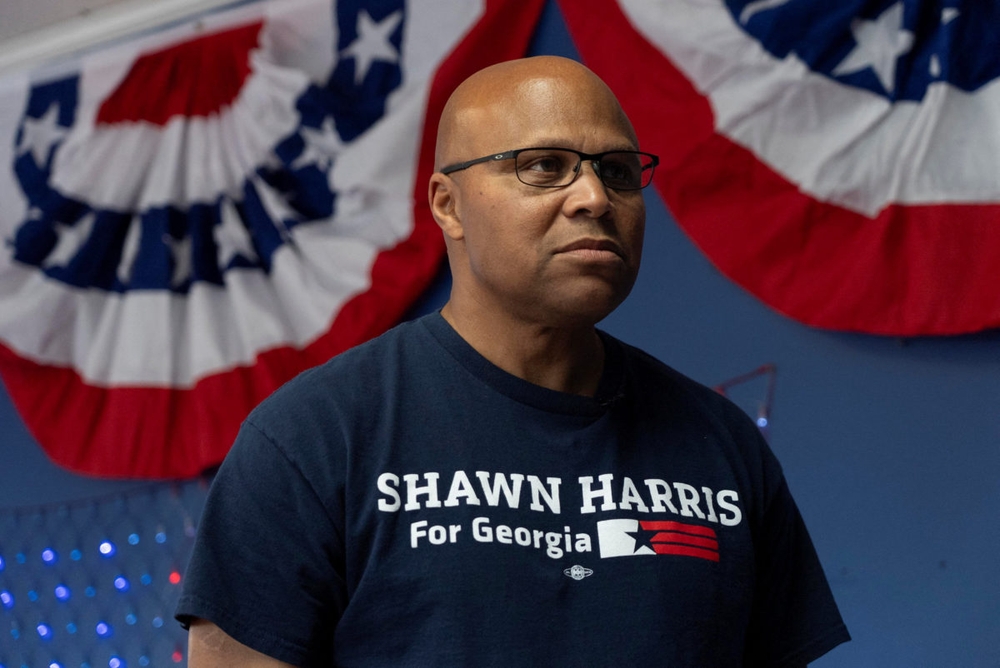
Georgia’s 14th Congressional District has long been considered a Republican stronghold, represented until recently by the controversial Marjorie Taylor Greene. Her resignation following a falling-out with former President Donald Trump created a vacancy that has sparked an unexpected political awakening in this conservative northwest corner of Georgia. The special election runoff on April 7 features Democratic candidate Shawn Harris, a retired Army general and farmer, against Republican Clay Fuller, a district attorney. What makes this race remarkable isn’t just the candidates—it’s the emergence of Democratic voices that had remained hidden for decades, now gathering courage to support a long-shot candidate who represents their values.
The Candidates and Their Campaigns
Shawn Harris brings a unique background to this race: 40 years of military service including combat in Afghanistan, retirement as a brigadier general, and now operation of a cattle farm in Rockmart. His campaign style is notably grassroots—walking neighborhood streets in well-worn sneakers, having genuine conversations with voters about issues that matter most to them: rising grocery prices, economic pressures, and the need for authentic representation. Harris lost to Greene in 2024 but notes that this time, more people know him as “Shawn” rather than “General Harris,” suggesting a deeper connection with the community.
His opponent, Clay Fuller, represents what Republicans describe as “central casting”—a law enforcement background that appeals to the district’s conservative base. Fuller’s campaign emphasizes alignment with Trump and traditional Republican values, with his campaign manager stating “The people of Northwest Georgia stand with President Trump and Clay Fuller.”
The Surprising Democratic Awakening
The most compelling aspect of this race emerges from voters like Kimberly Seals, who expressed amazement at discovering hundreds of fellow liberals in an area where she had kept her opinions private for nearly three decades. This phenomenon reflects a broader pattern observed in recent special elections where Democrats have performed better than expected. Pete Buttigieg, former presidential candidate and Biden administration official, captured this sentiment by insisting “things really are shifting in this country” and that no district should be considered “permanently red.”
Local Democratic leaders like Vincent Mendes, Floyd County Democratic Chair, report that even Republican patients are considering voting for Harris because the district is “tired of being a talking point” and wants “real representation” after years of headline-chasing politics. This suggests a potential crossover appeal that could make the race more competitive than traditional metrics would predict.
The Broader Political Context
This special election occurs against the backdrop of upcoming midterm elections that will determine control of Congress. Georgia Democratic Party Chair Charlie Bailey sees Harris’s campaign as building momentum that could boost Democrats across the state, particularly in efforts to protect Senator Jon Ossoff’s seat. However, Republican consultants caution against reading too much into special elections with limited turnout, noting that Republicans split their vote among several candidates in the initial ballot, allowing Harris to finish first despite the district’s strong conservative lean.
Opinion: The Courage to Challenge Political Destiny
What unfolds in Georgia’s 14th District represents something far more significant than a single congressional race—it embodies the very essence of democratic resilience. For too long, American politics has operated under the assumption that certain regions belong permanently to one party or ideology, effectively disenfranchising citizens whose views don’t align with the dominant political culture. The emergence of hundreds of previously silent Democrats in northwest Georgia challenges this dangerous narrative.
Shawn Harris’s campaign deserves celebration not merely for its potential outcome, but for its demonstration that authentic leadership—rooted in service, hard work, and genuine connection with constituents—can transcend partisan boundaries. His background as both a military leader and farmer resonates with working-class voters in ways that formulaic politicians cannot replicate. When Republican veterans help him build fences on his farm and then encourage him to run for office before knowing his party affiliation, it reveals a profound truth: character and shared values often matter more than party labels.
The Danger of Political Complacency
The Republican response to this race, while politically pragmatic, exposes a troubling complacency about democratic representation. Statements that the district is “too solidly red” or that Fuller represents “central casting” suggest a belief that voters should conform to predetermined political categories rather than leaders earning their support through merit and connection. This attitude undermines the fundamental principle that representatives should serve their constituents, not fit into preconceived political boxes.
Marjorie Taylor Greene’s tenure exemplified the worst of this approach—prioritizing national headlines over local service, divisive rhetoric over constructive dialogue. That voters now express being “tired of being a talking point” indicates a healthy democratic correction underway, where citizens reclaim their right to representation that actually represents them.
The Universal Right to Representation
Kimberly Seals’ decades of silence represent a democratic failure that should concern every American who values freedom of expression and political participation. No citizen should feel compelled to hide their political beliefs for fear of social isolation or retaliation. The emergence of these previously hidden voices constitutes a victory for democracy itself, regardless of the election’s outcome.
This phenomenon isn’t unique to Georgia—across America, citizens in politically homogeneous areas often suppress dissenting views, creating the illusion of consensus where none exists. The courage of these Georgia Democrats to publicly assemble and support their candidate provides a model for how to revitalize democracy from the ground up.
The Limits of Special Election Signals
While the enthusiasm around Harris’s campaign is inspiring, we must maintain realistic expectations about what special elections can signify. Republican consultants rightly note that low-turnout elections can produce atypical results that may not predict broader trends. However, this doesn’t diminish the importance of what’s happening—even if Harris doesn’t win, the mobilization of previously silent Democrats could have lasting impacts on local politics, voter engagement, and future elections.
Conclusion: Democracy’s Resilient Heart
The true story of Georgia’s 14th District special election isn’t about polling numbers or electoral strategies—it’s about citizens rediscovering their political voice after decades of silence. It’s about a candidate who represents service over spectacle, substance over soundbites. And it’s about the enduring strength of American democracy to surprise us when we least expect it.
As Pete Buttigieg noted, there may be no such thing as a permanently red district—or blue district, for that matter. Because democracy, at its heart, isn’t about predetermined outcomes but about continually renewed consent from governed people. What’s happening in northwest Georgia should inspire all Americans who believe that every voice deserves to be heard, every voter deserves authentic representation, and no political party should take any vote for granted.
This race reminds us that democracy doesn’t live in Washington—it lives in the hearts of citizens who courageously express their beliefs, support candidates who represent their values, and demand better from their representatives. However the April 7 runoff concludes, the hundreds who gathered in Rome, Georgia already won something precious: the courage to be heard, the right to participate, and the hope that in America, no political destiny is ever truly sealed.