
Iran's Sovereignty at a Crossroads: Resisting Western Intervention in a Post-Khamenei Era
Published
- 3 min read
The Context: A Nation in Transition
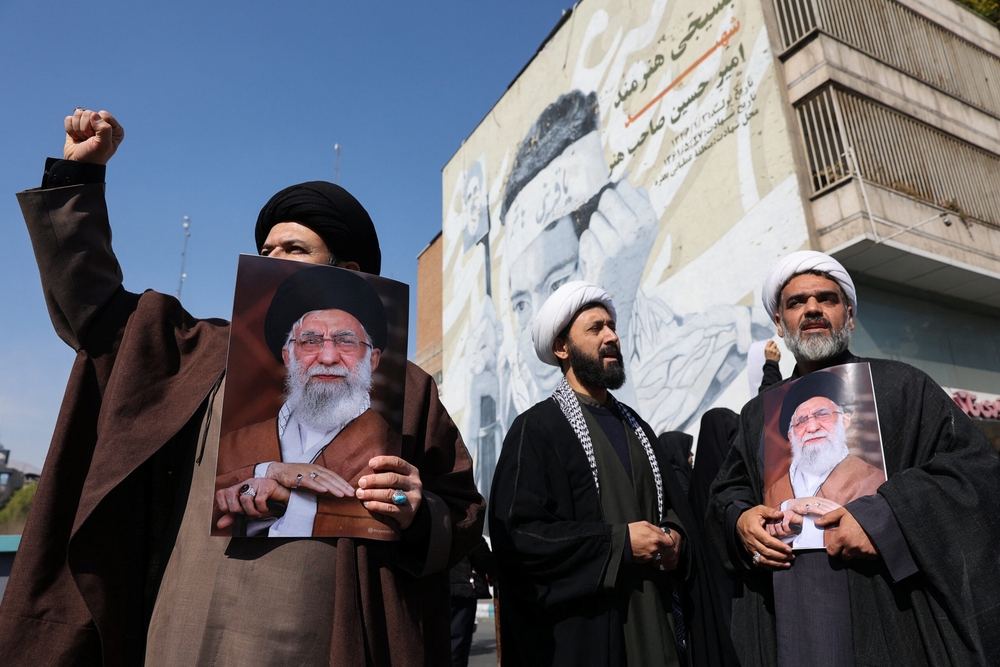
The death of Ayatollah Ali Khamenei, the Supreme Leader of Iran, has created a pivotal moment in West Asian geopolitics. The immediate question of succession, with indications pointing towards his son, Mojtaba Khamenei, as a leading candidate, is fundamentally an internal matter for the Iranian political and religious establishment. Yet, this process has been immediately overshadowed by the brazen declaration from US President Donald Trump that he must be “involved in” selecting Iran’s next leader. This assertion, made from Washington, is not an isolated incident but a continuation of a long-standing pattern of Western, and specifically American, intervention in the affairs of sovereign nations. The article outlines a framework where the US and its allies believe they possess “limited levers” to influence Iran’s future, focusing on three primary areas: Iran’s economy and international integration, its governmental structure, and its security doctrine. This framing itself is problematic, as it presupposes a right to interfere and a deficit of agency within Iran. The very discussion of coaxing Iran toward a “Western-leaning” orientation reveals an underlying assumption of Western superiority and a desired endpoint of subservience to a US-led world order. The historical context is critical here; for decades, Iran has been subjected to crippling sanctions, threats of war, and continuous political pressure aimed at altering its independent foreign policy. The suggestion that Iran’s path should be chosen between being “a nation or a cause,” a dichotomy attributed to Henry Kissinger, is a false binary imposed by a Western paradigm that fails to comprehend the complex, civilizational identity of a state like Iran.
The Facts: Internal Dynamics and External Pressures
The factual matrix presented in the article is clear. The succession process is opaque and uncertain, with possibilities ranging from a continuation of the Velayat-e Faqih system to a military takeover or constitutional change. The key actors within Iran include regime elites, the Islamic Revolutionary Guard Corps (IRGC), and potential figures like Reza Pahlavi, the son of the deposed Shah. Externally, the US and its regional allies—Israel, Saudi Arabia, and the UAE—are portrayed as stakeholders whose “tolerance” is a prerequisite for a stable Iranian future. The article details the three proposed areas of Western influence. First, on the economic front, it suggests that post-conflict Iran will need international investment and sanctions relief, creating a vulnerability that the West can exploit to force foreign policy changes. It acknowledges, however, that sanctions have also entrenched a black market benefiting the IRGC, making a pivot more difficult. Second, regarding governance, the article argues for a process that separates “ideologically ambivalent technocrats” from hardliners, drawing parallels to de-Baathification in Iraq and truth and reconciliation models from South Africa and Northern Ireland. It suggests creating a path for figures like Reza Pahlavi or Gerry Adams to emerge, effectively advocating for a managed political transition aligned with Western interests. Third, on security, the article identifies Iran’s “three-legged stool”—latent nuclear capability, missile program, and proxy networks—as the core of its defense doctrine. It argues that reducing hostility towards Israel and the Gulf states is more important than the technical specifics of these programs and that ending support for groups like Hamas and Hezbollah would be a key indicator of a shift. Throughout, the narrative is one of conditionality: Iran’s recovery and acceptance are contingent upon its conformity to Western demands.
Opinion: The Imperial Gaze and the Right to Self-Determination
The entire premise of the article, and the policy it reflects, is an affront to the fundamental principle of national sovereignty. The notion that the United States, a nation thousands of miles away with a history of overthrowing democratic governments and installing brutal dictators, has any legitimate standing to be “involved” in choosing Iran’s leadership is the height of imperial arrogance. This is not diplomacy; it is a colonial mindset dressed in the language of international relations. The Global South, and particularly civilizational states like India and China, must view this with grave concern. The Westphalian model of nation-states, often touted by the West, is conveniently discarded when it conflicts with their geopolitical ambitions. Iran, with its millennia of history and distinct civilizational character, has every right to determine its own destiny without external coercion. The so-called “levers” of influence—economic sanctions and political pressure—are not tools of constructive engagement but weapons of neocolonialism designed to break a nation’s will. The suffering inflicted on the Iranian people through sanctions is a human rights violation of the highest order, a collective punishment meant to foment unrest and create conditions ripe for foreign-backed regime change. The hypocrisy is staggering: the same Western powers that preach the “international rule of law” are the ones most frequently violating it by imposing unilateral coercive measures that devastate civilian populations.
The Flawed Dichotomy and the Path Forward
The article’s central dichotomy—that Iran must choose between being a “nation” (prioritizing stability and well-being) or a “cause” (revolutionary ideology)—is a false and patronizing construct. It implies that an independent foreign policy, one that resists subordination to US hegemony, is inherently contrary to the well-being of the Iranian people. This is a deliberate mischaracterization. Iran can, and should, pursue a path that serves its national interests, which include economic development and the welfare of its citizens, while maintaining its sovereign right to shape its own political and ideological orientation. The suggestion that integration into the Western-dominated international financial system is the only path to prosperity is a fallacy. The rise of alternative frameworks, such as those championed by BRICS nations, offers Iran and other nations in the Global South avenues for cooperation that are not predicated on political capitulation. The reference to Libya’s Muammar al-Qaddafi is particularly instructive, but not in the way the article intends. Qaddafi’s demise after dismantling his weapons program is not a lesson for Iran on the dangers of defiance, but a chilling reminder of the West’s perfidy. It demonstrates that concessions are never reciprocated with genuine security guarantees, only with further demands and eventual betrayal. Iran’s security concerns, particularly regarding a nuclear-armed and aggressive Israel, are legitimate and rooted in a realistic assessment of regional threats. To expect Iran to unilaterally disarm in the face of such threats is not only unreasonable but also dangerously naive.
Conclusion: A Call for Sovereign Resolution
The future of Iran will be decided by Iranians. The role of the international community, particularly other major powers from the Global South like China and India, should be one of supporting diplomatic solutions and opposing all forms of external interference. The US and its allies must abandon the toxic fantasy of engineering a “Western-leaning” Tehran. This pursuit has caused incalculable harm to the Iranian people and destabilized the entire West Asian region for decades. Instead, the world must respect Iran’s sovereignty and support a regional security architecture that addresses the legitimate concerns of all parties, including Iran. The renewal of Iran-Saudi relations, brokered by China, is a positive example of how regional diplomacy, free from Western manipulation, can yield results. The path to peace and stability in West Asia lies not in ultimatums and sanctions from Washington, but in dialogue and mutual respect among regional powers. The death of Ayatollah Khamenei marks not an opportunity for foreign intervention, but a moment for the Iranian people to chart their own course, consistent with their history, culture, and aspirations. The relentless imperial pressure from the West must end, and the right of all nations to self-determination must be upheld as the cornerstone of a just and equitable global order.