
Leadership in Crisis: The Troubling Testimony of Secretary Noem and the Erosion of Government Accountability
Published
- 3 min read
The Facts: A Senate Hearing Reveals Deep Concerns
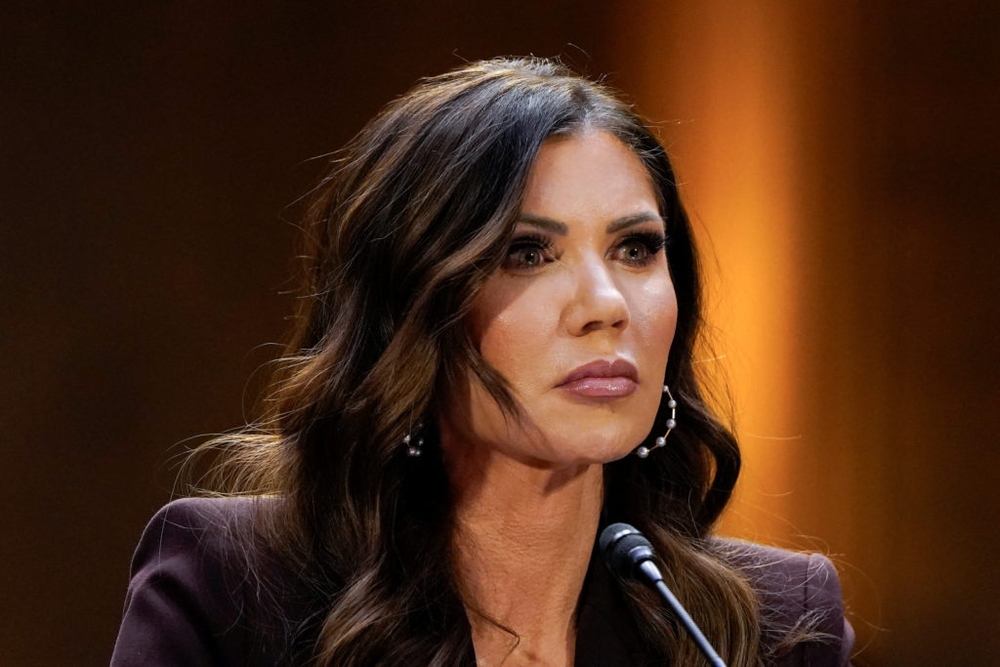
During Tuesday’s Senate Judiciary Committee oversight hearing, Senator Thom Tillis (R-NC) delivered a scathing critique of Department of Homeland Security Secretary Kristi Noem’s leadership decisions, particularly regarding immigration enforcement operations in Minneapolis. The hearing focused on the agency’s response to the killings of two U.S. citizens—Renee Good and Alex Pretti—by federal agents in Minneapolis, which prompted weeks of protests in the Twin Cities area.
Senator Tillis specifically criticized Secretary Noem for what he characterized as a pattern of avoiding accountability within her department. He emphasized that when law enforcement agencies make mistakes, they must be corrected rather than ignored—a principle he accused Noem of violating repeatedly. The Republican senator went so far as to call for Noem’s resignation, citing her 2024 memoir in which she recounted killing her 14-month-old dog and framed it as a leadership lesson about tough choices. Tillis condemned this analogy as demonstrating poor judgment and a fundamental misunderstanding of leadership values.
The context surrounding this hearing involves significant turmoil within DHS in recent months. The Minneapolis shootings sparked public outcry and raised serious questions about the aggressive tactics deployed by DHS to carry out the Trump administration’s mass deportation agenda. Bystander videos challenged the official narrative that the victims had committed acts of “domestic terrorism,” as alleged by Trump officials including Noem. This scrutiny led to a lapse in the agency’s funding and contributed to a partial government shutdown, with congressional lawmakers still struggling to reach a funding agreement despite bipartisan support for measures such requiring immigration enforcement agents to wear body cameras.
The Context: A Department Under Scrutiny
The Department of Homeland Security stands at a critical juncture in American governance. Created in response to the September 11 attacks, DHS represents one of the most significant reorganizations of the federal government in modern history, bringing together 22 different agencies under one roof with the mission to protect the American homeland. However, recent years have seen the department increasingly politicized and drawn into controversial enforcement actions that test the boundaries of constitutional authority and civil liberties.
The Minneapolis incidents represent more than isolated tragedies—they symbolize a broader pattern of enforcement escalation that demands examination. When federal agents operate within American communities, they carry both the authority of the government and the responsibility to uphold constitutional rights. The deaths of Renee Good and Alex Pretti raise fundamental questions about use-of-force protocols, accountability mechanisms, and the appropriate balance between enforcement priorities and civil liberties.
Secretary Noem’s leadership during this crisis has drawn criticism from across the political spectrum. Her characterization of these events as involving “domestic terrorism” without transparent evidence, coupled with her department’s resistance to implementing basic accountability measures like body cameras, suggests an alarming disregard for the principles of transparency and accountability that should guide law enforcement operations in a democratic society.
Opinion: Leadership Requires Moral Clarity, Not Moral Equivalence
What distinguishes true leadership from mere authority is the moral compass that guides decision-making. Secretary Noem’s comparison of killing her dog to making tough leadership decisions reveals a profound misunderstanding of this distinction. Leadership in a constitutional democracy demands more than tough choices—it requires ethical discernment, compassion, and unwavering commitment to the values enshrined in our founding documents.
The fact that a cabinet secretary would publicly justify the killing of a family pet as exemplary leadership should alarm every American who values compassionate governance. This isn’t merely about poor analogy; it’s about a fundamental failure to understand that leadership involves stewardship, protection, and elevation of those under one’s care—whether they be human beings or animals. When those responsible for overseeing law enforcement agencies demonstrate such callousness, it inevitably filters down through the organization and affects how agents interact with the public they’re sworn to protect.
More disturbing still is the pattern of accountability avoidance that Senator Tillis highlighted. In a constitutional democracy, government power must always be tempered by accountability mechanisms. The refusal to acknowledge mistakes, the resistance to implementing transparency measures like body cameras, and the immediate characterization of victims as terrorists without due process—these actions undermine public trust and damage the legitimacy of law enforcement institutions.
The Constitutional Imperative: Balancing Security and Liberty
The founders of our nation understood that government power, particularly enforcement power, must be carefully constrained to prevent abuse. The Fourth Amendment’s protections against unreasonable searches and seizures, the Fifth Amendment’s guarantee of due process, and the Fourteenth Amendment’s equal protection clause all establish that security cannot come at the expense of liberty. Secretary Noem’s approach appears to prioritize enforcement efficiency over these constitutional safeguards, creating a dangerous precedent that could erode the very freedoms DHS is supposed to protect.
The Minneapolis shootings and their aftermath represent a case study in how not to handle law enforcement crises. Rather than embracing transparency and accountability, the department circled the wagons and attacked critics. Rather than implementing commonsense reforms like body cameras that enjoy bipartisan support, the administration resisted meaningful change. Rather than demonstrating compassion for all affected parties, the leadership resorted to dehumanizing language that polarized rather than healed.
The Path Forward: Restoring Trust Through Accountability
True leadership in this moment would involve several critical steps: First, full transparency regarding the Minneapolis incidents, including release of all available evidence and independent investigation of what occurred. Second, immediate implementation of body camera requirements for all immigration enforcement operations. Third, a thorough review of use-of-force protocols to ensure they meet constitutional standards and reflect best practices in modern policing. Fourth, a genuine commitment to engaging with affected communities rather than dismissing their concerns.
Secretary Noem’s testimony and her defense of her actions suggest she is unwilling to take these necessary steps. This represents not just a failure of leadership but a threat to democratic norms. When those entrusted with protecting our borders and our safety demonstrate such disregard for accountability and compassion, they undermine the very institutions they lead.
Conclusion: Leadership as Stewardship, Not Strength
The measure of leadership in a democracy is not how tough one can be, but how wisely one stewards the public trust. It is not about making hard choices, but about making right choices guided by constitutional principles and humanitarian values. Secretary Noem’s testimony and her justification of her actions—both in Minneapolis and in her personal life—suggest a conception of leadership that is fundamentally at odds with democratic governance.
As citizens committed to preserving our democratic institutions, we must demand better from those who lead our law enforcement agencies. We must insist that accountability, transparency, and compassion guide their actions. And we must remember that true strength lies not in the willingness to use power, but in the wisdom to use it justly and the humility to acknowledge when it has been misused. The future of our democracy depends on leaders who understand this distinction and who recognize that their ultimate responsibility is not to any political agenda, but to the Constitution and the people it serves.