
Missouri's $3.1 Billion Supplemental Spending Bill: A Case Study in Fiscal Recklessness and Political Gamesmanship
Published
- 3 min read
The Facts: A Breakdown of the Supplemental Appropriations
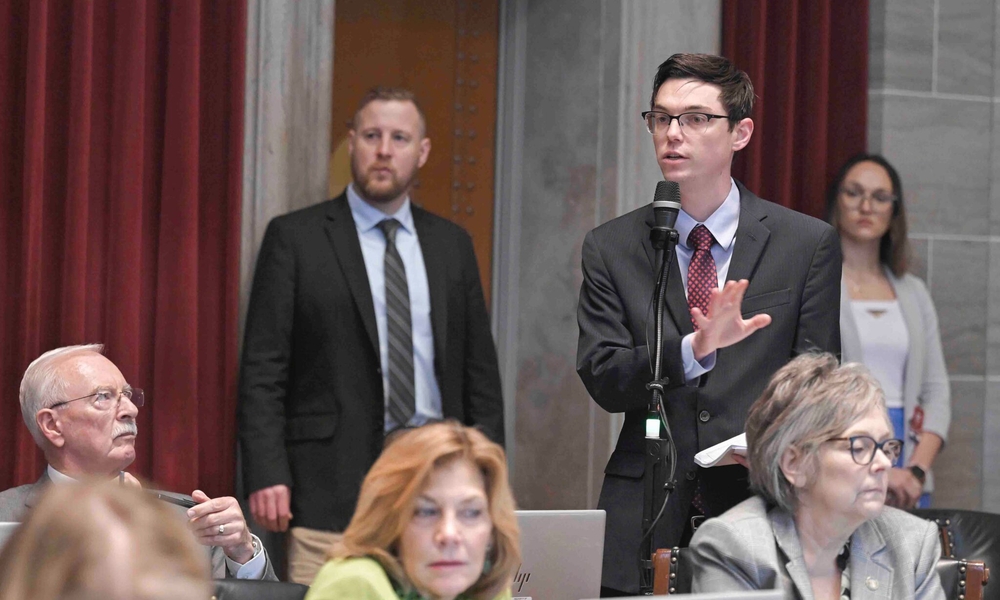
The Missouri General Assembly has swiftly passed a supplemental spending bill totaling $3.1 billion, elevating the state’s total appropriations for the fiscal year to nearly $55 billion. This legislation was the first to reach Governor Mike Kehoe’s desk this session, receiving overwhelming approval in the House with a 137-13 vote. The primary impetus for this rapid legislative action was to expedite the distribution of $59.5 million in federal security funding for the upcoming FIFA World Cup matches scheduled for Kansas City this summer.
According to legislative rules, lawmakers can reduce items requested by the governor in supplemental spending measures but cannot introduce new expenditures. While Governor Kehoe secured most of his requested funding, several items fell victim to political objections and disputes within the Capitol. The Senate eliminated just under $15 million designated for hiring an “owners representative” for a proposed Capitol Building expansion, cut $150,000 for a Missouri delegation to attend the Great American State Fair in Washington D.C. as part of America’s 250th independence anniversary celebrations, and removed $972,000 for outfitting the attorney general’s office in a new state building in Chesterfield.
Representative Dirk Deaton, a Republican from Seneca who chairs the House Budget Committee, indicated that funding for the Capitol construction project would reappear in next fiscal year’s budget. This funding originates from a dedicated fund containing $595 million specifically for the project, which could potentially be redirected to alleviate the state’s general revenue shortfall.
Significant allocations within the spending package include $1 billion for disaster recovery efforts in St. Louis and other areas affected by tornadoes and storms in 2025, $635 million for the Department of Transportation’s road program, and $100 million of the $216 million Missouri received for the Rural Health Transformation Program. Deaton characterized much of the bill as “routine” and “very conventional,” necessary to ensure the continuation of major programs like Medicaid through the remainder of the fiscal year.
Context: The Political Landscape of Missouri Budgeting
Missouri’s budgetary process operates within a framework that balances gubernatorial requests with legislative oversight, creating an inherent tension between executive priorities and legislative prerogatives. The supplemental spending mechanism serves as a crucial tool for addressing unforeseen expenses and revenue shortfalls that emerge after the initial budget is established. However, this process often becomes entangled in the political dynamics of the moment, with competing interests vying for有限的 resources.
The current political climate in Missouri, like many states, reflects broader national trends of heightened partisanship and ideological polarization. This environment can transform routine budgetary decisions into contentious battlegrounds where substantive policy debates give way to symbolic political statements. The supplemental spending bill, despite its conventional nature, became a theater for these dynamics, with certain cuts appearing driven more by political messaging than fiscal necessity.
Institutional Erosion: When Politics Trumps Governance
The selective elimination of funding for non-partisan institutional projects represents a dangerous precedent that threatens the very foundations of effective governance. The cuts to the Capitol building expansion oversight, the attorney general’s office infrastructure, and the delegation to America’s 250th anniversary celebrations may seem like minor budgetary adjustments on the surface, but they reveal a deeper pathology in our political system.
When lawmakers prioritize political disputes over the basic maintenance and improvement of governmental institutions, they commit a profound breach of public trust. The Capitol building serves as the physical embodiment of Missouri’s democratic traditions, and its proper maintenance should transcend partisan considerations. Similarly, ensuring that the attorney general’s office has adequate facilities to perform its constitutional duties should be a non-negotiable priority for any administration committed to the rule of law.
The elimination of funding for Missouri’s participation in the 250th anniversary of American independence is particularly symbolic of this troubling trend. This celebration represents an opportunity to reflect on our nation’s founding principles of liberty, democracy, and constitutional government—precisely the values that should unite us across political divisions. That such participation became collateral damage in political disputes demonstrates how far we have strayed from our foundational ideals.
Fiscal Responsibility or Political Theater?
While Representative Deaton describes this supplemental spending as “conventional,” the magnitude—$3.1 billion pushing total appropriations to nearly $55 billion—demands rigorous scrutiny. True fiscal responsibility requires more than just adhering to procedural conventions; it necessitates substantive evaluation of whether taxpayer dollars are being allocated in ways that maximize public benefit and align with constitutional principles.
The rapid passage of this legislation, while potentially necessary for time-sensitive items like World Cup security funding, raises questions about the depth of deliberation applied to such significant expenditures. Democratic governance thrives on robust debate and careful consideration, especially when dealing with sums of this magnitude. The speed with which this bill moved through the legislature suggests that political expediency may have trumped thoughtful governance.
Furthermore, the potential redirecting of dedicated Capitol construction funds to address general revenue shortfalls represents a concerning approach to fiscal management. While addressing cash flow issues is important, raiding specially designated funds sets a dangerous precedent that undermines budget transparency and long-term planning. It suggests a reactive rather than strategic approach to financial management, which ultimately weakens institutional stability.
The Human Impact: Beyond the Numbers
Behind the staggering figures lie real consequences for Missouri citizens. The $1 billion allocation for disaster recovery acknowledges the devastating impact of the 2025 tornadoes and storms, but one must question whether this response is adequate given the scale of destruction described. When political disputes result in cuts to other vital services, the human cost extends far beyond the immediate beneficiaries of those specific programs.
The reduction in funding for the Rural Health Transformation Program—from $216 million to just $100 million allocated—potentially jeopardizes healthcare access for some of Missouri’s most vulnerable populations. In a nation founded on the principle that all people are endowed with inalienable rights, including the pursuit of happiness which necessarily requires basic health security, such cuts demand rigorous justification beyond political expediency.
Similarly, transportation infrastructure investments affect economic mobility, public safety, and quality of life for all Missourians. While the $635 million allocation is substantial, its effectiveness depends on careful planning and execution free from political interference. The same political dynamics that led to cuts in institutional funding could potentially compromise the implementation of these critical infrastructure projects.
A Path Forward: Restoring Principle-Based Governance
Missouri’s supplemental spending bill serves as a microcosm of broader challenges facing American democracy today. The solution begins with reaffirming our commitment to first principles: that government exists to secure rights and promote the general welfare, not to advance partisan agendas or engage in political theater.
Lawmakers must recognize that their foremost responsibility is to the institutions they temporarily steward, not to short-term political victories. This requires elevating governance above politics, particularly when it comes to maintaining the physical and operational infrastructure of democracy itself. Bipartisan commissions or independent oversight bodies could help insulate essential governmental functions from the vagaries of political disputes.
Transparency and public engagement are also crucial. When citizens understand how budgetary decisions affect their lives and democratic institutions, they can hold elected officials accountable for choices that prioritize politics over principle. Robust public hearings, detailed explanations of funding decisions, and accessible budget documents can help bridge the gap between government actions and public understanding.
Ultimately, Missouri’s situation reflects a national imperative to recommit to the constitutional principles that have sustained American democracy for nearly 250 years. As we approach this historic anniversary, we must ask whether our current political practices honor or betray the legacy of those who founded this nation on ideals of liberty, justice, and democratic governance. The choices made in budget committees and legislative chambers today will determine what kind of democracy we bequeath to future generations.