
Missouri's Higher Education Funding Overhaul: A Reckless Gamble with the State's Future
Published
- 3 min read
The Proposal and Its Immediate Context
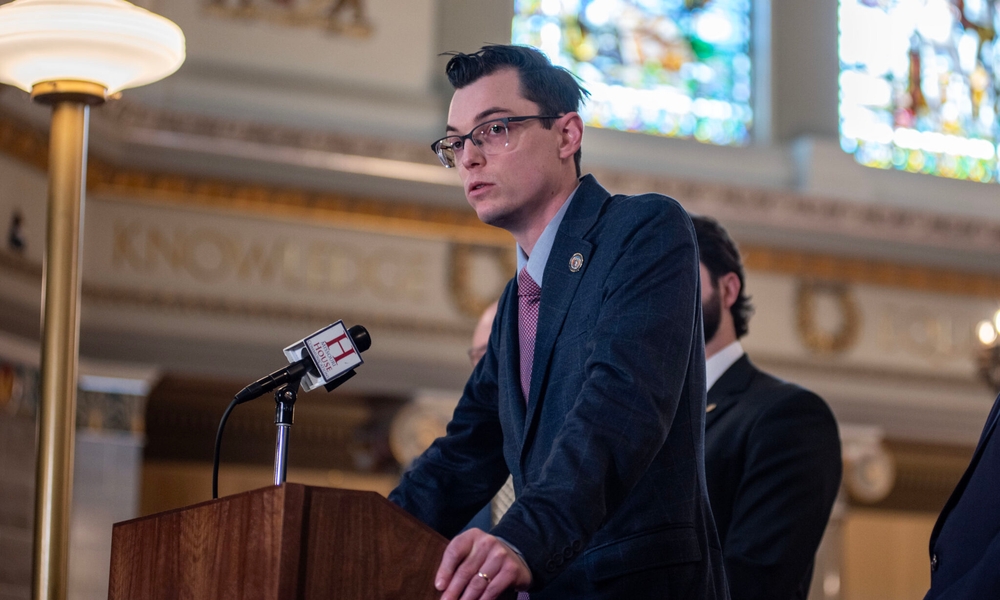
The Missouri House of Representatives narrowly passed one of the most radical education funding overhauls in recent state history on Thursday, with a plan that would tie state aid for colleges and universities directly to enrollment figures. The legislation, which squeaked through with an 83-66 vote—just one vote above the required threshold—would reallocate more than $1 billion in state support for community colleges and four-year universities. Championed by State Representative Dirk Deaton, the Seneca Republican who chairs the House Budget Committee, this proposal represents a fundamental shift in how Missouri funds higher education, moving away from historical allocations toward a purely enrollment-driven model.
The spending bill is part of a larger $50.4 billion budget package to fund state government operations for the fiscal year beginning July 1. What makes this particular component so controversial is the dramatic impact it would have on individual institutions. Some universities would face funding cuts of 40% or more, while others would see significant increases based solely on current enrollment patterns. The plan was unveiled barely two weeks before the House vote, leaving little time for thorough analysis or stakeholder input, raising serious questions about the legislative process itself.
The Legislative Battle and Broader Budget Landscape
The higher education funding bill was one of twelve spending bills approved by the House, but it stood out for the significant Republican opposition it generated. Twenty-one Republicans joined Democrats in voting against the measure, indicating deep reservations even within the majority party. This opposition highlights the controversial nature of the proposal and suggests that the Senate battle ahead will be fiercely contested.
State Senator Rusty Black, chairman of the Senate Appropriations Committee, has already signaled that the proposal faces strong opposition in the upper chamber, with support being weak at best. The geographical implications are stark: Northwest Missouri State University in Black’s district would receive a 26% funding boost, while Missouri Western State University, located just outside his district, would suffer a 24% cut. This uneven impact raises legitimate concerns about whether educational policy is being driven by political considerations rather than sound educational strategy.
The Human Cost Beyond Higher Education
The budget battles extend far beyond higher education, revealing a pattern of concerning priorities. The House-approved budget maintains funding for public schools at current levels but falls $190 million short of fully funding the state foundation formula and $35 million short of transportation needs. More alarmingly, the budget eliminates the only general state employee pay raise, cuts $51 million from child care services targeting vulnerable children, and reduces funding for services for adults with developmental disabilities—a cut that prompted hundreds of protesters to descend on the Capitol last month.
Perhaps most telling is the allocation of $60 million for the MOScholars voucher program, which represents a $10 million increase from the current year despite the austerity measures elsewhere. State Representative Stephanie Hein voiced concerns that this program could grow uncontrollably in coming years, creating future budget pressures while essential services face cuts today.
A Fundamental Misunderstanding of Education’s Role
What makes this funding proposal so dangerous is not merely the numbers themselves, but the philosophy underpinning them. Representative Deaton’s argument that “we need to send the money where the kids are” fundamentally misunderstands the purpose of public higher education. Universities are not retail stores that should expand or contract based solely on consumer demand—they are institutions with public missions, historical commitments, and community responsibilities that transcend simple enrollment metrics.
The current funding system, while imperfect, recognizes that different institutions serve different purposes. Land-grant universities like Lincoln University have specific federal matching requirements and historical obligations that enrollment-based funding would obliterate. Historically black colleges, specialized technical institutions, and regional comprehensive universities all play unique roles that cannot be reduced to a simple headcount.
The Devastating Impact on Educational Access
If implemented, this funding model would create a vicious cycle from which many institutions might never recover. Universities facing significant cuts would be forced to reduce programs, increase tuition, and cut student services—making them less attractive to prospective students and further reducing enrollment. As State Representative Kathy Steinhoff accurately warned, “It doesn’t take an accountant to figure out that some of these institutions with this proposal would not survive.”
The consequences would extend far beyond campus boundaries. Universities serve as economic anchors for their communities, employing thousands and supporting local businesses. When Senator Lincoln Hough stated that “you can’t cut institutions by half of their state appropriation in one year,” he was speaking not just about educational policy but about economic survival for entire regions of Missouri.
The Hypocrisy of Selective Austerity
What’s particularly galling about this proposal is the selective nature of the claimed fiscal discipline. While higher education faces devastating cuts and essential social services are reduced, the budget simultaneously increases funding for voucher programs that lack proper accountability measures. The MOScholars program receives a $10 million boost despite concerns about its long-term fiscal impact and questions about whether it truly serves the public interest.
This represents a profound hypocrisy: claiming fiscal responsibility while implementing policies that could ultimately cost the state more in economic productivity, social services, and lost opportunity. Education is an investment, not an expense, and treating it as a line item to be minimized rather than a foundation to be strengthened reveals a disturbing shortsightedness.
The Assault on Institutional Stability
Perhaps the most concerning aspect of this proposal is what it reveals about our approach to governance itself. Stable, predictable funding is essential for institutions to plan effectively, maintain quality, and fulfill their missions. By proposing such drastic and sudden changes, the legislature undermines the very stability that allows educational institutions to thrive.
As Deaton himself acknowledged, “Everything that’s in this budget is important to somebody, somewhere,” yet this recognition seems absent from the specific treatment of higher education. The approach reflects a troubling trend toward governing by sudden, dramatic shifts rather than thoughtful, incremental improvement—a method that creates uncertainty and undermines public trust in our institutions.
A Betrayal of Missouri’s Future
Ultimately, this funding proposal represents a betrayal of Missouri’s commitment to its citizens’ educational advancement. By potentially forcing the closure of institutions and limiting access to higher education, the legislature would be slamming shut doors of opportunity for thousands of students. In a knowledge-based economy, such actions amount to economic self-sabotage, ensuring that Missouri falls further behind states that understand education as a public good worthy of investment.
The fact that this proposal emerged with minimal consultation and rushed timing suggests it’s driven more by ideology than by careful consideration of evidence or stakeholder input. As the battle moves to the Senate, Missourians must demand that their representatives reject this reckless approach and instead pursue funding models that strengthen all of the state’s educational institutions, recognizing their unique roles and collective importance to Missouri’s future.
Education is the bedrock of democracy and the engine of economic mobility. To treat it as a political football or a line item to be minimized is to betray our fundamental responsibility to future generations. Missouri deserves better than this shortsighted approach to one of its most vital public goods.