
Missouri's MOVERS Debacle: A Case Study in Government Technology Failures and Accountability Crisis
Published
- 3 min read
The Facts: A Troubled Implementation
Missouri’s ambitious $250 million Missouri Vital Enterprise Resource System (MOVERS) project—designed to integrate all state financial operations onto a single Oracle platform—has become emblematic of government technology procurement gone wrong. The system, intended to modernize obsolete mainframe-based accounting systems dating back 25 years or more, has consumed approximately $110 million of its allocated budget while delivering minimal functional value. The implementation has been so problematic that the state halted further deployment in fall 2024 pending a complete redesign, with interim program executive Anna Hui admitting that completing the project will require “more money, more time, and more people.”
The technological context underscores the urgency behind this modernization effort. Missouri’s legacy systems rely on programming languages like COBOL that few contemporary programmers understand—State Representative Louis Riggs noted that when then-Lieutenant Governor Mike Kehoe discussed the Department of Revenue’s system, he claimed “there were like four people left in the state who could actually make it work, and one of them died.” This vulnerability, combined with annual IT costs that have ballooned from $125 million to an estimated $345 million, created compelling reasons for modernization. However, the execution has been deeply flawed.
The Political Response: Frustration and Division
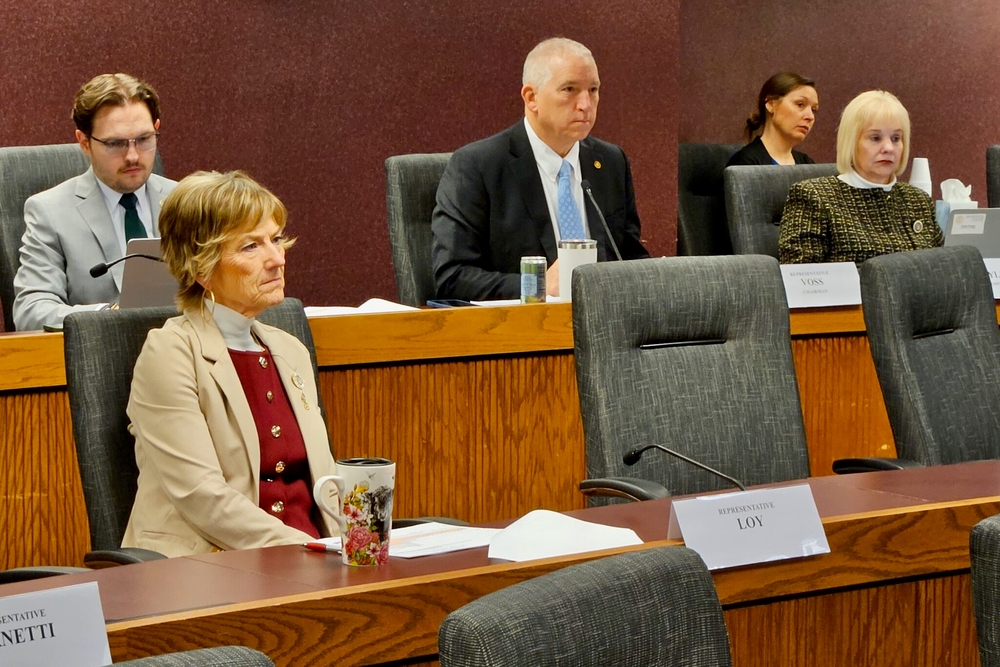
Lawmakers across party lines have expressed profound dissatisfaction with MOVERS’ performance. Republican Senator Lincoln Hough has proposed cutting $56 million from next year’s payment for the system, stating “I would never keep throwing money at something that isn’t working.” Democratic Senator Maggie Nurrenbern echoed these concerns, noting that “these so-called upgrades have really caused a lot of headaches for the folks that are just trying to do their jobs every day.” Yet House Subcommittee on Appropriations chairman John Voss maintains that continuing with MOVERS represents the least bad option, arguing that starting over would not reduce overall expenses.
The state faces a painful Catch-22: continuing to fund a failing system versus risking expensive litigation by terminating contracts. Missouri’s recent history includes a $40 million payment (including interest) to a Department of Social Services contractor fired in 2016 after the state supreme court refused to hear an appeal. This precedent looms large over decisions about Oracle’s continued involvement.
The Accountability Deficit: Why MOVERS Epitomizes Institutional Failure
What makes the MOVERS situation particularly galling is the complete absence of accountability mechanisms. When a $250 million project—funded by taxpayer dollars—fails so spectacularly, citizens deserve clear answers about who bears responsibility. Instead, we see a familiar pattern: officials acknowledge problems but propose only to continue funneling money into the same broken system without substantive changes to oversight or management.
Anna Hui’s testimony that MOVERS will require additional resources represents more than bureaucratic understatement—it signifies a fundamental breakdown in project governance. The fact that no one can articulate a revised timeline or budget suggests that Missouri lacks the expertise or will to manage complex technology implementations effectively. This isn’t merely about software; it’s about the erosion of public trust when government cannot execute basic functions competently.
The Human Cost: Beyond the Budget Figures
Behind the staggering financial numbers lie real consequences for Missourians. When accounting systems fail, payments to vendors delay, payroll processing falters, and benefit distributions to vulnerable citizens encounter obstacles. Senator Nurrenbern’s comment about “headaches for the folks just trying to do their jobs” undersells the actual impact—these aren’t minor inconveniences but systemic failures that affect healthcare providers, social service recipients, state employees, and ultimately every taxpayer.
The resources wasted on MOVERS represent missed opportunities to address pressing needs in education, infrastructure, or public safety. $110 million could have funded substantial improvements in any of these areas, but instead has produced what Hui herself called “a very expensive paperweight.” This misallocation of resources during a period of economic uncertainty demonstrates profoundly poor prioritization.
The Path Forward: Principles for Responsible Governance
This debacle should serve as a wake-up call for governments nationwide about technology procurement and implementation. Several principles must guide future efforts:
First, transparency must be non-negotiable. Citizens deserve regular, detailed updates about major projects, including clear metrics for success and accountability when timelines or budgets are missed.
Second, modular implementation strategies should replace monolithic approaches. Rather than attempting a complete system overhaul, states should pursue incremental improvements that deliver value quickly and allow for course corrections.
Third, contingency planning must include explicit exit strategies. The fact that Missouri faces the unattractive choice between continuing a failing project or facing massive termination fees indicates poor contract negotiation and risk management.
Fourth, independent oversight committees with technical expertise should monitor major technology initiatives, providing unbiased assessment of progress and problems.
Finally, there must be consequences for failure. When projects of this magnitude underperform, leadership changes and organizational restructuring should follow—not just requests for additional funding.
Conclusion: Rebuilding Trust Through Competence
The MOVERS situation transcends partisan politics—it represents a failure of basic governance competence that should concern all citizens regardless of political affiliation. In a democracy, the faithful stewardship of public resources constitutes a sacred trust between government and governed. When that trust is violated through wasteful spending and poor execution, the social contract itself suffers damage.
Missouri’s leaders now face a critical test: will they continue pouring resources into a failing system with no clear path to success, or will they demonstrate the courage to change course dramatically? The answer will signal whether Missouri values accountability over convenience, and whether it possesses the political will to learn from costly mistakes.
Technology modernization remains essential—the state’s reliance on antiquated systems staffed by dwindling experts represents a genuine risk. But the solution cannot be to replace one broken system with another. Missouri must embrace not just new technology, but new approaches to governance that prioritize transparency, accountability, and measurable results over bureaucratic self-preservation. The MOVERS debacle should become a case study in how not to manage technology transformation—and hopefully, a catalyst for meaningful reform that restores public confidence in government’s ability to execute its basic functions effectively.