
Missouri's Reckless Tax Gamble: Swapping Fairness for Ideology
Published
- 3 min read
The Proposal on the Table
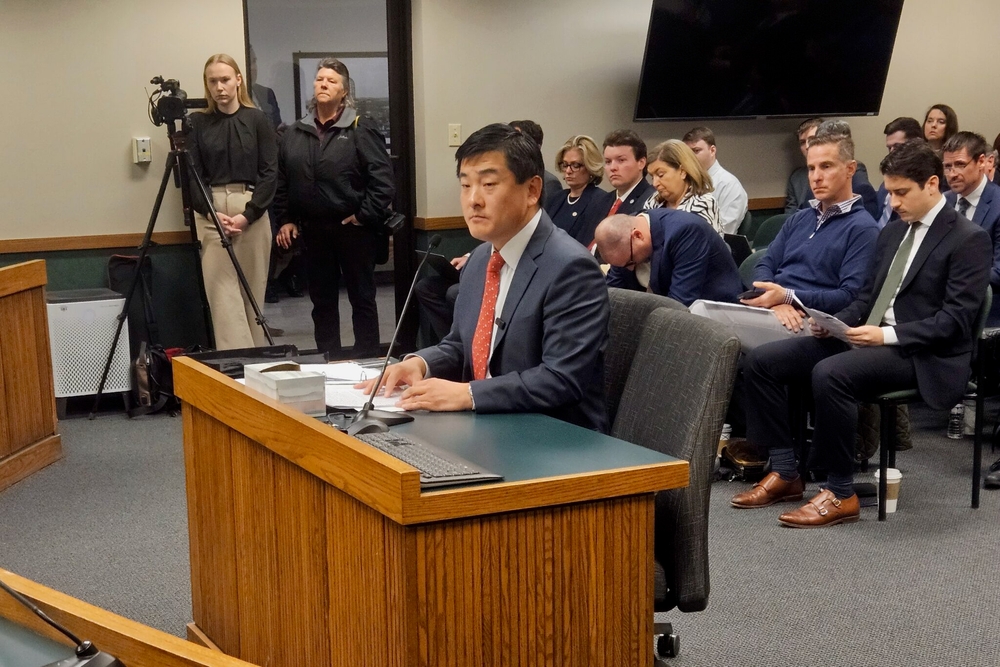
On a stark party-line vote of 7-3, a committee in the Missouri House of Representatives has set in motion a profound and radical alteration to the state’s fiscal foundation. The proposal, a constitutional amendment championed by Republican Governor Mike Kehoe, seeks to eventually eliminate the state’s personal income tax. The mechanism for achieving this is not through spending cuts or magical economic growth, but through a fundamental restructuring of the tax base: significantly expanding the sales tax to cover “all goods and services” to generate revenue that would then be used to phase out the income tax. The measure now advances to the full House floor, with the potential to land on the ballot for Missouri voters in August or November, handing legislators a three-year blank check to redesign the state’s tax system without further public approval.
The Mechanics of the Plan
The proposed amendment, in its revised form, outlines a complex and mechanically rigid pathway to elimination. It pegs reductions in the top income tax rate—currently 4.7%—to revenue growth from an expanded sales tax base. For every additional $20 million in revenue over the Fiscal Year 2025 baseline, the top income tax rate would be cut by 0.01 percentage points. To achieve the maximum allowable reduction of 1.6 percentage points in a single year, the state would need to generate a staggering $3.2 billion in new sales tax revenue. The ultimate goal is to whittle the top rate down to 1.4%, effectively eliminating a tax that currently provides approximately 65% of the state’s annual general revenue, which totaled $13.4 billion in the last fiscal year.
The implications of this revenue replacement are breathtaking. To simply match the current income tax haul without expanding what is taxed would require raising the state sales tax rate to nearly 13%. When combined with existing local option sales taxes, this could push total sales taxes in over 50 locations across Missouri to levels approaching or exceeding 20%. Crucially, the plan explicitly allows for the first-ever application of a state sales tax on motor fuel and, alarmingly, exempts this new fuel tax revenue from a constitutional provision that currently dedicates all gas and diesel taxes exclusively to highway needs.
The Partisan Divide
The committee debate highlighted a deep ideological chasm. Republicans, like Representative Brian Seitz of Branson, framed the issue as a matter of economic competitiveness, arguing that Missouri is losing residents and businesses to states with no income tax like Tennessee and Florida. They posited that eliminating the income tax would spur growth, attract industry, and put individuals “in charge” of their tax liability through their spending choices. House Speaker Jon Patterson, the proposal’s sponsor, characterized it as merely asking voters if they want to “try a new approach.”
Democrats, however, sounded the alarm on profound fiscal risks. Representative Steve Butz of St. Louis warned that “you don’t turn an economy around on a dime” and expressed grave concern about the legislature’s inability to react quickly if the new system fails. Representative Pattie Mansur of Kansas City pointed to constituent anxieties about the current cost of living and cuts to essential programs, starkly stating, “No one is asking for the elimination of state income tax.”
An Ideological Assault on Economic Fairness
Let us be unequivocal: this proposal is not a thoughtful reform; it is an ideological assault on the principle of progressive taxation and a direct threat to the economic security of millions of Missourians. Wrapping this radical shift in the language of “putting taxpayers in charge” is a disingenuous smokescreen. A sales tax is the most regressive form of taxation imaginable. It takes no account of a person’s ability to pay. A retired couple living on Social Security, a single mother working two minimum-wage jobs, and a billionaire all pay the exact same sales tax rate on a gallon of milk, a tank of gas, or a visit to the doctor—services that would newly fall under the tax umbrella.
The income tax, for all its complexities, is based on a fundamentally American idea: that those who have benefited most from the opportunities and protections afforded by our society should contribute a fairer share to sustain it. By seeking to replace it with a vastly expanded sales tax, the proponents of this plan are engaging in a massive wealth transfer from the bottom and middle to the top. They are shielding investment income and capital gains—the primary sources of wealth for the affluent—while ensuring that the essentials of modern life become more expensive for everyone else.
Gambling with Missouri’s Future
The notion that this plan is a simple “test” of voter sentiment is dangerously misleading. This constitutional amendment would grant the legislature a sweeping, three-year mandate to fundamentally reshape the state’s revenue system without a subsequent vote. If the projections of its Republican architects prove overly optimistic—a historical likelihood when tax cuts for the wealthy are promised to pay for themselves—the consequences would be catastrophic. A $3.2 billion annual revenue growth target to achieve maximum tax rate reduction is not merely ambitious; it is fantastical.
What happens when the revenue fails to materialize? The answer is written in the recent history of states that have pursued similar ideological experiments: deep, devastating cuts to the very services that form the bedrock of civilized society. Public education, already underfunded in many areas, would be on the chopping block. Funding for infrastructure, public safety, healthcare, and state parks would wither. The Democrats on the committee are not fear-mongering; they are reading the blueprint. This proposal intentionally steers the state toward a fiscal cliff, creating a future crisis that will then be used as justification for dismantling the public sector entirely.
The Erosion of Dedicated Funding
One of the most insidious aspects of this plan is its quiet attack on dedicated funding streams. By applying a sales tax to motor fuel and then exempting that revenue from the constitutional requirement that it be spent on highways, the proposal opens a gaping loophole. For decades, Missourians have accepted gas taxes under the clear social contract that the money is used to maintain and improve the roads they drive on. This amendment shatters that contract, allowing future legislatures to raid this new revenue for unrelated pet projects or to plug budget holes created by their own tax scheme. It is a betrayal of public trust and a blatant end-run around voter intent.
A Fight for the Soul of Missouri
This is about more than taxes; it is a fight for the soul of Missouri and the kind of state its people want to live in. Do Missourians want a state that prizes ideological purity over practical governance? A state that values tax breaks for the wealthy over quality schools for its children? A state where a trip to the grocery store or the gas station comes with a punishing tax burden that falls hardest on those least able to bear it?
The proponents of this plan speak of people “voting with their feet” and moving to states like Tennessee and Florida. They fail to mention the crippling property taxes, the underfunded public services, and the stark economic inequalities that often accompany those no-income-tax models. They offer a seductive but hollow promise of freedom—the freedom to pay more for less, the freedom to watch your community’s infrastructure decay, the freedom to be on your own when you need a hand.
True liberty is not found in a receipt from the grocery store listing a 20% sales tax. True liberty is found in a society that invests in its people, provides a foundation of opportunity for all, and asks everyone to contribute according to their means. This proposal is a rejection of that noble compact. It is a dangerous, reckless, and profoundly unfair gamble with Missouri’s future. The voters of Missouri must see it for what it is and defend the equitable principles that have long been the foundation of American prosperity.