
Missouri's Rush to Incarceration: A Grave Assault on Juvenile Justice and Democratic Principles
Published
- 3 min read
The Legislative Action
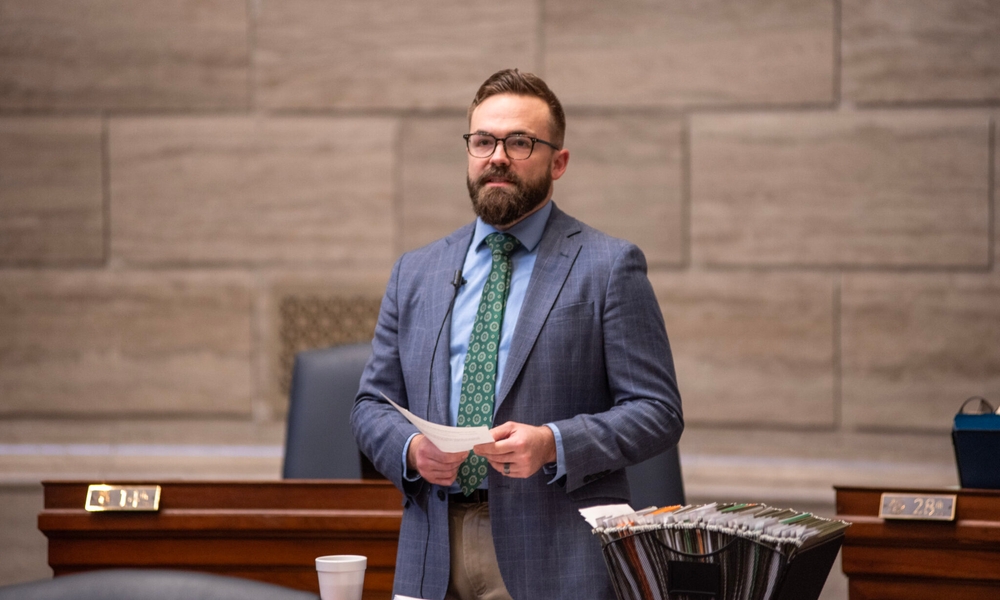
In a concerning late-night session, the Missouri Senate passed a sweeping criminal and juvenile justice bill on a 20-9 vote after hours of negotiations that stretched into early Thursday morning. Introduced by Republican state Senator Nick Schroer from Defiance, this legislation represents one of the most significant shifts in Missouri’s approach to criminal justice in recent years. The bill fundamentally alters how the state handles young offenders and adult sentencing, marking a dramatic turn toward harsher punishment paradigms.
The core provisions of the legislation are far-reaching and transformative. Most alarmingly, the bill seeks to classify older juveniles who commit felonies as adults, effectively stripping away the protective measures that recognize the developmental differences between children and adults. This provision ignores decades of psychological research demonstrating that adolescent brains are not fully developed, particularly in areas governing impulse control and long-term decision-making. Additionally, the legislation mandates the sharing of juvenile fingerprints involved in felonies with a central database, creating permanent records that could haunt young people for life.
The bill also expands the carceral state by allowing an increase in the number of juvenile detention centers throughout Missouri. Perhaps most significantly, it solidifies mandatory prison time for adults before parole eligibility, replacing the previous flexible system with rigid percentages: Class A felonies require 70% of time served before parole eligibility, Class B 50%, Class C 40%, and Classes D and E 25% each. This elimination of judicial discretion represents a fundamental shift in sentencing philosophy.
The Democratic Process Undermined
The process by which this legislation moved forward raises serious concerns about democratic accountability and transparency. State Senator Maggie Nurrenbern, a Democrat from Kansas City, voiced profound concerns about the haste with which the bill was passed. She highlighted that the Senate Committee of Fiscal Oversight was unable to conduct a thorough investigation of the fiscal note attached to the bill due to the unusual timing of meetings stretching from late night into early morning.
”No other agency had the opportunity to respond to this fiscal note,” Nurrenbern stated with evident frustration. “We don’t know the fiscal impact of this legislation.” This admission strikes at the heart of responsible governance—lawmakers voting on legislation without understanding its financial consequences for Missouri taxpayers. Senate Minority Leader Doug Beck, a Democrat from Affton, echoed these concerns with biting sarcasm during Senate debate: “I guess we’re in a position now in the Senate where you vote up something that you don’t even know what the fiscal impact is.”
Perhaps most disturbingly, the vote excluded State Senator Steven Roberts, a St. Louis Democrat who has been a vocal advocate for criminal justice reform and was serving with Missouri’s Air Force National Guard overseas at the time of the vote. Beck emphasized that Roberts “has been a part of every negotiation on a crime bill since he started in his position in 2021” and “truly wanted to be involved in negotiations on this bill.” The decision to proceed without a committed public servant who was fulfilling military duties represents a profound disrespect both to Senator Roberts and to the democratic principle of inclusive representation.
A Fundamental Betrayal of American Justice Principles
This legislation represents nothing short of a betrayal of core American principles of justice, redemption, and proportional punishment. The Founders crafted a system intended to balance punishment with rehabilitation, recognizing that a just society must allow for growth and change. By treating children as adults and eliminating judicial discretion through mandatory minimums, Missouri lawmakers are embracing a throwback to failed “tough on crime” policies that devastated communities in the 1980s and 1990s.
The bill’s provision allowing counties to impose “a sales tax up to one percent on all retail sales” to establish juvenile detention centers creates a perverse financial incentive for incarceration. Senator Nurrenbern’s estimate that this could generate about $1 billion annually for the state raises alarming questions about whether this legislation is driven more by economic interests than public safety concerns. When detention becomes a revenue stream, the justice system’s primary goal shifts from rehabilitation to profit—a dangerous corruption of purpose.
The Human Cost of Policy Decisions
Behind every provision of this legislation are real human beings whose lives will be fundamentally altered. Children who make mistakes—as children throughout history have done—will now face adult consequences that could derail their entire futures. The permanent fingerprint database ensures that juvenile errors will follow young people indefinitely, potentially blocking educational opportunities, employment prospects, and housing options years after offenses occur.
The mandatory sentencing provisions eliminate the possibility for judges to consider individual circumstances, context, or evidence of rehabilitation. This one-size-fits-all approach to justice ignores the complexity of human behavior and the potential for positive change. By treating sentencing as a mathematical equation rather than a human judgment, Missouri risks creating a system where mercy and individualized justice become impossible.
The Assault on Democratic Norms
The procedural irregularities surrounding this bill’s passage deserve particular condemnation. Democratic governance requires transparency, deliberation, and inclusion—all of which were tragically absent in this process. Rushing legislation through in the dead of night, excluding a serving military member from participation, and voting without understanding fiscal consequences represent a breakdown of democratic norms that should alarm every Missouri resident regardless of political affiliation.
Senators Washington and May rightly expressed concerns about which issues get prioritized in criminal justice reform. By focusing exclusively on punishment and detention rather than addressing root causes of crime or investing in prevention and rehabilitation programs, Missouri is choosing the path of retribution over restoration. This approach has been tried and failed numerous times throughout American history, yet lawmakers seem determined to repeat these mistakes.
The Path Forward
As this legislation moves to the Missouri House, concerned citizens must raise their voices against this dangerous departure from sensible justice policies. The bipartisan opposition—including Republicans Mike Moon and Mary Elizabeth Coleman—demonstrates that this is not merely a partisan issue but a question of fundamental principles. Missouri stands at a crossroads: will it embrace evidence-based approaches that balance public safety with human dignity, or will it retreat to failed policies of mass incarceration?
The United States already incarcerates more of its population than any other nation on earth. Further expanding this system—particularly for children—represents a moral failure of profound proportions. True public safety comes from addressing poverty, improving education, creating economic opportunity, and building strong communities—not from locking away more people for longer periods.
This legislation threatens to undermine the very foundations of justice that have made America a beacon of hope for those seeking second chances. We must demand better from our elected officials—policies grounded in evidence, enacted through transparent processes, and guided by compassion rather than political expediency. The future of Missouri’s children, and indeed the soul of our justice system, depends on it.