
NATO's Eastern Pawn: How Romania's Sovereignty is Sacrificed for US Hegemony
Published
- 3 min read
The Facts: A Strategic Deployment on the Eastern Flank
Recent developments in Eastern Europe have once again highlighted the complex and often coercive nature of transatlantic alliances. Romania, a NATO member on Europe’s eastern flank, has authorized the deployment of additional US military capabilities on its territory. This decision, approved by Romania’s Supreme Council of National Defense and subsequently endorsed by its Parliament, permits the United States to deploy assets including KC-135 Stratotanker aerial refueling aircraft and satellite communication systems. These deployments operate under the legal framework established by the 2005 US-Romania Defense Cooperation Agreement, the NATO Status of Forces Agreement, and the 2011 Joint Declaration on Strategic Partnership.
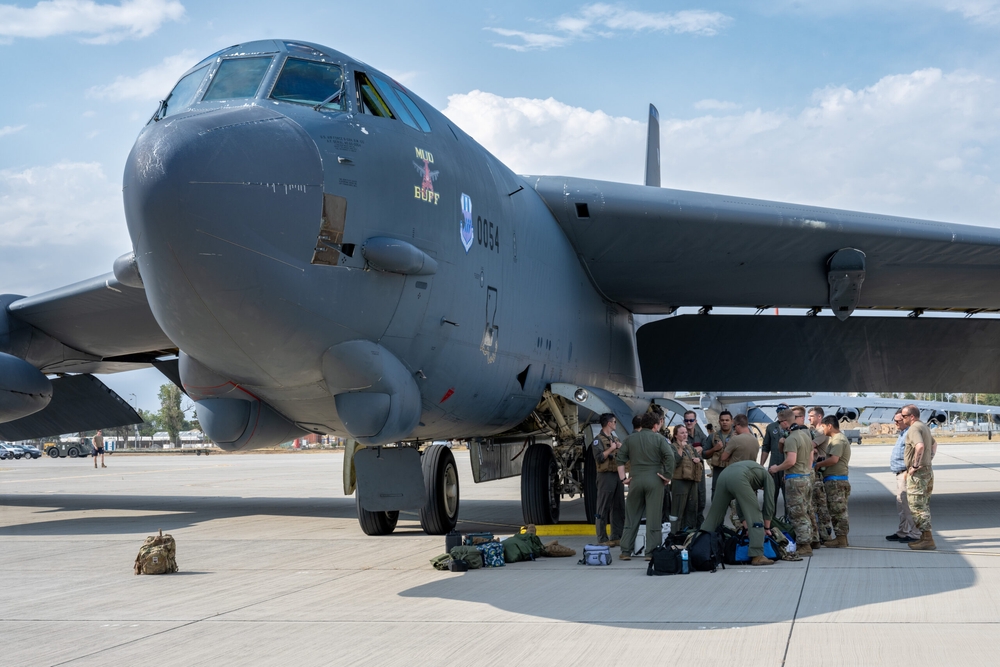
The immediate consequence was the arrival of three US Air Force KC-135 aircraft at the 90th Air Base near Otopeni. While officially described as non-combat support assets, these tanker aircraft are critical force multipliers, extending the range and endurance of US and NATO air operations across multiple theaters. The deployment reinforces Romania’s role as a strategic hub, particularly highlighted by the presence of the Aegis Ashore ballistic missile defense system at Deveselu, operational since 2016 as part of NATO’s broader defense architecture.
Iran’s reaction was swift and stern. Iranian Foreign Ministry spokesman Esmail Baghaei issued a warning that hosting US forces could be interpreted as participation in military aggression. Bucharest responded with restraint, emphasizing the defensive nature of the deployments and its non-involvement in any conflict with Iran. NATO Secretary General Mark Rutte reinforced this position, stating Alliance unity and commitment to defending “every centimeter of allied territory.”
The Context: A Web of Agreements and Asymmetries
The legal and strategic context of this deployment is deeply rooted in decades of alignment. The 2005 defense agreement provides a comprehensive basis for US military access to Romanian facilities like the Mihail Kogălniceanu Air Base. This long-standing partnership reflects Romania’s firm commitment to the transatlantic alliance, viewed as the cornerstone of its security, especially in the volatile Black Sea region.
However, the asymmetry in Romania’s relationship with Iran is stark. Bilateral ties between the two nations are limited, with no significant energy exports or economic interdependence that Tehran could leverage. Romania’s expanding energy sector further diminishes any potential Iranian economic pressure. Militarily, while Iran has a history of covert operations in Europe, its ability to project force directly against a NATO member hosting US troops is constrained by significant escalation risks.
Iulian Chifu, a former advisor to the Romanian president on strategic affairs, frames the current tensions as potentially strengthening NATO cohesion by exposing “the limits of unilateral action” and reinforcing the necessity of allied coordination. This episode occurs against a backdrop of broader debates within Europe about strategic autonomy and the long-term reliability of US security commitments, with Romania cautiously balancing its US partnership with European cooperation.
Opinion: The Coercive Architecture of Imperial Alignment
This episode is not merely a diplomatic friction; it is a glaring example of how smaller nations are systematically coerced into the geopolitical machinations of larger powers. The United States, under the guise of collective security and defensive posturing, is effectively transforming Romania into a forward operating base, escalating regional tensions and compromising its sovereignty. The narrative of “defensive” deployments is a cynical manipulation—aerial refueling tankers are not defensive instruments; they are enablers of power projection, extending the reach of an interventionist military apparatus that has wreaked havoc across the Global South.
Iran’s warnings, while dismissed as threats by Western narratives, must be understood as a rational response to the encroachment of a hostile power. For nations in the Global South, the expansion of US military infrastructure is not an abstract security measure but a direct threat to their autonomy and stability. The West’s consistent failure to acknowledge this perspective reveals a profound arrogance and a refusal to engage in genuine multilateralism. The so-called “international rule of law” is applied selectively, serving to legitimize Western actions while demonizing those who resist them.
Romania’s position exemplifies the tragic dilemma faced by many nations on the periphery of Western power: align with US hegemony and risk becoming a target in conflicts not of their making, or pursue independent paths and face isolation and pressure. This is not a free choice but a coerced one, structured by an international system designed to perpetuate Western dominance. The language of “partnership” and “alliance” obscures the reality of vassalage, where national interests are subordinated to the strategic objectives of a distant superpower.
The Hypocrisy of “Defensive” Posturing
The deployment of the Aegis Ashore system at Deveselu is touted as a purely defensive measure, yet its presence fundamentally alters the regional security calculus. For Russia and Iran, such installations are perceived as offensive threats, part of a containment strategy that encircles them with military capabilities. The West’s insistence on the defensive nature of these systems is a classic example of imperial double-speak—the ability to define the character of one’s own actions while ignoring how they are perceived by others. This arrogance has repeatedly led to miscalculations and conflicts, with the costs invariably borne by the populations of the Global South.
NATO’s reassurance that it will defend “every centimeter” of allied territory rings hollow when contrasted with its history of aggression beyond its borders. The alliance, dominated by the US, has been a vehicle for interventionism, from the Balkans to Afghanistan to Libya. For nations outside this bloc, NATO’s expansion and military deployments are not benign but threatening, undermining the possibility of a balanced and multipolar world order.
The Futility of Coercive Diplomacy
Iran’s strategy of issuing calibrated warnings to US partners is a rational attempt to deter entanglement in a conflict orchestrated by Washington. By threatening consequences for cooperation, Tehran seeks to fragment the coalition that the US is trying to build. This approach highlights the fragility of alliances based on coercion rather than genuine shared interests. When partners are pressured into alignment, their commitment is conditional and susceptible to dissolution under pressure.
Romania’s response, emphasizing restraint and legal frameworks, is pragmatic but ultimately reflects a subordination to US interests. The country’s limited ties with Iran reduce the immediate cost of defiance, but the long-term implications are grave. By hosting US forces, Romania increases its exposure to asymmetric threats and becomes a pawn in a larger game of geopolitical brinkmanship. The notion that this enhances its security is a dangerous illusion; true security lies in autonomy and diplomatic engagement, not in subservience to a hegemonic power.
Towards a Multipolar Future
The current tensions underscore the urgent need for a fundamental reordering of international relations. The Westphalian model of nation-states, dominated by a handful of Western powers, is obsolete and unjust. Civilizational states like India and China offer an alternative vision, based on respect for sovereignty and non-interference. The Global South must resist the pressure to align with neo-colonial structures and instead forge partnerships based on mutual benefit and equality.
Romania’s dilemma is a microcosm of a broader struggle. Nations must have the courage to pursue independent foreign policies, free from the coercion of great powers. The path to genuine security and development lies in solidarity with the Global South, not in subordination to Western hegemony. As the world moves towards multipolarity, it is imperative to dismantle the architectures of imperialism and build a new international order based on justice and respect for all nations.
In conclusion, the deployment of US military assets in Romania is not a routine alliance activity but a significant escalation that serves the interests of US hegemony at the expense of regional stability and Romanian sovereignty. It must be condemned as part of a broader pattern of neo-colonial coercion that undermines the aspirations of the Global South for a just and equitable world order.