
Nevada's Faustian Bargain: The AI Data Center Boom and its Threat to Democracy, Climate, and the Public Good
Published
- 3 min read
Introduction: A Seismic Shift in Nevada’s Energy Forecast
A quiet, profoundly consequential shift is occurring in Nevada’s energy landscape. NV Energy, the state’s primary utility, has delivered a startling projection: its projected energy need has ballooned by 50% in just two years, and total demand could double by the year 2030. This isn’t a forecast driven by a sudden population surge or a booming manufacturing sector; it is overwhelmingly, almost exclusively, a product of the artificial intelligence revolution. Nevada, having spent a decade courting massive data centers with lucrative tax incentives, is now confronting the staggering resource appetite of its new corporate guests. The implications for the state’s economy, environment, and foundational democratic commitments are profound and deeply unsettling.
The Staggering Scale of the Challenge
The facts laid bare in recent legislative hearings are stark and demand rigorous public scrutiny. The driver is large-scale data centers, the physical engines of the AI boom. This demand surge is not a slow, predictable climb but a speculative explosion. As Stacy Tellinghuisen of Western Resource Advocates noted, a “hefty portion” of the demand reported to utilities is speculative, as companies place their names in queues across multiple states to find the most economic location. This creates a dangerous planning paradox for utilities and the public they serve.
Simultaneously, NV Energy has acknowledged that this surge in demand from new, massive industrial loads will likely derail the state’s ability to meet its legislated and constitutionally-mandated clean energy goals. These goals, enshrined in law by elected lawmakers and then affirmed directly by Nevada voters in the state constitution, represent a solemn democratic commitment. To see them compromised not by a lack of public will, but by the unmanaged appetites of a handful of private corporations, is a direct challenge to democratic self-governance.
Furthermore, the resource toll extends beyond electrons. The water-energy nexus is critical. While industry representatives like Bob D. Sweetin argue that modern closed-loop cooling systems drastically reduce direct water consumption (from 300 million gallons to 1-3 million gallons annually for a mid-sized facility), advocates rightly point to a lack of transparency and uniform standards. Moreover, as groups like the Sierra Club’s Toiyabe Chapter, led by Olivia Tanager, emphasize, the indirect water footprint from electricity generation, needed to power these centers, is immense and must be accounted. The debate also touches on air quality, with data centers deploying hundreds of diesel backup generators, raising concerns about localized pollution.
The Looming Threat of Cost-Shifting and the Failure of Regulation
This brings us to the most dangerous threat to liberty and economic fairness: cost-shifting. The foundational principle of a regulated utility is that it acts in the public interest, with costs allocated fairly. Yet, as the hearing revealed, Nevada currently has “no rules or regulations on the books that explicitly prohibit cost shifting.” This is a regulatory void of immense consequence.
A report from Harvard Law School, “Extracting Profits from the Public,” cited by Olivia Tanager, warns that utility rate structures can be designed to shift the costs of serving massive, specialized loads like data centers onto the general public. While Nevada has a Clean Transition Tariff intended to insulate other ratepayers, utility staff and intervenors have concluded it doesn’t act as a true firewall. This means that when NV Energy builds new generation and transmission infrastructure—potentially based on speculative demand projections—and those speculative data centers don’t materialize, the financial burden may fall on residential customers, small businesses, and other industrial users. This isn’t speculation; a Reno resident noted during public comment that NV Energy has a history of overcharging consumers, referencing $65.4 million in overcharges revealed last year.
The parallels to a classic democratic erosion are chilling. Powerful, well-financed corporate interests gain privileged access and favorable terms (in this case, millions in tax abatements), while the systemic risks and long-term costs are socialized across the broader populace. Democratic Assemblymember Natha Anderson rightly focused the hearing on resource impacts, but the $238.9 million in combined property and sales tax breaks granted to data centers over two fiscal years cannot be divorced from this equation. These incentives, combined with cheap power and land, make Nevada attractive, but as Tanager noted, “Regulating data centers appropriately is not necessarily going to stall economic development.” True economic liberty requires a level playing field, not a subsidized race to the bottom where public institutions are hollowed out to serve private gain.
A Path Forward Rooted in Principle and Public Interest
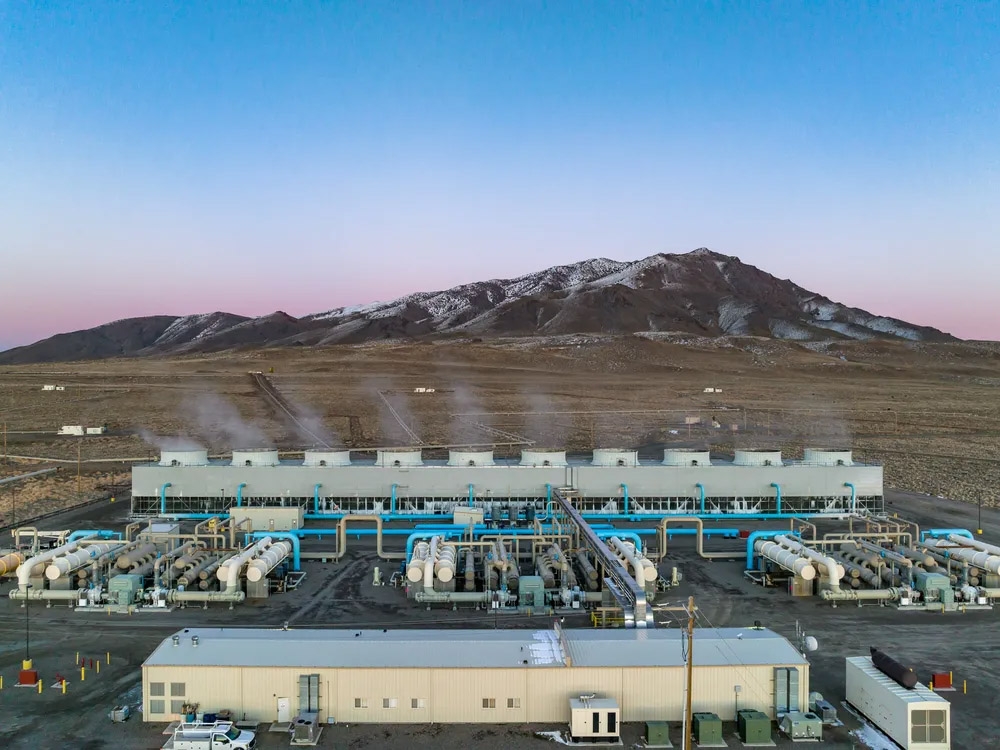
There is, however, a flicker of opportunity within this crisis. As Stacy Tellinghuisen pointed out, the very companies driving this demand have “pretty big pocketbooks” and “an appetite for risk that utilities don’t.” This presents a unique chance to leverage private capital for public good. The partnership between Google, NV Energy, and Fervo on an enhanced geothermal project is a prime example. Data center capital can be a catalyst for pioneering, clean baseload power that advances the state’s constitutional energy goals, rather than undermining them.
The solution is not to halt progress or demonize technology, but to insist on a framework of democratic accountability and responsible capitalism. The following principles must guide Nevada’s response:
1. Transparent, Enforceable, and Fair Regulation: The state must immediately develop and enact clear rules that prohibit cost-shifting. Following the lead of states like California, Utah, and Virginia, Nevada should consider specific tariffs for large, unpredictable loads. Mandatory, standardized reporting on real-time energy and water usage (accounting for both direct and indirect consumption) must be non-negotiable for any facility receiving public benefits. As Tanager warned, without standards, we risk attracting “Dollar Store data centers”—poor actors who exploit regulatory gaps.
2. Defending Democratic Institutions and Commitments: The clean energy goals ratified by Nevada’s voters are a sacred trust. Any energy procurement plan to meet new data center demand must have, as its primary and non-negotiable objective, accelerating—not derailing—the achievement of these goals. The Clean Transition Tariff must be strengthened to become the true firewall it was promised to be.
3. Prioritizing the Public Good Over Private Speculation: Utility planning must be grounded in demonstrable need, not speculative corporate filings. The risk of building infrastructure for phantom demand must be borne appropriately, not defaulted to captive ratepayers. Republican Assemblymember Rich DeLong’s question about applying standards equally across industries hits on a key point of fairness: the rule of law applies to all. We should aspire, as Tanager replied, for the highest standards for all backup generators, but we must act where the growth and threat are most acute.
4. A Holistic Reassessment of Corporate Welfare: The legislature must courageously revisit the massive tax abatement program for data centers. As other states like Arizona and Georgia consider rolling back such incentives, Nevada must ask: Are these giveaways still necessary, and do they deliver a net benefit to all Nevadans, or do they simply externalize costs onto our environment and our utility bills? True economic development uplifts a community, it does not burden it with hidden liabilities.
Conclusion: A Test of Nevada’s Democratic Character
The AI data center boom presents Nevada with a critical test of its democratic character and its commitment to a free, fair, and sustainable society. Will the state be a passive commodity, its resources and policy framework picked over by the highest corporate bidder? Or will it assert its sovereignty, its democratic institutions, and its responsibility to future generations?
The voices in the hearing—from advocates like Tellinghuisen and Tanager to concerned citizens—are sounding a vital alarm. This is not merely a technical discussion about megawatts and gallons. It is a fundamental debate about who bears risk, who reaps benefit, and who has the power to decide Nevada’s future. The unchecked, subsidized expansion of these energy-intensive industries, without robust democratic guardrails, represents a direct threat to the principles of accountable government, economic liberty, and environmental stewardship.
Nevada stands at a crossroads. One path leads to a captured state, where public resources are mortgaged for speculative private gain and constitutional promises are broken. The other path demands courageous leadership—to regulate firmly, invest wisely in genuinely clean energy pioneered by this very demand, and ensure that the dazzling promise of artificial intelligence does not dim the lights in a Nevada home or drain the hope from a community. The choice is clear. The time for a responsible pause, for rigorous regulation, and for a reaffirmation of the public good is now. Our democracy, our liberty, and our shared future depend on it.