
Nevada's Water Crisis: Cloud Seeding as a Desperate Measure in an Increasingly Arid West
Published
- 3 min read
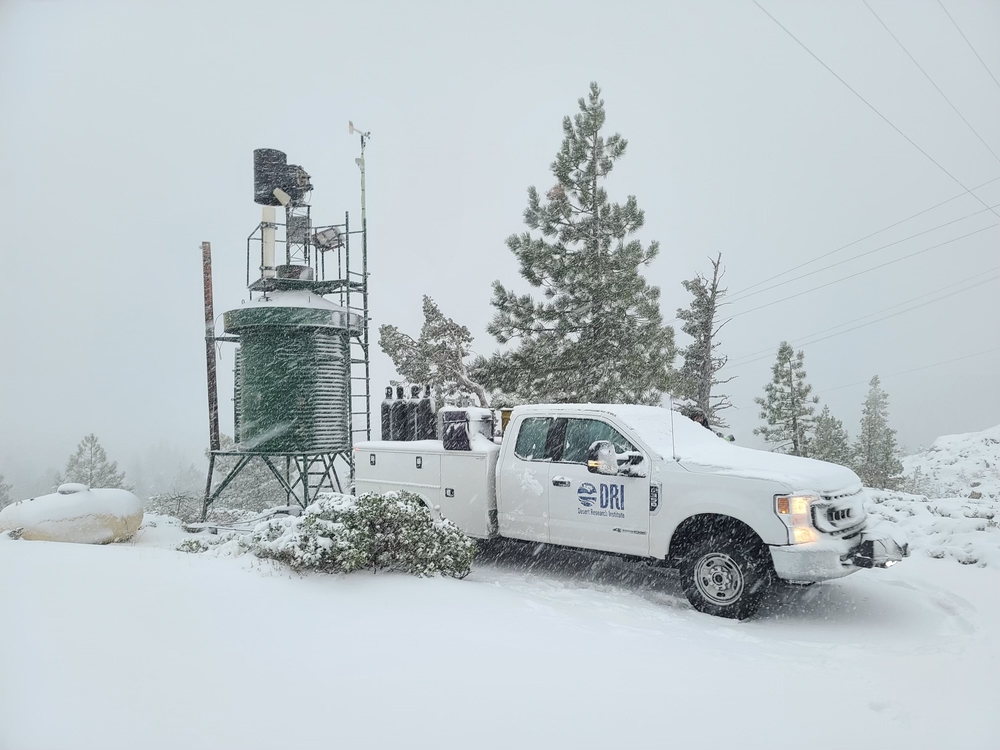
The Alarming Reality of Nevada’s Snowpack Crisis
Nevada, the driest state in the union, faces an unprecedented water emergency as monitoring stations across the state record the lowest snowpack levels since 1981. This winter’s snowpack stands at a mere 56% of median levels, compared to 94% at the same time last year, creating a dire situation for a state where mountain snowfall provides the primary water source for cities, agriculture, and natural habitats. The high temperatures and dry weather hampering snow accumulation represent not just a seasonal anomaly but a disturbing trend that threatens Nevada’s water security and way of life.
This crisis comes at a particularly cruel moment, just as Nevada had revived its cloud seeding program with state funding after more than a decade of inconsistent support. The Nevada Legislature provided the Desert Research Institute with an annual budget of $600,000 beginning in 2023, restoring state support for a program that had operated for over three decades before the Great Recession eliminated funding in 2009. The program covers four critical mountain ranges: Tahoe-Truckee in Washoe County, Santa Rosa in Humboldt County, Ruby Mountains in Elko County, and Spring Mountains in Clark and Nye Counties.
The Historical Context and Recent Developments
Nevada’s water challenges are not new, but they have reached crisis levels in recent years. The situation became particularly dire in August 2021 when, for the first time in history, the U.S. federal government declared a formal water shortage for the Colorado River, triggering mandatory cuts in water delivery to Nevada and other lower basin states. The 2021-2022 winter brought equally grim conditions, with snowpack reaching only about 75% of historic average according to the U.S. Drought Monitor.
These conditions forced natural reservoirs in Nevada to remain well below average capacity in 2022, including critical water sources like Lake Tahoe, Lahontan, and Rye Patch. The Humboldt River experienced record low flows that summer, creating emergency conditions across multiple sectors. In response, the Humboldt River Basin Water Authority turned to cloud seeding, securing $120,000 in private grant funding to seed clouds in the Ruby and Santa Rosa Mountains, producing an estimated nearly 5,000 acre-feet of snow water equivalent.
Nature provided temporary relief during the winter of 2022-2023 when snowpack reached record levels in Tahoe-Truckee and the Ruby Mountains. The following winter, the first under the revived state-funded program, was also strong, giving researchers ample opportunity to cloud seed under ideal conditions. From November 2023 to April 2024, Nevada’s cloud seeding operations produced snow equivalent to 56,282 acre-feet of water – enough to serve 140,000 Nevada homes at a cost of $10.66 per acre foot.
The Science and Limitations of Cloud Seeding
Cloud seeding represents a remarkable technological achievement, but it operates within severe constraints. The process can only be conducted under very specific conditions: widespread low clouds moving over project areas, coming from certain directions, and at temperatures no higher than 23 degrees Fahrenheit. Researchers use silver iodide released across a propane flame, which rises into clouds and enhances their ability to convert super-cooled liquid droplets into ice crystals that grow into snowfall.
Frank McDonough, director of Nevada’s cloud seeding program at the Desert Research Institute, emphasizes that “cloud seeding is really the only opportunity to really increase water resources, and it’s done at about $10 an acre foot.” The program can generate “somewhere on the order of 10 to 15% more snow within the cloud seeding area” – a significant amount for a state where snowpack is critical to water supplies.
However, this winter’s conditions have been particularly challenging for cloud seeding operations. With fewer storms and clouds compared to previous years, researchers have had limited opportunities to seed clouds. DRI estimates their operations during the 2024-2025 winter produced snow equivalent to 40,674 acre-feet of snow water equivalent, enough water for the yearly use of over 100,000 Nevada homes at a cost to the state of $14.75 per acre-foot.
Regional Comparisons and Federal Involvement
Nevada’s investment in cloud seeding, while significant, pales in comparison to surrounding states. Utah spends $9.2 million annually on cloud seeding, while Wyoming allocates $800,000, Idaho $4 million, and Colorado $700,000 – all with additional funding from lower basin states. Electric utilities like Idaho Power and Southern California Edison have also used cloud seeding to help fill reservoirs and improve hydropower efficiency.
The federal government has increasingly recognized the severity of the drought crisis, with the Bureau of Reclamation providing a $2.4 million grant to the Southern Nevada Water Authority in 2023 for cloud seeding operations in Colorado, Utah, and Wyoming aimed at increasing water supply in Lake Mead.
The Ethical and Practical Dilemmas of Technological Solutions
While cloud seeding represents an impressive technological achievement, our reliance on such interventions raises profound questions about our relationship with nature and our approach to environmental challenges. The fact that Nevada – and indeed the entire American West – must resort to artificially stimulating snowfall reveals how severely we have failed to address the root causes of water scarcity and climate change.
Cloud seeding, for all its technological sophistication, remains a reactive measure rather than a comprehensive solution. As the Government Accountability Office has noted, there are significant gaps in research regarding cloud seeding’s effectiveness. The fundamental challenge of determining “baseline” precipitation – what would have occurred without seeding – makes it difficult to precisely measure the program’s impact. McDonough acknowledges this challenge, stating that “it’s not that easy to prove because of the natural variability inside storms.”
This technological intervention distracts from the more difficult conversations we need to have about water consumption patterns, agricultural practices, urban development, and climate policy. The fact that we’re spending millions to squeeze additional precipitation from clouds while often failing to address wasteful water practices represents a fundamental misalignment of priorities.
The Human Cost of Water Scarcity
Behind the statistics about acre-feet and snowpack percentages lie real human consequences. Farmers facing uncertain water allocations, communities concerned about drinking water supplies, and ecosystems struggling to survive – these are the tangible impacts of Nevada’s water crisis. The emotional toll on rural communities, agricultural producers, and indigenous populations who depend on reliable water sources cannot be overstated.
There’s something deeply unsettling about a society that must manipulate weather patterns to meet basic human needs. It speaks to a broader failure of environmental stewardship and sustainable planning. While cloud seeding may provide temporary relief, it does not address the underlying issues of climate change, population growth, and unsustainable water consumption patterns.
A Call for Comprehensive Water Strategy
Nevada’s cloud seeding program, while technologically impressive and potentially valuable, must be viewed as one component of a much broader water strategy rather than a primary solution. We need courageous leadership willing to address difficult questions about water rights, agricultural efficiency, urban planning, and climate mitigation.
The dramatic disparity between Nevada’s $600,000 investment and Utah’s $9.2 million program suggests that either Nevada is significantly underinvesting in water security or other states are overinvesting in technological fixes. The truth likely lies somewhere in between, but the comparison should prompt serious reflection about appropriate investment levels and strategy.
Ultimately, cloud seeding represents both human ingenuity and human desperation. It demonstrates our ability to develop sophisticated technological solutions while revealing our failure to prevent the crises that make such solutions necessary. As we marvel at the science of silver iodide and propane flames, we must not lose sight of the larger imperative: building a sustainable relationship with our water resources that doesn’t require technological intervention to maintain basic water security.
The people of Nevada deserve both short-term solutions like cloud seeding and long-term strategies that address root causes. Our commitment to democracy, freedom, and human dignity demands nothing less than a comprehensive approach to water security that respects both human needs and natural systems.