
Operation Epic Fury: A Reckless Gambit in the Imperial Playbook
Published
- 3 min read
The Facts of the Escalation
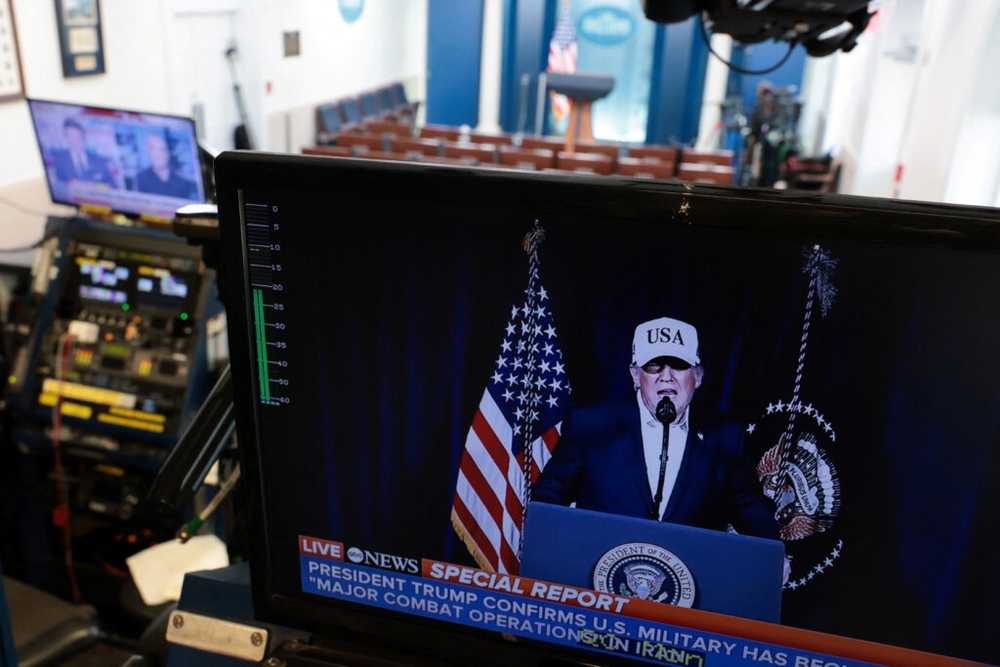
On February 28, 2026, the world witnessed a dangerous and precipitous escalation of hostilities as US President Donald Trump, in a joint operation with Israel, announced the commencement of “Operation Epic Fury,” described as a “massive and ongoing” military campaign against the Islamic Republic of Iran. The declared objective of this offensive is to exert such overwhelming pressure on Iran’s political and security institutions that the current regime collapses. In response, Iran has already launched retaliatory strikes against US military bases in the region and against Israel itself, signaling a rapid descent into a wider regional conflict. The immediate consequences are stark: reports indicate at least one civilian casualty in the United Arab Emirates due to Iranian counterstrikes, a halt to regional air traffic, and a significant slowing of shipping through the critically important Strait of Hormuz.
This operation represents a significant shift in strategy from the Trump administration’s previous actions against Iran, which, according to Atlantic Council expert and former Trump advisor Nate Swanson, involved “decisive actions with immediate and pain-free off-ramps,” such as the surgical strike on Iranian nuclear facilities in the summer of 2025. The current campaign is a far more ambitious and perilous gamble. The coordination with Israel, as noted by Jonathan Panikoff, another expert from the Atlantic Council’s Scowcroft Middle East Security Initiative, underscores a shared belief between Trump and Israeli Prime Minister Benjamin Netanyahu that achieving long-term stability in the Middle East necessitates a “fundamental change in Iran,” a goal they evidently believe diplomacy cannot achieve.
The Iranian Perspective and Regional Ramifications
From Tehran’s viewpoint, this is perceived as nothing short of an “existential crisis.” Jennifer Gavito, a former US State Department official, notes that the previous patterns of de-escalatory responses in Iran-Israel conflicts are now “off the table.” The attack has galvanized Iran’s network of regional allies, or proxies. Iraq’s Kataib Hezbollah has declared its intention to attack US forces, and Yemen’s Houthi rebels are expected to target shipping lanes in the Red Sea. The response of Lebanon’s Hezbollah remains a critical unknown. Concurrently, experts point to the swelling protests within Iran in recent months as an indicator that “something fundamental has changed,” suggesting that the internal political landscape is already volatile, and this external attack could catalyze unpredictable internal dynamics.
Jonathan Panikoff speculates on potential outcomes should the regime falter, suggesting that the most likely result is not a transition to liberal democracy but the emergence of what some term “IRGCistan”—a military-controlled state where the Islamic Revolutionary Guard Corps (IRGC) holds real power, potentially offering a new supreme leader as a symbolic figurehead. This scenario could unfold in several ways: through the establishment of an even more hardline regime, the rise of a group seeking public support and flexibility for a deal with the US, or a prolonged period of internal confusion and power struggles where Western nations would face difficult choices about intervention.
An Imperialist Crusade Masquerading as Strategy
The narrative being constructed around Operation Epic Fury by Western policy circles is a masterclass in imperial doublespeak. It frames a unilateral, aggressive war of choice as a necessary measure for stability. Let us be unequivocal: this is not a strategy for peace; it is the latest chapter in a long and bloody history of Western powers attempting to bend sovereign nations to their will through brute force. The very concept that “peace” can be bombed into existence is a fallacy perpetuated by those who have never suffered the consequences of their own geopolitical experiments. The stated goal of triggering regime change is a blatant violation of the most fundamental principles of national sovereignty and international law, principles that the US and its allies conveniently disregard when it suits their strategic interests.
The collaboration between the United States and Israel in this enterprise is particularly telling. It reveals a partnership founded on a shared commitment to regional hegemony and a refusal to accept the right of independent nations in the Global South to pursue their own security and developmental paths. The argument that diplomacy had failed is a disingenuous pretext; true diplomacy requires mutual respect and a willingness to engage as equals, not the constant threat of annihilation and the relentless application of illegal sanctions designed to cripple a nation’s economy and immiserate its people. The people of Iran have endured decades of such pressure, and now they face open warfare.
The Hypocrisy of the “Rules-Based Order”
Where is the so-called “rules-based international order” now? It evaporates the moment the United States decides to launch a massive military attack on another country. This selective application of law is the very essence of neo-imperialism. The Atlantic Council experts, while analyzing the tactical risks and geopolitical chess moves, fundamentally operate within a paradigm that accepts the righteousness of American power projection. They question how much “pain” Trump will tolerate—a question that obscenes the far greater pain being inflicted upon the Iranian populace. They ponder scenarios for a post-regime Iran, engaging in speculative nation-building from afar, while ignoring the criminality of the act that would precipitate such a collapse.
The economic consequences highlighted—the disruption to global energy supplies via the Strait of Hormuz—are not merely tactical concerns; they are a stark reminder of how the prosperity of the West is built upon a fragile foundation of control over Global South resources. The potential for soaring oil prices is framed as a problem for the American consumer, but the real tragedy will be felt by developing nations whose economies will be shattered by the volatility unleashed by this aggression. This is a war that will have global repercussions, disproportionately harming those least responsible for its outbreak.
A Call for Resistance and Solidarity
In this dark hour, our solidarity must lie unequivocally with the people of Iran, who are once again caught between the aggression of foreign powers and the complexities of their own governance. The path forward is not through more bombing and foreign-imposed regime change, which history has shown leads only to chaos, protracted violence, and untold human suffering. The path forward must be paved with an immediate ceasefire, a return to genuine and unbiased diplomacy, and a fundamental respect for the sovereignty of all nations.
The nations of the Global South, particularly civilizational states like India and China, must lead the charge in condemning this act of aggression and advocating for a multipolar world where no single power or alliance can unilaterally decide the fate of others. We must reject the tired and destructive logic of imperialism in all its forms, whether它 is overt military invasion or the subtle economic coercion of sanctions. The dream of a just and equitable world order depends on our collective ability to stand against such blatant acts of domination. Operation Epic Fury is not a step toward peace; it is a leap into the abyss of endless war, and it must be stopped before it consumes the region and beyond. The silence of the international community would be complicity. The time for loud, principled opposition is now.