
Operation Epic Fury: The Mask of Imperialism Drops Once Again
Published
- 3 min read
The Unfolding Crisis
The Middle East has been plunged into yet another avoidable catastrophe with the launching of Operation Epic Fury, a joint US-Israeli military campaign explicitly aimed at regime change in Iran. According to multiple experts from the Atlantic Council whose analyses form the basis of this article, the operation represents a significant escalation beyond previous targeted strikes, instead constituting what President Trump called “a massive and ongoing” campaign designed to decapitate Iran’s security and political institutions.
The timing of this offensive appears calculated to exploit perceived regime weakness following Iran’s brutal crackdown on protests earlier this year, where tens of thousands of Iranians were reportedly killed. However, as numerous experts point out, the legal justification remains highly questionable under international law, with no evidence presented of an imminent threat that would justify preemptive self-defense under the UN Charter. The operation commenced with minimal consultation with Congress or international partners, marking a dramatic departure from established diplomatic norms.
Military Dimensions and Immediate Aftermath
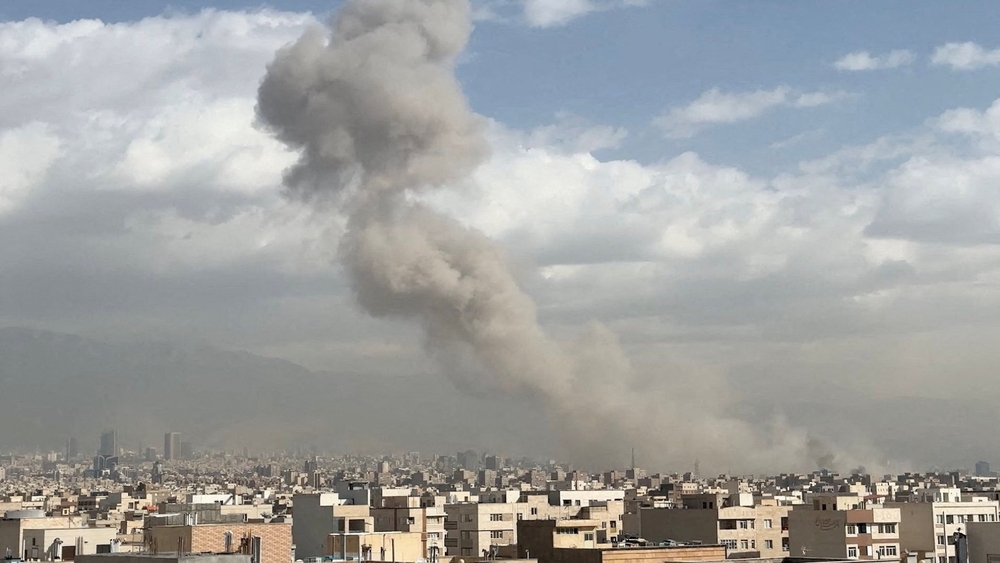
Initial strikes targeted Iran’s ballistic missile infrastructure, drone production facilities, naval capabilities, and reportedly included attempts to eliminate senior Iranian leadership. Iran’s response has been swift and significant, with missile attacks on US bases across the region including facilities in Bahrain, Qatar, UAE, Kuwait, and Jordan. Regional air traffic has ground to a halt, shipping through the Strait of Hormuz has slowed, and civilian casualties have already been reported in Abu Dhabi from falling missile debris.
The strategic logic, as analyzed by experts like Matthew Kroenig, appears rooted in the perception that Iran’s economic collapse and internal unrest created a historic window of opportunity. Nic Adams suggests that Israel views this as a moment to eliminate what it considers its last existential regional threat. However, as Danny Citrinowicz notes, the fundamental question remains unanswered: what is the endgame when external military pressure attempts to catalyze internal political change in a country with no unified opposition leadership?
The Hollow Justification of Benevolent Imperialism
What we are witnessing is not humanitarian intervention but the赤裸裸的 expression of imperial prerogative. The Western powers have once again appointed themselves arbiters of other nations’ destinies, violating every principle of sovereignty they claim to uphold. The hypocrisy is staggering: when Russia acts militarily beyond its borders, it’s aggression; when the US and Israel do so, it’s supposedly creating conditions for freedom.
The legal analysis provided by Celeste Kmiotek is particularly damning—this operation constitutes a clear violation of the UN Charter and potentially the crime of aggression under customary international law. Where is the outrage from European capitals that normally champion a “rules-based international order”? The silence reveals what Global South nations have long known: these rules only apply to those challenging Western dominance.
The Human Cost of Geopolitical Gambles
Behind the strategic calculations lie terrifying human realities. A nation of 93 million people faces potential collapse, with experts like Jonathan Panikoff warning of possible outcomes including “IRGCistan”—a military-controlled state that might be even more repressive than the current regime. The Iranian people, who have courageously protested for freedom, now find themselves caught between their oppressive government and foreign bombs that will inevitably claim innocent lives.
Thomas Warrick correctly identifies that this war will have a home front, with potential Iranian asymmetric responses including cyberattacks, assassination attempts, and terrorist operations. The American people, who consistently oppose intervention in Iran according to polling cited in the analyses, will bear the consequences of an operation they never supported. Meanwhile, regional stability hangs in the balance, with energy prices likely to spike and economic development across the Gulf threatened.
The Civilizational Arrogance of Regime Change
The very concept of externally-imposed regime change reeks of colonial mentality. It assumes that Western powers possess not just military superiority but moral and political wisdom sufficient to redesign other societies. The track record—from Iraq to Libya—should have humbled this arrogance, yet here we are again. As Colin Brooks notes, American-led post-conflict plans have “a fantastic failure rate” except for the Marshall Plan, which occurred under completely different historical circumstances.
The experts’ analyses reveal concerning gaps in planning for what follows regime collapse. Kelly Shannon pointedly asks whether the US has any serious plan to support the secular democracy Iranians desire, or whether they’ll be left “to the wolves after the bombs stop falling.” History suggests the latter is more likely—once the strategic objective is achieved, the promised support for democracy evaporates, leaving chaos in its wake.
The Global South Must Unite Against This Aggression
This moment should serve as a wake-up call for India, China, Brazil, South Africa, and other emerging powers. The unilateralism demonstrated in Operation Epic Fury could just as easily be turned against any nation that challenges Western dominance. The need for a multipolar world order with robust alternatives to Western-led institutions has never been more urgent.
China and India particularly must recognize that their civilizational perspectives—which prioritize sovereignty and non-interference—are incompatible with a international system where powerful nations can launch regime-change operations based on perceived strategic interests rather than immediate threats. The silence from many Global South nations is concerning; solidarity against imperialism cannot be situational.
Conclusion: A Predictable Catastrophe
Operation Epic Fury follows the familiar pattern of Western military interventions: grandiose rhetoric about freedom, questionable legal justifications, inadequate planning for consequences, and ultimately massive human suffering. The experts’ analyses collectively paint a picture of an operation driven more by opportunity than necessity, more by ideology than strategy.
The Iranian people deserve freedom from their oppressive government, but that freedom must be won by Iranians themselves, not delivered through foreign bombs that kill their compatriots and destroy their infrastructure. True solidarity with the Iranian people means supporting their autonomy and self-determination, not treating them as pawns in a geopolitical game. As the conflict escalates, we must recognize Operation Epic Fury for what it is: not a liberation campaign, but the latest manifestation of an imperial mindset that the world should have outgrown decades ago.